Still growing.New universities and courses are added most weekdays (not weekends), each checked against the university's own page before it goes live — worth checking back. Sources last read 13 Sept 2026. How we verify →

StudyPath
Not separately QS-rankedPalaiseau, France· QS World University Rankings 2027

École Polytechnique (l'X)

École Polytechnique (l'X), in Palaiseau, France, has 4 undergraduate courses listed on StudyPath. International tuition is €18,800 a year. École Polytechnique publishes its own accommodation prices, from €606 per month. All of them publish an application deadline. 3 named scholarships are recorded against these courses. Every figure above was read from École Polytechnique's own published pages and last checked on 16 August 2026.

Not ranked in its own right in the QS World University Rankings 2027 - QS now profiles the group it belongs to, Institut Polytechnique de Paris, at =43. École Polytechnique's own QS profile records no position after the 2021 edition, where it stood at 61.

Courses
4
Fees verified
4 / 4
Scholarship entries
3
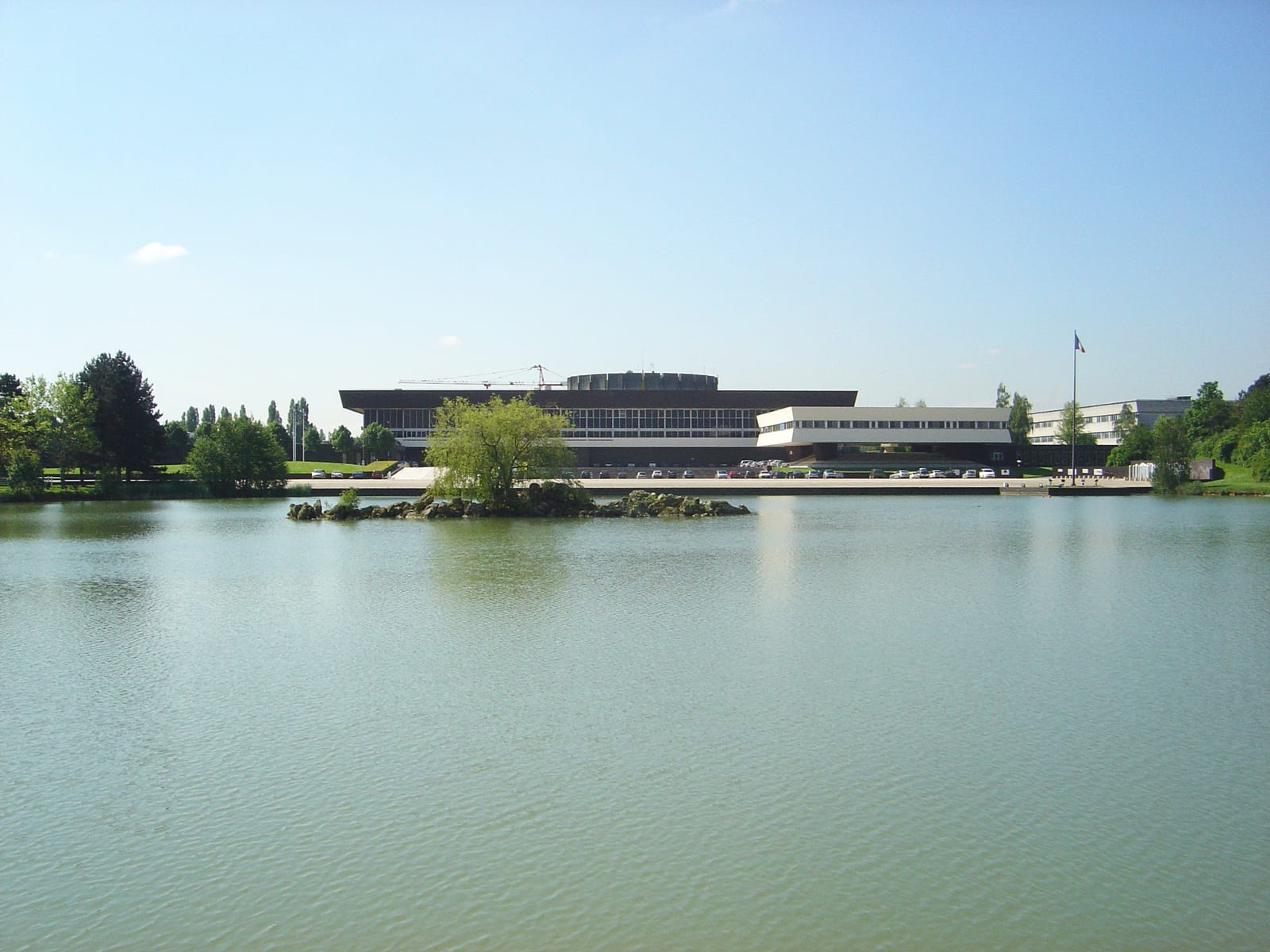
École Polytechnique: main hall seen from the other side of the lake. Verified
École Polytechnique: main hall seen from the other side of the lake. · Photo: David MonniauxCC BY-SA 3.0
Applies everywhere on the site, on this device — change it any time.
Not set — every fee below is the international rate. Home and EU/EEA rates are often far lower.

courses

4 courses

Bachelor of Science

BSc · 3 years · Mathematics, Computer Science, Physics

International tuition

€18,800 per year

~€56,400 for the whole 3 years, at today's fee
Verified

2024/25 · Priced for this course · Non-EU students

This is the 2024/25 figure as published by École Polytechnique. An earlier academic year than the one now running. Fees usually rise, so treat it as a floor and check the course page for the current rate.

This is the most recent tuition figure Ecole Polytechnique attaches an intake year to. Its Bachelor tuition-fees page currently advertises a higher rate -- 'Non-EU Students EUR 19,200 / year' (EUR 15,900 for EU/EEA) -- but prints no year against it and warns 'Rates are subject to change', so that newer figure cannot be dated and is described in the cost note instead. Tuition is stated to remain constant throughout the programme. On top of tuition there is a non-refundable EUR 1,500 annual administration fee, two EUR 1,500 tuition deposits deducted from the first year, and a EUR 95 application fee with no waiver. Students on the BS/MS track pay Columbia University's own rates for their years there.

Show the fee on the university's site

Ecole Polytechnique's Bachelor tuition-fees page currently advertises EUR 19,200 per year for non-EU students (EUR 15,900 for EU/EEA) but prints no academic year anywhere against those figures and states only that 'Rates are subject to change'. The dated figure recorded above -- EUR 18,800 for the 2024-2025 intake -- is the most recent one the School attaches a year to, so treat EUR 19,200 as the rate to confirm before applying. Beyond tuition, the School charges a non-refundable EUR 1,500 annual administration fee, two EUR 1,500 tuition deposits deducted from the first year's fees, and a EUR 95 application fee with no waiver; on-campus accommodation is quoted at EUR 602 per month.

Show the source
Intake
September
Source
Taught in
English
Source
Application deadline
Three application rounds each year, the first opening in early September, with no quota per round and no quota by nationality. At capture the site still listed only the 2026-intake deadlines (Round 1 closed 30 October 2025, Round 2 on 5 January 2026 and Round 3 on 9 February 2026); the 2027-intake dates had not yet been published. Candidates may apply only once per academic year, either through Ecole Polytechnique's own system or through Parcoursup, never both.
Source

What you'll study

Not yet added.

Scholarships3 available
  • Full Scholarship Scheme for International Olympiad Medalists

    Tuition fees waived apart from the annual administration fee, plus a living allowance; the combined ceiling is 87,900 euros per non-EU/EEA student (78,750 euros for EU/EEA students) across the programme. Living allowance paid in ten monthly instalments from September to June.

    Eligibility: Admitted Bachelor of Science students who won one or more medals at an international subject-proficiency Olympiad in the two years before enrolment, with priority given to gold medalists. Only one scholarship per student, and it cannot be combined with other Ecole Polytechnique, Foundation or French government aid.

    The 1,500 euro annual administration fee is still due and is non-refundable. A limited number of awards; granting is subject to the final decision of the Bachelor Admission and Financial Aid Committees, and renewal depends on academic success and conduct.

    Source
  • Excellence Scholarship

    4,800 euros in total per year, for the three years of the programme, paid in ten monthly instalments from September to June.

    Eligibility: Only students admitted with honours are eligible to apply; awarded to those showing outstanding academic ability and strong motivation for the Bachelor Program. Candidates are told how to apply on admission.

    The number of awards depends on available funds, and renewal is subject to academic success and conduct. Against tuition of 19,200 euros a year for non-EU students this covers about a quarter of the fee, so it is a contribution rather than a waiver.

    Source
  • Women in Science Scholarship

    4,800 euros in total per year, granted throughout the three years of the programme, paid in ten monthly instalments from September to June.

    Eligibility: Female candidates admitted to the Bachelor Program; candidates are told how to apply on admission.

    The number of awards depends on available funds, and renewal is subject to academic success and conduct.

    Source
Entry requirementsEnglish · grades · interview

English language

  • TOEFL iBT, 90 overall
  • IELTS, minimum grade per each language skill: 6Ecole Polytechnique prints the overall bar as "6,5" with a French decimal comma - that is 6.5 on the IELTS band scale. It is recorded here only as the published sub-score rule, because the overall figure does not appear on the page in a form that can be checked digit-for-digit against a 6.5 entry.
  • Cambridge, 176 overall, minimum grade per each language skill: 169Grade B in C1 Advanced (CAE) or C2 Proficiency (CPE). IGCSE is not accepted as an English certificate.
Source

Academic offer

A recognised high school leaving certificate (or a scientific university entrance certificate), with a strong overall academic average, advanced mathematics and at least one advanced science course, and English at CEFR C1. Selection is holistic - the committee weighs academic record together with non-academic achievement - and the published procedure is an application file (transcripts, personal statement, CV, ID, photo, application fee, two referees) followed by an interview for shortlisted candidates. No written entrance examination appears anywhere in the Bachelor admissions procedure; the concours route belongs to the separate Ingenieur Polytechnicien programme. Admission is to Year 1 only - no transfers into Years 2 or 3.
Source
Convert your grade to compare →

Interview

Shortlisted applicants are interviewed remotely by videoconference. The interview lasts around 50 minutes and is conducted entirely in English; the final decision weighs the whole application file together with the interview.
Source

BSc · 3 years · Economics, Mathematics

International tuition

€18,800 per year

~€56,400 for the whole 3 years, at today's fee
Verified

2024/25 · Priced for this course · Non-EU students

This is the 2024/25 figure as published by École Polytechnique. An earlier academic year than the one now running. Fees usually rise, so treat it as a floor and check the course page for the current rate.

This is the most recent tuition figure Ecole Polytechnique attaches an intake year to. Its Bachelor tuition-fees page currently advertises a higher rate -- 'Non-EU Students EUR 19,200 / year' (EUR 15,900 for EU/EEA) -- but prints no year against it and warns 'Rates are subject to change', so that newer figure cannot be dated and is described in the cost note instead. Tuition is stated to remain constant throughout the programme. On top of tuition there is a non-refundable EUR 1,500 annual administration fee, two EUR 1,500 tuition deposits deducted from the first year, and a EUR 95 application fee with no waiver. Students on the BS/MS track pay Columbia University's own rates for their years there.

Show the fee on the university's site

Ecole Polytechnique's Bachelor tuition-fees page currently advertises EUR 19,200 per year for non-EU students (EUR 15,900 for EU/EEA) but prints no academic year anywhere against those figures and states only that 'Rates are subject to change'. The dated figure recorded above -- EUR 18,800 for the 2024-2025 intake -- is the most recent one the School attaches a year to, so treat EUR 19,200 as the rate to confirm before applying. Beyond tuition, the School charges a non-refundable EUR 1,500 annual administration fee, two EUR 1,500 tuition deposits deducted from the first year's fees, and a EUR 95 application fee with no waiver; on-campus accommodation is quoted at EUR 602 per month.

Show the source
Intake
September
Source
Taught in
English
Source
Application deadline
Three application rounds each year, the first opening in early September, with no quota per round and no quota by nationality. At capture the site still listed only the 2026-intake deadlines (Round 1 closed 30 October 2025, Round 2 on 5 January 2026 and Round 3 on 9 February 2026); the 2027-intake dates had not yet been published. Candidates may apply only once per academic year, either through Ecole Polytechnique's own system or through Parcoursup, never both.
Source

BSc · 3 years · Mathematics, Computer Science

International tuition

€18,800 per year

~€56,400 for the whole 3 years, at today's fee
Verified

2024/25 · Priced for this course · Non-EU students

This is the 2024/25 figure as published by École Polytechnique. An earlier academic year than the one now running. Fees usually rise, so treat it as a floor and check the course page for the current rate.

This is the most recent tuition figure Ecole Polytechnique attaches an intake year to. Its Bachelor tuition-fees page currently advertises a higher rate -- 'Non-EU Students EUR 19,200 / year' (EUR 15,900 for EU/EEA) -- but prints no year against it and warns 'Rates are subject to change', so that newer figure cannot be dated and is described in the cost note instead. Tuition is stated to remain constant throughout the programme. On top of tuition there is a non-refundable EUR 1,500 annual administration fee, two EUR 1,500 tuition deposits deducted from the first year, and a EUR 95 application fee with no waiver. Students on the BS/MS track pay Columbia University's own rates for their years there.

Show the fee on the university's site

Ecole Polytechnique's Bachelor tuition-fees page currently advertises EUR 19,200 per year for non-EU students (EUR 15,900 for EU/EEA) but prints no academic year anywhere against those figures and states only that 'Rates are subject to change'. The dated figure recorded above -- EUR 18,800 for the 2024-2025 intake -- is the most recent one the School attaches a year to, so treat EUR 19,200 as the rate to confirm before applying. Beyond tuition, the School charges a non-refundable EUR 1,500 annual administration fee, two EUR 1,500 tuition deposits deducted from the first year's fees, and a EUR 95 application fee with no waiver; on-campus accommodation is quoted at EUR 602 per month.

Show the source
Intake
September
Source
Taught in
English
Source
Application deadline
Three application rounds each year, the first opening in early September, with no quota per round and no quota by nationality. At capture the site still listed only the 2026-intake deadlines (Round 1 closed 30 October 2025, Round 2 on 5 January 2026 and Round 3 on 9 February 2026); the 2027-intake dates had not yet been published. Candidates may apply only once per academic year, either through Ecole Polytechnique's own system or through Parcoursup, never both.
Source

What you'll study

Not yet added.

BSc · 3 years · Mathematics, Physics

International tuition

€18,800 per year

~€56,400 for the whole 3 years, at today's fee
Verified

2024/25 · Priced for this course · Non-EU students

This is the 2024/25 figure as published by École Polytechnique. An earlier academic year than the one now running. Fees usually rise, so treat it as a floor and check the course page for the current rate.

This is the most recent tuition figure Ecole Polytechnique attaches an intake year to. Its Bachelor tuition-fees page currently advertises a higher rate -- 'Non-EU Students EUR 19,200 / year' (EUR 15,900 for EU/EEA) -- but prints no year against it and warns 'Rates are subject to change', so that newer figure cannot be dated and is described in the cost note instead. Tuition is stated to remain constant throughout the programme. On top of tuition there is a non-refundable EUR 1,500 annual administration fee, two EUR 1,500 tuition deposits deducted from the first year, and a EUR 95 application fee with no waiver. Students on the BS/MS track pay Columbia University's own rates for their years there.

Show the fee on the university's site

Ecole Polytechnique's Bachelor tuition-fees page currently advertises EUR 19,200 per year for non-EU students (EUR 15,900 for EU/EEA) but prints no academic year anywhere against those figures and states only that 'Rates are subject to change'. The dated figure recorded above -- EUR 18,800 for the 2024-2025 intake -- is the most recent one the School attaches a year to, so treat EUR 19,200 as the rate to confirm before applying. Beyond tuition, the School charges a non-refundable EUR 1,500 annual administration fee, two EUR 1,500 tuition deposits deducted from the first year's fees, and a EUR 95 application fee with no waiver; on-campus accommodation is quoted at EUR 602 per month.

Show the source
Intake
September
Source
Taught in
English
Source
Application deadline
Three application rounds each year, the first opening in early September, with no quota per round and no quota by nationality. At capture the site still listed only the 2026-intake deadlines (Round 1 closed 30 October 2025, Round 2 on 5 January 2026 and Round 3 on 9 February 2026); the 2027-intake dates had not yet been published. Candidates may apply only once per academic year, either through Ecole Polytechnique's own system or through Parcoursup, never both.
Source

What you'll study

Not yet added.

Advertisement

More about École Polytechnique

Student body

QS's own figures · QS World University Rankings 2027

Students
2,850
International students
1,248
≈44% of the student body (worked out here)
Faculty
633
International faculty
40%

These come from QS, not the university's own pages. Unlike every fee and deadline on this site. QS is the primary source for its own rankings and measurements, which is why it is cited here and rejected everywhere else.

Show the QS profile

About & contact

Palaiseau, France· view on Google Maps ↗polytechnique.edu

Find nearby

These open a map search near Palaiseau. StudyPath isn't listing or vouching for specific places — what the university itself publishes about on-campus facilities appears under On-campus amenities, cited like everything else here.

No admissions email, phone number, or address verified for this university yet. Not yet collected, not necessarily unavailable.

Accommodation

€606per month

on-campus dorm room (guaranteed Bachelor of Science housing)

Published by the university itself, not a live listings price. Actual cost depends on room type, availability and when you apply.

Show the source

Search student housing near Palaiseau (partner link)

After you graduate

Rules read 17 Aug 2026

What France's own immigration authority currently publishes. Not a ranking, not a guarantee, and not the same as what any agent or forum will tell you. Whether someone actually obtains residence depends on occupation, points, funds and policy that can change between application and graduation.

Money you must prove before the visa

€877.50per month, for the long-stay student visa (VLS-TS étudiant) — published as a monthly minimum and stored as one

Shown as a balance in a bank account. You keep control of it.

Figure published for: à compter du 1er août 2026 (from 1 August 2026), in the authority's own wording. Applications lodged at a visa centre or consular post up to and including 31 July 2026 are assessed on the previous figure of 615 euros per month; applications from 1 August 2026 must show 877,50 euros per month. This amount is revised regularly, so check it again before you transfer anything.

Someone who applied online on France-Visas while the old 615-euro threshold was still displayed, and filed evidence for that amount, may be asked for further evidence to reach the new 877,50-euro threshold. Holders of a French government scholarship funded by the Ministry for Europe and Foreign Affairs are unaffected, because the scholarship itself pays 900 euros per month, above the new threshold. The change also reaches people already in France: a student who got their visa on the old 615-euro basis and needs to renew their residence permit for a stay over a year must show the threshold in force at renewal, which is 877,50 euros per month. Service-Public.fr states the accepted evidence: a bank attestation of a sufficient credit balance if the student has the resources themselves, or — where a third party is paying — that person's identity document plus bank attestations showing scheduled regular transfers, or a sworn statement undertaking to pay enough to reach 877,5 € a month. Where the money comes from several sources, each must be evidenced separately, and the authorities assess them against the applicant's particular circumstances.

Show the source
Compare this against other countries →

Work during study

A non-EU/EEA student holding a student residence card or a long-stay visa valid as a residence permit (VLS-TS) for study may work up to 964 hours per year — described as 60% of the statutory full-time annual working duration — without their employer needing to separately obtain a work authorisation. The 964-hour window runs for one year from the date the card was issued or the VLS-TS validated (an anniversary-based count, not the calendar year), and to work beyond that limit the employer must apply for and obtain a work authorisation before the student starts.

Show the source

Post-study work visa

Carte de séjour or VLS-TS "recherche d'emploi/création d'entreprise" (the route commonly referred to in English as the APS, Autorisation Provisoire de Séjour) . Up to 1 year
Valid for exactly 1 year and cannot be renewed. Available to a non-EU/EEA graduate who held a student (or student-mobility-programme) residence card and who obtained, within the 12 months before applying, a licence professionnelle, a Mastère Spécialisé, a Master of Science labelled by the Conférence des Grandes Écoles, or another diploma at least equivalent to a master's degree. During its validity the holder may work as a salaried employee without their employer needing a separate work authorisation, provided the job is related to their field of study and pays a gross monthly salary of at least EUR 2,800.53 — the usual 964-hour/60% annual cap on student work does not apply during this card. One naming nuance worth flagging: service-public.fr uses 'carte de séjour ou VLS-TS recherche d'emploi/création d'entreprise' as the general name for this route, and reserves the specific term 'autorisation provisoire de séjour (APS)' on its own pages for a narrower case — nationals of a country that has signed a migration-flow-management agreement with France (a specific, named list of countries) applying for a first professional experience. In practice both are commonly called 'the APS' in English-language explainers, and this dataset follows that common usage while disclosing the distinction here. This route does not apply to Algerian students, who are governed by a separate bilateral Franco-Algerian agreement not covered by this entry.

Show the source

Route to permanent residence

The job-search card/VLS-TS does not itself count towards permanent residence, and neither, on the evidence of its own enumerated list, does an ordinary student residence card: service-public.fr's page on the 'carte de résident de longue durée-UE' (the standard route built on 5 years of regular residence) lists exactly which residence-permit types count toward that 5-year period — a long-stay visa valid as a residence permit, the temporary/multi-year 'visiteur' card, the private-and-family-life card, the salarié (employee) card, the entrepreneur/self-employed card, the 'talent' multi-year card, and the carte de résident itself — and a student or job-search card is not among them. In practice this means the clock towards permanent residence generally only starts once a graduate secures salaried work (or otherwise qualifies for one of the listed cards) after using the job-search card, not from when they first arrived to study. Once someone has held a qualifying card for 5 years of legal, uninterrupted residence in France (absences allowed up to 6 consecutive months and 10 months total), they may apply for the carte de résident de longue durée-UE, valid for 10 years and renewable, which also carries a French-language (B1) and civic-integration exam requirement.

Show the source

Route to citizenship

French nationality by naturalisation (naturalisation par décret) is granted by decree of the Ministry of the Interior. The standard route requires a minimum of 5 years' habitual residence in France, but service-public.fr sets out several shorter tracks relevant to this dataset's readers: no minimum residence at all for a refugee, a francophone-native speaker, or someone from a francophone country schooled 5+ years in French; and — directly relevant to an international graduate — only 2 years' residence for someone who obtained a degree from a French higher-education institution after 2 years of study there, or who has an exceptional record of integration or important services rendered to France. Applicants must also live in France when the decree is signed, hold a valid residence permit, pass a civic knowledge exam and an interview at the prefecture, show spoken and written French to at least CEFR level B1, have stable and sufficient income, and have no disqualifying criminal record. France permits multiple nationality without requiring renunciation: service-public.fr states plainly that it is possible to hold several nationalities in France, and that someone who becomes French by naturalisation or declaration keeps whichever of their existing nationalities they wish to (voluntary renunciation is available but not compulsory).

Show the source

What the government currently prioritises

When a graduate on the job-search card finds a job and applies to switch onto the standard 'salarié' (employee) residence card, French law normally applies a labour-market test (the 'opposabilité de la situation de l'emploi') that can block the switch — but that test is waived, regardless of salary, if the job is on the government's official list of occupations characterised by recruitment difficulties ('métiers en tension'), a list published by ministerial order (most recently the Arrêté du 21 mai 2025) and organised by occupation and geographic zone. The test is separately waived — without needing to be on that list — for a job that is related to the graduate's field of study and pays at least EUR 2,800.53 gross per month. Which occupations and regions appear on the métiers-en-tension list changes with each ministerial order and is not reproduced here.

Show the source

Read 17 August 2026. France's system names things differently from how English-language guides commonly summarise it — see the naming-nuance disclosure inside postStudyWork.value — but the substance (a non-renewable 1-year job-search residence permit, obtainable by a recent master's-equivalent graduate, allowing salaried work tied to the graduate's field of study above a stated salary floor) matches what is usually meant by 'the French APS' in the STEM-study-destination comparisons this dataset exists to support. All figures cited to service-public.fr (Direction de l'information légale et administrative, Premier ministre), which is the correct general-public-facing official source for these rules; france-visas.gouv.fr and campusfrance.org (both pre-approved for this country) were checked but did not carry a more specific or more current statement of these particular figures than service-public.fr did on this pass. The EUR 2,800.53 monthly-salary and 964-hour figures are both indexed/reviewed periodically (the salary floor in particular tracks a statutory reference wage) and should be re-checked before relying on them for a specific year. citizenshipRoute added 17 August 2026, cited to service-public.fr's own naturalisation-conditions fiche (F2213, 0ea511026bce93a5) — reached this time via its actual content ID rather than the F34708 'choose your situation' router page, which turned out to be a JS decision-tree entry point with no static requirements text of its own (archived anyway as 95f442ddbdc800c2, unused as a citation). The multiple-nationality statement is cited to the same domain's dedicated fiche F334 ('Peut-on avoir plusieurs nationalités en France ?', 5aff1d23595e552a). naturalisationStatus set to 'published-route' on 18 August 2026: the authority already cited under citizenshipRoute publishes criteria a foreign resident could actually follow, which is the only claim this field makes. It is deliberately not a judgement about how attainable that route is in practice. citizenshipTerms records the general 5-year period service-public.fr states for naturalisation par décret. The same page publishes a 2-year period for an applicant who obtained a degree from a French higher-education institution after 2 years of study there — directly relevant to an international graduate, but a category route rather than the general case, so it is described in citizenshipRoute rather than recorded as the headline figure. studentVisaFunds added 19 August 2026, and the timing matters: France raised this threshold from 615 to 877,50 euros a month on 1 August 2026, less than three weeks before this reading, so every third-party guide and much of the search-engine index still carried 615. The Campus France notice is cited because it states the new amount and its commencement date in one sentence and sets out the transition rules. Service-Public.fr, separately archived (ce6d8f2e1faa084e), independently states the current requirement as 877,5 € par mois and lists the accepted evidence, so the figure rests on two allowlisted French government sources rather than one. france-visas.gouv.fr's own student page was archived too (1a99492ecb5b91d1) but publishes no amount — the Campus France notice itself warns that the France-Visas site was only being updated from 1 August 2026, which is exactly the kind of lag this field exists to protect a student from.

Open the immigration authority's own page ↗
Advertisement

Student photos

Contributed by students and applicants. Not checked the way the campus photos above are, just real photos from people who've actually been here.

Loading…

What students say about École Polytechnique

Opinions from students and applicants. Not checked against the university's own pages the way the fees and deadlines above are.

to write a review. Signing in with your university email marks you as a verified student here.

Loading reviews…