Still growing.New universities and courses are added most weekdays (not weekends), each checked against the university's own page before it goes live — worth checking back. Sources last read 13 Sept 2026. How we verify →

StudyPath
Not separately QS-rankedMunich, Germany· QS World University Rankings 2027

Hochschule München (Munich University of Applied Sciences)

Hochschule München (Munich University of Applied Sciences), in Munich, Germany, has 6 undergraduate courses and 3 master's courses listed on StudyPath. International tuition runs from ~€1,000 to ~€8,000 a year depending on the course. HM publishes its own accommodation prices, from €283.20 per month. 7 of the 9 publish an application deadline. 1 named scholarship is recorded against these courses. Every figure above was read from HM's own published pages and last checked on 6 September 2026.

Not in the QS World University Rankings — QS's own institution profile for University of Applied Sciences - München carries no ranking table of any kind (not even a regional QS placement), unlike some other German Fachhochschulen that at least appear in QS's Europe University Rankings. This is normal for a German Fachhochschule and is not a quality signal.

Courses
9
Fees verified
9 / 9
Scholarship entries
9
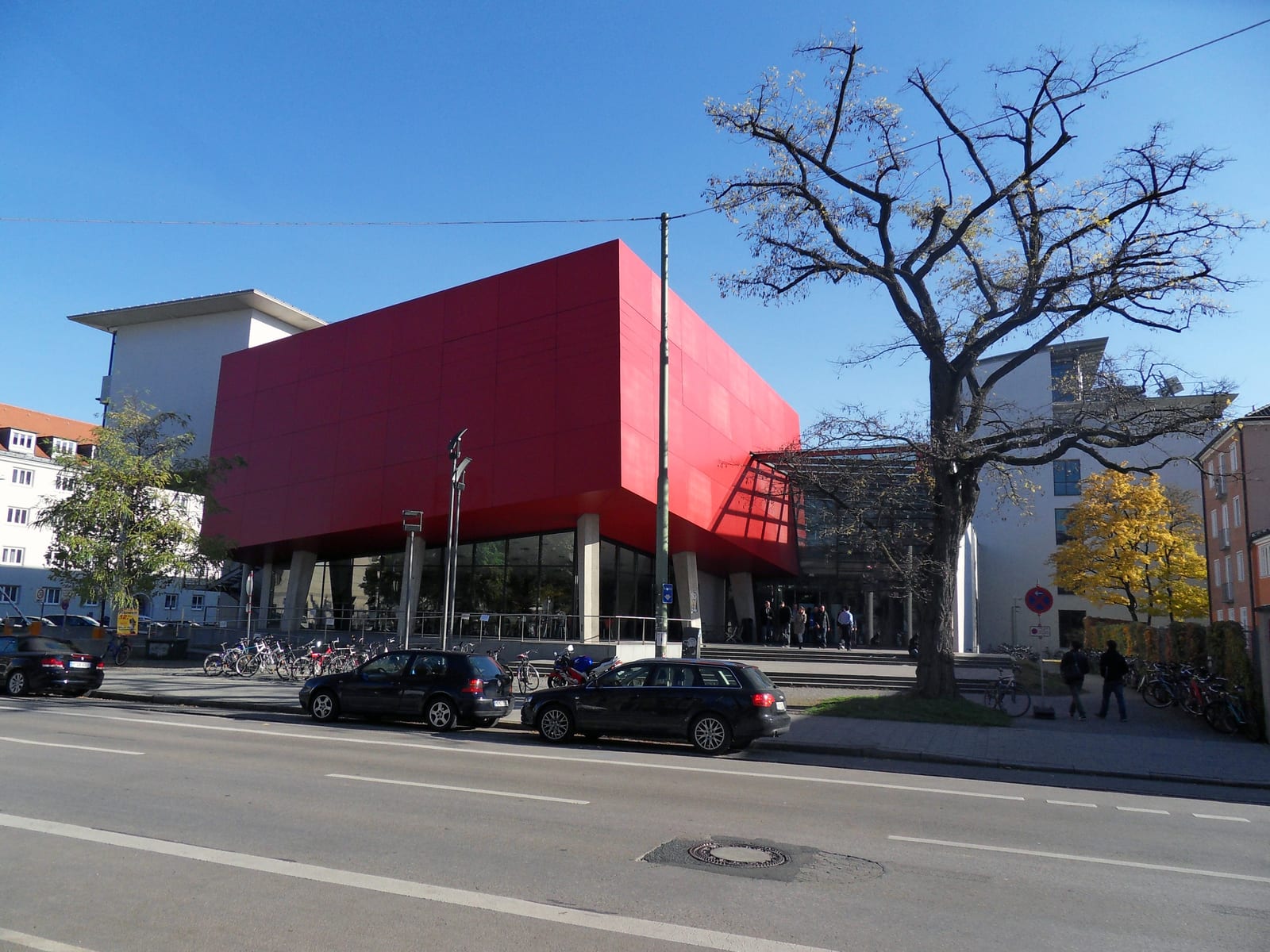
University Of Applied Sciences in Munich at Lothstraße 64 Verified
University Of Applied Sciences in Munich at Lothstraße 64 · Photo: Johannes VogelCC BY-SA 3.0
Applies everywhere on the site, on this device — change it any time.
Not set — every fee below is the international rate. Home and EU/EEA rates are often far lower.

courses

4 of 9

B.Sc. · 3.5 years · Physics, Computer Science

International tuition

€500 per term

~€3,500 for the whole 3.5 years, at today's fee
Verified

2026/27 · Same rate across the institution · Non-EU students

Same institution-wide Hochschule München policy already recorded on hm-muenchen-informatik in this file: Bavaria's 2024 higher-education law (BayHIG) applies this to third-country nationals only, not EU/EEA citizens. Applies to students newly enrolling from the winter semester 2026/2027 onward; students already matriculated at HM before that date continue to study fee-free. A parallel EUR 700.00-per-semester rate applies to Master's programmes. Exemptions exist under §8 Abs. 2 of the university's own Hochschulgebührensatzung (fee statute).

Show the fee on the university's site
Intake
October (winter semester)
Source
Taught in
English
Source
Application deadline
May 2 to July 15, for the October (winter-semester) intake.
Source

What you'll study

Not yet added.

Scholarships1 available
  • Deutschlandstipendium at Munich University of Applied Sciences (HM)

    EUR 300 per month, as a rule for at least two semesters and at most until the end of the standard period of study. Granted independently of the student's and their parents' income. HM also runs a programme of events building a network between holders and funders.

    Eligibility: Open to high-performing and committed bachelor's and master's students of HM, and to prospective students, whose record points to outstanding achievement in study and professional life. At the start of funding in the winter semester the applicant must still have at least two semesters remaining within the standard period of study.

    HM has taken part since 2011; each award is co-financed EUR 150 by the federal government and EUR 150 by a private funder. The application period for funding from winter semester 2026/27 ran 27 April to 17 May 2026. Quote is from HM's German-language applicant page, which is where it states the figure. No numeric grade threshold is published, so none is recorded here.

    Source
Entry requirementsgrades

Academic offer

English at CEFR B2 and German at CEFR A2 are both required -- the German requirement is a genuinely basic level, and must be proven only by the end of the SECOND semester, not at admission.
Source
Convert your grade to compare →

M.Eng. · 2 years · Chemical Engineering, Materials Science

International tuition

€4,000 per term

~€16,000 for the whole 2 years, at today's fee
Verified

winter semester 2021/22 · Priced for this course · All students — no separate international rate

This is the fee-charging 'continuing education' (Weiterbildungsstudiengang) variant of HM's Paper Technology Master's, open to any Bachelor's-holder with a year of professional experience; the fee applies to all students, not just non-EU internationals, and the university's own page does not distinguish by nationality. HM's page states the figure was first set 'as of winter semester 2021/22' and repeats it unchanged, flagged 'subject to change', with no newer date attached, so periodLabel cites that original date rather than implying a current-year figure the page does not actually print. The separate 3-semester 'consecutive' variant of this same Master's -- open only to Bachelor's graduates of Paper Technology itself -- charges no tuition fee at all (see notes).

Show the fee on the university's site

Beyond the EUR 4,000-per-semester continuing-education fee, students pay a semester contribution of approx. EUR 85 (student union / public-transport ticket) plus obligatory student health insurance and general living costs, per the same official costs table.

Show the source
Intake
October (winter semester)
Source
Taught in
English
Source
Application deadline
2 May to 15 July, for the following winter (October) semester intake.
Source

What you'll study

Not yet added.

Scholarships1 available
  • Deutschlandstipendium at Munich University of Applied Sciences (HM)

    EUR 300 per month, as a rule for at least two semesters and at most until the end of the standard period of study. Granted independently of the student's and their parents' income. HM also runs a programme of events building a network between holders and funders.

    Eligibility: Open to high-performing and committed bachelor's and master's students of HM, and to prospective students, whose record points to outstanding achievement in study and professional life. At the start of funding in the winter semester the applicant must still have at least two semesters remaining within the standard period of study.

    HM has taken part since 2011; each award is co-financed EUR 150 by the federal government and EUR 150 by a private funder. The application period for funding from winter semester 2026/27 ran 27 April to 17 May 2026. Quote is from HM's German-language applicant page, which is where it states the figure. No numeric grade threshold is published, so none is recorded here.

    Source
Entry requirementsEnglish · grades

English language

  • TOEFL, 80 overall
  • IELTS, 6 overall
Source

Academic offer

Requires at least a Bachelor's degree in engineering or science (minimum 6 theoretical semesters, 180 ECTS points) with a converted grade of at least 'good' on the German scale, plus at least one year of professional experience after the Bachelor's degree (specific to this continuing-education variant; the separate consecutive variant instead requires a Bachelor's in Paper Technology itself and a 12-week work placement).
Source
Convert your grade to compare →

Photonics

M.Sc. · 1.5 years · Physics, Electrical & Electronic Engineering

International tuition

€700 per term

~€2,100 for the whole 1.5 years, at today's fee
Verified

2026/27 · Same rate across the institution · Non-EU students

The Photonics programme's own page states no separate tuition fee of its own (it just links out to a general 'Semester contribution / living costs' page), so this is the same institution-wide Hochschule München policy already recorded on sibling HM programmes in this file: Bavaria's 2024 higher-education law (BayHIG) charges third-country nationals newly enrolling from winter semester 2026/2027 onward, not EU/EEA citizens. Students already matriculated at HM before that date continue to study fee-free. A parallel EUR 500.00-per-semester rate applies to Bachelor's programmes. Exemptions exist under §8 Abs. 2 of the university's own Hochschulgebührensatzung (fee statute). DAAD's own listing describes this programme as having 'No tuition fees', which predates this 2024 state-law change and is superseded by HM's own current fee page.

Show the fee on the university's site

Beyond the EUR 700-per-semester tuition fee charged to newly-enrolling non-EU international students from winter semester 2026/2027 onward (see internationalTuition), every student at Hochschule München -- domestic or international -- also pays the mandatory Studierendenwerk basic contribution. The university's own fees page states this as EUR 97.00 from the 2026 summer semester onward, funding the student-services body (canteen, counselling, halls of residence); it is charged even to students on a leave of absence or a practical/study-abroad semester. Students who matriculated at HM before winter semester 2026/2027 pay only this contribution, with no tuition fee at all.

Show the source
Intake
March (summer semester), October (winter semester)
Source
Taught in
English
Source
Application deadline
2nd May to 15th June, for the following winter semester; 15th November to 15th January, for the following summer semester.
Source

What you'll study

Not yet added.

Scholarships1 available
  • Deutschlandstipendium at Munich University of Applied Sciences (HM)

    EUR 300 per month, as a rule for at least two semesters and at most until the end of the standard period of study. Granted independently of the student's and their parents' income. HM also runs a programme of events building a network between holders and funders.

    Eligibility: Open to high-performing and committed bachelor's and master's students of HM, and to prospective students, whose record points to outstanding achievement in study and professional life. At the start of funding in the winter semester the applicant must still have at least two semesters remaining within the standard period of study.

    HM has taken part since 2011; each award is co-financed EUR 150 by the federal government and EUR 150 by a private funder. The application period for funding from winter semester 2026/27 ran 27 April to 17 May 2026. Quote is from HM's German-language applicant page, which is where it states the figure. No numeric grade threshold is published, so none is recorded here.

    Source
Entry requirementsEnglish · grades

English language

  • B2Alternatively satisfied by an English-included German university entrance certificate (Abitur).
Source

Academic offer

Requires a Bachelor's degree in science or engineering (e.g. Physics, Mechatronics, Electrical Engineering, or Ophthalmic Optics/Optometry) from a properly accredited institution, with a final grade at least equivalent to the German grade 'good', at least 180 ECTS credits, at least six theoretical semesters, and a practical semester or industrial internship of at least 18 weeks. Applicants short of the ECTS or internship threshold can make this up during an extended, 4-semester version of the Master's. Applicants who do not clearly meet the grade/documentation requirement must instead pass an oral entrance examination (in person or online).
Source
Convert your grade to compare →

M.Sc. · 1.5 years · Physics, Materials Science

International tuition

€700 per term

~€2,100 for the whole 1.5 years, at today's fee
Verified

2026/27 · Same rate across the institution · Non-EU students

The programme's own page states no fee of its own (it just links out to a general 'Semester contribution / living costs for foreign students' page), so this is the same institution-wide Hochschule München policy already recorded on sibling HM programmes in this file: Bavaria's 2024 higher-education law (BayHIG) charges third-country nationals newly enrolling from winter semester 2026/2027 onward, not EU/EEA citizens. Students already matriculated at HM before that date continue to study fee-free. A parallel EUR 500.00-per-semester rate applies to Bachelor's programmes. Exemptions exist under §8 Abs. 2 of the university's own Hochschulgebührensatzung (fee statute).

Show the fee on the university's site

Beyond the EUR 700-per-semester tuition fee charged to newly-enrolling non-EU international students from winter semester 2026/2027 onward (see internationalTuition), every student at Hochschule München -- domestic or international -- also pays the mandatory Studierendenwerk basic contribution. The university's own fees page states this as EUR 97.00 from the 2026 summer semester onward, funding the student-services body (canteen, counselling, halls of residence); it is charged even to students on a leave of absence or a practical/study-abroad semester. Students who matriculated at HM before winter semester 2026/2027 pay only this contribution, with no tuition fee at all.

Show the source
Intake
March (summer semester), October (winter semester)
Source
Taught in
English, also taught partly in German
Source
Application deadline
Mai 2nd to June 15th, for the following winter semester; November 15th to January 15th, for the following summer semester.
Source

What you'll study

Not yet added.

Scholarships1 available
  • Deutschlandstipendium at Munich University of Applied Sciences (HM)

    EUR 300 per month, as a rule for at least two semesters and at most until the end of the standard period of study. Granted independently of the student's and their parents' income. HM also runs a programme of events building a network between holders and funders.

    Eligibility: Open to high-performing and committed bachelor's and master's students of HM, and to prospective students, whose record points to outstanding achievement in study and professional life. At the start of funding in the winter semester the applicant must still have at least two semesters remaining within the standard period of study.

    HM has taken part since 2011; each award is co-financed EUR 150 by the federal government and EUR 150 by a private funder. The application period for funding from winter semester 2026/27 ran 27 April to 17 May 2026. Quote is from HM's German-language applicant page, which is where it states the figure. No numeric grade threshold is published, so none is recorded here.

    Source
Entry requirementsgrades

Academic offer

Requires a Bachelor's degree (or similar Diploma) in natural or engineering sciences or a similar field, from a German university or a properly accredited foreign institution, with a final grade at least equivalent to the German grade 'good', covering at least 180 ECTS credits and at least six theoretical semesters, plus a practical semester or industrial internship of at least 18 weeks and a minimum of 10 ECTS in physics. Both a German language certificate at CEFR A2 and English language skills at CEFR B2 must be proven, even though the programme itself is taught in English -- German A2 unlocks a wider choice of elective modules and industry placements for the project study and Master's thesis. Applicants who do not meet the grade requirement must instead pass a 20-30 minute oral entrance examination held by two full professors.
Source
Convert your grade to compare →

Advertisement

More about HM

About & contact

Munich, Germany· view on Google Maps ↗hm.edu

Find nearby

These open a map search near Munich. StudyPath isn't listing or vouching for specific places — what the university itself publishes about on-campus facilities appears under On-campus amenities, cited like everything else here.

No admissions email, phone number, or address verified for this university yet. Not yet collected, not necessarily unavailable.

Accommodation

€283.20–€525.10per month

Studierendenwerk München Oberbayern’s Studentenstadt Freimann, its largest complex at over 1,000 rooms, which the operator places 5.5 km from Hochschule München. Hochschule München lets no halls itself: its own “Wohnen in München” page lists Studierendenwerk München under Wohnheime and links to it. Warmmiete per month, from the operator’s “Wartezeit und Miete” list, Stand Juni 2026. The waiting list for these rooms is 3 to 4 semesters.

  • Einzelzimmer in WG — own room in a shared flat, 462 rooms, 3-4 semester wait€283.20–€480.70
  • Teilapartment — 264 rooms, 4 semester wait€375.80–€525.10
  • Einzelapartment — self-contained, 282 rooms, 4 semester wait€401.10–€505.50

The operator describes the rent as a reine Kostenmiete — a pure cost rent covering all outgoings with no operating subsidy — collected monthly by direct debit, with operating costs charged as a monthly advance and reconciled at the end of the billing period. The same list prices every other Munich hall on the same Warmmiete basis, and one of them is earmarked for Hochschule München’s own students: Lothstraße 62, on HM’s main campus street and marked “vorwiegend für FH-Studierende”, lets 61 rooms in shared flats at 491,10 - 576,60 € with a 4-semester wait. Cheaper options exist elsewhere in the network — Chiemgaustraße lists rooms in 4-, 5- and 6-person shared flats from 334,80 € with a wait of only 1 to 2 semesters. Single-parent apartments and family flats in Studentenstadt are priced separately and much higher (628,00 € to 1.144,90 €) and are excluded from the range above. Parking, where offered, costs students between 6 and 35 Euro a month.

Published by the university itself, not a live listings price. Actual cost depends on room type, availability and when you apply.

Show the source

Search student housing near Munich (partner link)

After you graduate

Rules read 16 Aug 2026

What Germany's own immigration authority currently publishes. Not a ranking, not a guarantee, and not the same as what any agent or forum will tell you. Whether someone actually obtains residence depends on occupation, points, funds and policy that can change between application and graduation.

Money you must prove before the visa

€11,904per year — the mission publishes it both ways, as 992,00 Euro pro Monat and 11.904,00 Euro pro Jahr, and says the proof normally has to cover the first year of the planned stay

Paid into a blocked account before you travel, and released to you in monthly instalments once you arrive.

Figure published for: 10.04.2025, the date the Federal Foreign Office carries on this page, and still stated there as the amount required when read on 19 August 2026. The figure is the BAföG maximum support rate, which the Auswärtiges Amt says the deposit is based on, so it moves when that rate moves. This amount is revised regularly, so check it again before you transfer anything.

A Sperrkonto is one accepted way to show the money, not the only one: the Auswärtiges Amt also accepts evidence of the parents' income and assets, a Verpflichtungserklärung (a formal undertaking under §§ 66-68 AufenthG by someone living in Germany), or an annually renewable bank guarantee lodged with a German bank. Someone applying as a Studienbewerber/in (applicant for a study place, § 17 II AufenthG) rather than an enrolled student must show a higher 1.091,00 Euro per month. A scholarship counts toward the requirement, but where it is worth less than 992,00 Euro a month the shortfall still has to be evidenced separately. Only 1/12 of the deposited total may be withdrawn per month, and at the visa appointment the mission accepts only an official account-opening confirmation naming both the total paid in and the monthly available amount. Blocked-account provider fees are payable on top of the blocked sum.

Show the source
Compare this against other countries →

Germany also requires proof of health cover for this visa. See what's required →

Work during study

International students on a residence permit for study purposes may generally work up to 120 full days or 240 half days per year without needing separate permission from the immigration or labour authorities, and may also take on student ancillary jobs (studentische Nebentätigkeiten — e.g. a student-assistant role at their own institution) which are not counted against that limit. In exceptional cases, the Ausländerbehörde (immigration office) responsible for the applicant's place of study can restrict this.

Show the source

Post-study work visa

Aufenthaltserlaubnis zur Arbeitsplatzsuche nach Studienabschluss (residence permit to seek employment after graduation, Section 20 Residence Act) . Up to 18 months
After successfully completing a degree or doctorate at a German higher education institution, a graduate can obtain a residence permit for up to 18 months to look for a job for any qualified employment. Any kind of work is permitted during this job-search period, and the applicant must be able to show their living costs are covered for it. (A separate, later 'Chancenkarte' route of up to 1 year exists for someone who later loses a follow-on job and needs to search again.)

Show the source

Route to permanent residence

A graduate who completes a degree or doctorate at a German higher education institution and then works for two years in a job matching that qualification can obtain a settlement permit (unbefristeter Aufenthaltstitel) — an unlimited, permanent residence title. This particular route does not apply to someone holding a residence permit for research purposes. Separately, a graduate with a concrete job offer meeting the required minimum salary threshold has a statutory right to be issued an EU Blue Card.

Show the source

Route to citizenship

Naturalisation (Einbürgerung) is governed by the federal Staatsangehörigkeitsgesetz (StAG) and administered by each Land's own naturalisation authority, with BAMF publishing the citizen-facing requirements. As of this reading the standard route requires 5 years of habitual, lawful residence in Germany — reduced from 8 years by the reform that took effect 27 June 2024. A shorter 3-year route for exceptional integration achievements existed briefly after that reform (StAG §10(3)) but was itself repealed effective 30 October 2025, confirmed by the current official law text simply marking that paragraph '(weggefallen)' (lapsed) — so 5 years is again the uniform minimum for every applicant rather than one of two tracks. Applicants must also hold secure residence status, be able to support themselves and any dependants without core social-assistance benefits, have no relevant criminal conviction, demonstrate German at CEFR level B1, and pass the Einbürgerungstest (a 33-question test on Germany's legal and social order, history and the applicant's own Land; 17 correct answers required). Since 27 June 2024, Germany accepts multiple nationality for every applicant, not only EU/Swiss nationals as the pre-reform rule allowed: naturalising no longer requires giving up an applicant's existing citizenship — though whether that other country's own law actually lets the person keep it remains outside Germany's control.

Show the source

What the government currently prioritises

The most concrete, actionable shortage signal for this dataset's students is Germany's EU Blue Card (Blaue Karte EU, a residence title under Section 18g of the Residence Act for someone with an academic degree and a job offer matching that qualification): it is granted at a reduced minimum gross annual salary when the job is in a recognised shortage occupation (Mangelberuf) or the applicant graduated within the last 3 years — EUR 45,934.20 for 2026 (the 'kleine'/small Blue Card), versus EUR 50,700 for the standard 'große'/large Blue Card, both set by the Bundesagentur für Arbeit and adjusted annually. The Bundesagentur's own current examples of shortage occupations qualifying for the reduced threshold explicitly include: academic specialists in mathematics, computer science, natural science and technology ('Mathematik, Informatik, Naturwissenschaft und Technik', MINT — a category covering engineering under 'Technik'); academic specialists in architecture and spatial/transport planning; doctors ('Ärztinnen und Ärzte'), dentists, vets and pharmacists; and academic nursing/midwifery specialists. A further special rule lets an IT specialist qualify for the reduced-threshold Blue Card without a university degree at all, given at least 3 years of relevant, academic-level professional experience within the last 7 years. The reduced threshold requires the Bundesagentur für Arbeit to first check that pay and working conditions match those of comparable domestic employees; the standard threshold needs no such check. Separately, the Bundesagentur's annual shortage-occupation analysis (Fachkräfteengpassanalyse) found 157 occupations in shortage in its 2025 edition, concentrated in nursing/healthcare, construction and skilled trades — a broader, non-Blue-Card-specific measure that changes year to year (it found IT-sales and software-development shortages had ended compared with the prior year, while a new shortage appeared in surveying-engineering).

Show the source

Two different day-count rules should not be confused: the 120-full-days/240-half-days limit above applies to a residence permit for study purposes (enrolled degree students). A separate, unrelated day limit applies to residence permits for study-preparation stays (e.g. attending a language course before enrolling), which is not the rule described here. make-it-in-germany.com — the Federal Government's official skilled-migration portal, which publishes much of this same material in English — returned an automated bot-verification challenge to this collector's non-browser fetch tools and so could not be archived and cited directly; every figure in this entry is instead cited to BAMF and Auswärtiges Amt pages, which independently state the same rules. Read 16 August 2026. Deepening pass, 17 August 2026: inDemandOccupations replaced with EU Blue Card salary-threshold detail, per the project brief's explicit ask for a country whose reduced threshold is tied to named shortage professions. Cited to arbeitsagentur.de (the Bundesagentur für Arbeit's own ZAV international-placement newsletter page), an already-allowlisted Germany domain — no domain change needed. The 2026 figures (EUR 50,700 standard / EUR 45,934.20 reduced) and the shortage-occupation category names (MINT academics, architecture/planning academics, doctors, dentists, vets, pharmacists, academic nursing/midwifery, plus the IT-specialist-without-degree carve-out) are this page's own words, not a conversion from another currency/scale. Note precisely what 'MINT' covers: it is the Bundesagentur's own umbrella term for mathematics, computer science (Informatik), natural science and technology (Technik) graduates — it names the category, not the word 'Ingenieur'/engineer literally, though Technik is understood to include engineering; this entry says so explicitly rather than overclaiming a literal citation. The prior Fachkräfteengpassanalyse content (157 shortage occupations, 2025 edition) was kept as a second, shorter paragraph rather than deleted, since it remains accurate and gives a broader (non-Blue-Card) shortage signal. citizenshipRoute added 17 August 2026: the 5-year figure and B1/Einbürgerungstest conditions are cited to bamf.de's own 'Einbürgerung in Deutschland' page (896146c8106c6a83, read the same day this note was written, so it reflects the post-30-October-2025 rule). The repeal of the 3-year fast track was independently confirmed against the current official law text of StAG §10 on gesetze-im-internet.de (5e754a29c205e76e, already an allowed Germany domain by virtue of being added this pass — see IMMIGRATION_DOMAINS), which shows paragraphs (3) and (3a) both marked '(weggefallen)'. The dual-nationality statement ('Seit dem 27.06.2024 werden alle Staatsangehörigen unter Hinnahme von Mehrstaatigkeit eingebürgert') is cited to auswaertiges-amt.de (18cff8083a4e04bb), an already-allowed Germany domain, rather than bamf.de, since BAMF's own citizen-facing page does not itself state the Mehrstaatigkeit rule in as much detail. bmi.bund.de — the ministry that owns this policy — returned HTTP 400 to every fetch attempt this pass (both the project's default fetcher and WebFetch) on several different URLs tried, so it could not be used despite being an already-allowed domain; a future collector with different network conditions should retry it. naturalisationStatus set to 'published-route' on 18 August 2026: the authority already cited under citizenshipRoute publishes criteria a foreign resident could actually follow, which is the only claim this field makes. It is deliberately not a judgement about how attainable that route is in practice. studentVisaFunds added 19 August 2026. The Auswärtiges Amt's own central Sperrkonto page (snapshot d25a23872dd8b603) deliberately publishes no number: it says the amount 'variiert je nach Aufenthaltszweck', is based on the BAföG maximum rates, and tells the applicant to look it up 'auf der Webseite der zuständigen Auslandsvertretung bzw. im Auslandsportal' — its English twin (64a22d6737946bc0) says the same. The figure is therefore cited to a German mission's own page on diplo.de, the Federal Foreign Office's domain for its embassies and consulates and the body that actually issues the national visa, which is why diplo.de was added to Germany's IMMIGRATION_DOMAINS this pass. The Paris embassy page was chosen because it states the monthly and the annual figure in one sentence and also carries the Studienbewerber and scholarship conditions. Three further missions were archived the same day as an independent cross-check and all state the same rate: Quito (ab3cb26e3eff1eeb) '12 x 992,- = 11.904,- €', Tiflis (2185f74496cc1197) 'der jeweils gültige BaföG-Satz, der aktuell 992,-- Euro beträgt', and Tashkent (55cad36d3daedc62) '11.904 Euro für das gesamte erste Jahr'. The widely-circulated 11.208 Euro figure is the pre-September-2024 rate and was not used; the Auswärtiges Amt's own FAQ page on study financing (d7cc582456ad8fde) no longer prints any figure at all. make-it-in-germany.com, though allowlisted, again returned a JavaScript/bot-challenge stub of 93 characters to plain HTTP fetching and so could not be archived.

Open the immigration authority's own page ↗

You will need a blocked account for this visa. Open one (partner link)
Advertisement

Student photos

Contributed by students and applicants. Not checked the way the campus photos above are, just real photos from people who've actually been here.

Loading…

What students say about HM

Opinions from students and applicants. Not checked against the university's own pages the way the fees and deadlines above are.

to write a review. Signing in with your university email marks you as a verified student here.

Loading reviews…