Still growing.New universities and courses are added most weekdays (not weekends), each checked against the university's own page before it goes live — worth checking back. Sources last read 13 Sept 2026. How we verify →

StudyPath
QS #=608Lahore, Pakistan· QS World University Rankings 2027

Lahore University of Management Sciences (LUMS)

Lahore University of Management Sciences (LUMS), in Lahore, Pakistan, has 12 undergraduate courses listed on StudyPath. International tuition runs from PKR 1,465,600 to PKR 1,557,200 a year depending on the course. LUMS publishes its own accommodation prices, from PKR 71,095 per term. 7 of the 12 publish an application deadline. 4 named scholarships are recorded against these courses. Every figure above was read from LUMS's own published pages and last checked on 19 August 2026.

Courses
12
Fees verified
12 / 12
Scholarship entries
28
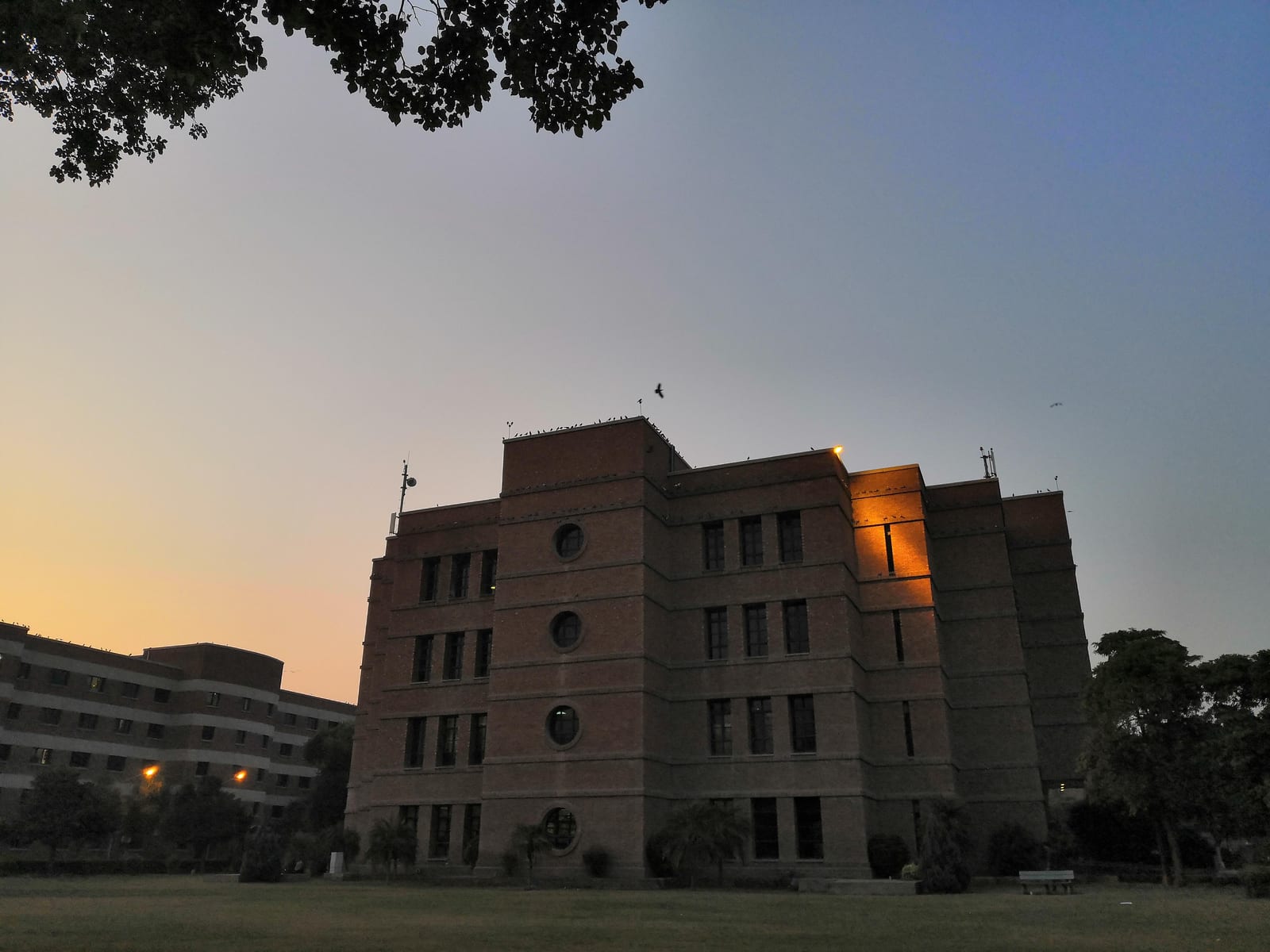
An evening shot of the Gad and Birgit Library at LUMS Verified
An evening shot of the Gad and Birgit Library at LUMS · Photo: ShyokCC BY-SA 4.0
Applies everywhere on the site, on this device — change it any time.
Not set — every fee below is the international rate. Home and EU/EEA rates are often far lower.

courses

12 courses

Computer Science

BS · 4 years · Computer Science

International tuition

PKR 1,557,200 per year

~PKR 6,228,800 for the whole 4 years, at today's fee
Verified

2026/27 · Faculty-wide rate · All students — no separate international rate

Figure is the "Tuition Fee" line (Fall 2026 PKR 824,400 + Spring 2027 PKR 732,800) from LUMS’s published Year-1 fee-structure table for FY 2026-27, common to all Syed Babar Ali School of Science and Engineering (SBASSE) majors (identical figure published on the Computer Science, Electrical Engineering, Chemical Engineering, Biology, Chemistry, Mathematics and Physics programme pages) — so it is faculty-wide, not unique to this one degree. It excludes other first-year charges shown on the same table: a one-time PKR 176,600 Admission Fee, a PKR 269,200 SBASSE (lab) Fee, a PKR 112,200 Semester Registration Fee, and a PKR 67,000 refundable General Security deposit — together these bring Year-1’s all-in total to PKR 2,182,200. The per-credit-hour rate for FY 2026-27 is PKR 45,800; Year 1 carries 34 credit hours, but SBASSE degrees run roughly 130-138 credit hours in total (varies by major), so later years’ totals may differ slightly from Year 1’s. LUMS does not publish a separate international-student tuition rate or a USD-equivalent for this fee — the same PKR rate applies to domestic and international admits alike (foreign nationals instead pay a higher USD 200, vs PKR 11,500, application processing fee, and must separately arrange a Pakistani student visa). See costContext for LUMS’s need-based financial aid, which can reduce what an admitted student actually pays below this sticker figure.

Show the fee on the university's site

LUMS's need-based Financial Aid (a mix of fee waiver and interest-free loan) covers between 20% and 100% of tuition fee expenses for undergraduates who demonstrate financial need, reassessed every academic year; it is not universal or guaranteed. Separately, LUMS’s National Outreach Programme (NOP, running since 2001) gives selected high-achieving, financially disadvantaged students from across Pakistan full financial support — covering admission, tuition, semester registration fees, lab charges, accommodation, meals and stipends. LUMS also awards 100 Undergraduate Merit Scholarships a year, covering partial-to-full tuition for high academic achievers, one year at a time. So a meaningful share of admitted students pay less than the sticker tuition above, though it is not automatic.

Show the source
Intake
September 2026 (Fall 2026)
Source
Application deadline
January 27, 2026, 5:00 PM (PKT) — deadline to submit the Online Application for Fall 2026 admission (SAT must be taken by March 14, 2026; ACT by April 11, 2026; LCAT is tentatively administered February 15, 2026).
Source

Add to calendar

What you'll study

Not yet added.

Scholarships4 available
  • LUMS National Outreach Programme (NOP)

    Full scholarship covering admission to a LUMS undergraduate programme.

    Eligibility: At least 80% marks in Matric or equivalent in O-Levels, plus demonstrated financial need. Shortlisted candidates attend the NOP Summer Coaching Session, sit the LUMS entrance test (paid for by LUMS), and must qualify on merit for admission.

    LUMS’s financial-aid overview page separately describes NOP scholars as receiving "full financial support, covering Admission, Tuition, Semester Registration Fees, Lab Charges, Accommodation, Meals, and Stipends" (financial-aid.lums.edu.pk/financial-aid-options-fa), and the NOP FAQ describes a qualifying award as "more than a 100% scholarship" including hostel, book and living allowances — not repeated here as separate structured figures since those specific phrases come from different pages than this citation.

    Source
  • Sekha Scholarship (SBASSE)

    100% tuition fee waiver for all four years of the undergraduate degree.

    Eligibility: Top ten position holders (from Year 1 or 2) of any of the 23 national FSc examination boards, who gain admission to the Syed Babar Ali School of Science and Engineering (SBASSE) undergraduate programmes.

    Specific to FSc (Pakistani Intermediate) board position holders — the cited page does not state an A-Level-equivalent track for this particular award.

    Source
  • LUMS Need-Based Tuition Fee Waiver and Loan

    Partial to full tuition fee expenses, in a range between 20% and 100%, delivered as a mix of non-repayable fee waiver and repayable LUMS Interest-Free Loan.

    Eligibility: Undergraduate students demonstrating financial need; awards are reassessed every academic year based on demonstrated need.

    No single fixed percentage is stated (it is a range), so coveragePercentage is deliberately left unset.

    Source
  • LUMS Undergraduate Merit Scholarship

    Partial to full tuition fees, for one year only (not carried forward); adjusted against the Financial Aid Award for students who qualify for both.

    Eligibility: First year: awarded to the top applicants shortlisted for admission to each school, based on outstanding academic performance and the LUMS admission evaluation criteria (100 scholarships available). Subsequent years: awarded to top-ranked returning students based on CGPA ranking and placement on the Dean’s Honour List.

    LUMS does not publish a numeric grade, test-score, or percentage threshold for this award — eligibility is by relative ranking against other applicants/students each year, so no structured numeric fields are set.

    Source
Entry requirementstests · grades · interview

Admissions tests

  • SAT optionalOne of three accepted admission-test routes for SBASSE (Fall 2026 cycle) — applicants sit SAT, ACT, or the LCAT, not all three. SAT must be taken by March 14, 2026 (registration via collegeboard.org); official scores must be sent directly by ETS to LUMS (college code 0513).
  • ACT optionalOne of three accepted admission-test routes for SBASSE (Fall 2026 cycle) — applicants sit SAT, ACT, or the LCAT, not all three. ACT must be taken by April 11, 2026 (registration via act.org); official scores must be sent directly by ACT to LUMS (college code 7896).
  • LUMS Common Admission Test (LCAT) optionalLUMS’s own paper-based, multiple-choice admission test (similar in style to the SAT): 4 sections (two verbal, two math), 40 minutes each, ~3 hours total, no calculators permitted. Administered once for the Fall 2026 cycle at designated cities in Pakistan; registration fee PKR 6,500; scores are valid for one academic year only. One of three accepted admission-test routes for SBASSE, not compulsory on its own.
Source

Academic offer

Applicants need a completed or in-progress Higher Secondary qualification (Matric/FSc/ICS, A-Level, High School Diploma or IB) and must meet one of: Matric with 70%+ and FSc/ICS with 70%+; or O-Level (at least 8 subjects, average grade B or above) plus A-Level in at least three full-credit subjects (excluding AS-levels, the General Paper, and any grade below E) averaging 2 Bs and 1 C across the best three — for SBASSE, the accepted full-credit A-Level subjects are Biology, Chemistry, Computing, Computer Science, Mathematics, Further Mathematics, Information Technology or Physics; or an American High School Diploma with 70%+ / GPA B or above; or an IB Diploma with at least 28/45 points (SBASSE applicants need science subjects in the IB); or an IB Career-related Programme; or another equivalent qualification at the Admissions Committee’s discretion. In addition, applicants must sit one of SAT, ACT, or the LUMS Common Admission Test (LCAT).
Source
Convert your grade to compare →

Interview

Some candidates may be called for an interview as part of admission evaluation; not every applicant is interviewed.
Source

BS · 4 years · Electrical & Electronic Engineering

International tuition

PKR 1,557,200 per year

~PKR 6,228,800 for the whole 4 years, at today's fee
Verified

2026/27 · Faculty-wide rate · All students — no separate international rate

Figure is the "Tuition Fee" line (Fall 2026 PKR 824,400 + Spring 2027 PKR 732,800) from LUMS’s published Year-1 fee-structure table for FY 2026-27, common to all Syed Babar Ali School of Science and Engineering (SBASSE) majors (identical figure published on the Computer Science, Electrical Engineering, Chemical Engineering, Biology, Chemistry, Mathematics and Physics programme pages) — so it is faculty-wide, not unique to this one degree. It excludes other first-year charges shown on the same table: a one-time PKR 176,600 Admission Fee, a PKR 269,200 SBASSE (lab) Fee, a PKR 112,200 Semester Registration Fee, and a PKR 67,000 refundable General Security deposit — together these bring Year-1’s all-in total to PKR 2,182,200. The per-credit-hour rate for FY 2026-27 is PKR 45,800; Year 1 carries 34 credit hours, but SBASSE degrees run roughly 130-138 credit hours in total (varies by major), so later years’ totals may differ slightly from Year 1’s. LUMS does not publish a separate international-student tuition rate or a USD-equivalent for this fee — the same PKR rate applies to domestic and international admits alike (foreign nationals instead pay a higher USD 200, vs PKR 11,500, application processing fee, and must separately arrange a Pakistani student visa). See costContext for LUMS’s need-based financial aid, which can reduce what an admitted student actually pays below this sticker figure.

Show the fee on the university's site

LUMS's need-based Financial Aid (a mix of fee waiver and interest-free loan) covers between 20% and 100% of tuition fee expenses for undergraduates who demonstrate financial need, reassessed every academic year; it is not universal or guaranteed. Separately, LUMS’s National Outreach Programme (NOP, running since 2001) gives selected high-achieving, financially disadvantaged students from across Pakistan full financial support — covering admission, tuition, semester registration fees, lab charges, accommodation, meals and stipends. LUMS also awards 100 Undergraduate Merit Scholarships a year, covering partial-to-full tuition for high academic achievers, one year at a time. So a meaningful share of admitted students pay less than the sticker tuition above, though it is not automatic.

Show the source
Intake
September 2026 (Fall 2026)
Source
Application deadline
January 27, 2026, 5:00 PM (PKT) — deadline to submit the Online Application for Fall 2026 admission (SAT must be taken by March 14, 2026; ACT by April 11, 2026; LCAT is tentatively administered February 15, 2026).
Source

Add to calendar

What you'll study

Not yet added.

Scholarships4 available
  • LUMS National Outreach Programme (NOP)

    Full scholarship covering admission to a LUMS undergraduate programme.

    Eligibility: At least 80% marks in Matric or equivalent in O-Levels, plus demonstrated financial need. Shortlisted candidates attend the NOP Summer Coaching Session, sit the LUMS entrance test (paid for by LUMS), and must qualify on merit for admission.

    LUMS’s financial-aid overview page separately describes NOP scholars as receiving "full financial support, covering Admission, Tuition, Semester Registration Fees, Lab Charges, Accommodation, Meals, and Stipends" (financial-aid.lums.edu.pk/financial-aid-options-fa), and the NOP FAQ describes a qualifying award as "more than a 100% scholarship" including hostel, book and living allowances — not repeated here as separate structured figures since those specific phrases come from different pages than this citation.

    Source
  • Sekha Scholarship (SBASSE)

    100% tuition fee waiver for all four years of the undergraduate degree.

    Eligibility: Top ten position holders (from Year 1 or 2) of any of the 23 national FSc examination boards, who gain admission to the Syed Babar Ali School of Science and Engineering (SBASSE) undergraduate programmes.

    Specific to FSc (Pakistani Intermediate) board position holders — the cited page does not state an A-Level-equivalent track for this particular award.

    Source
  • LUMS Need-Based Tuition Fee Waiver and Loan

    Partial to full tuition fee expenses, in a range between 20% and 100%, delivered as a mix of non-repayable fee waiver and repayable LUMS Interest-Free Loan.

    Eligibility: Undergraduate students demonstrating financial need; awards are reassessed every academic year based on demonstrated need.

    No single fixed percentage is stated (it is a range), so coveragePercentage is deliberately left unset.

    Source
  • LUMS Undergraduate Merit Scholarship

    Partial to full tuition fees, for one year only (not carried forward); adjusted against the Financial Aid Award for students who qualify for both.

    Eligibility: First year: awarded to the top applicants shortlisted for admission to each school, based on outstanding academic performance and the LUMS admission evaluation criteria (100 scholarships available). Subsequent years: awarded to top-ranked returning students based on CGPA ranking and placement on the Dean’s Honour List.

    LUMS does not publish a numeric grade, test-score, or percentage threshold for this award — eligibility is by relative ranking against other applicants/students each year, so no structured numeric fields are set.

    Source
Entry requirementstests · grades · interview

Admissions tests

  • SAT optionalOne of three accepted admission-test routes for SBASSE (Fall 2026 cycle) — applicants sit SAT, ACT, or the LCAT, not all three. SAT must be taken by March 14, 2026 (registration via collegeboard.org); official scores must be sent directly by ETS to LUMS (college code 0513).
  • ACT optionalOne of three accepted admission-test routes for SBASSE (Fall 2026 cycle) — applicants sit SAT, ACT, or the LCAT, not all three. ACT must be taken by April 11, 2026 (registration via act.org); official scores must be sent directly by ACT to LUMS (college code 7896).
  • LUMS Common Admission Test (LCAT) optionalLUMS’s own paper-based, multiple-choice admission test (similar in style to the SAT): 4 sections (two verbal, two math), 40 minutes each, ~3 hours total, no calculators permitted. Administered once for the Fall 2026 cycle at designated cities in Pakistan; registration fee PKR 6,500; scores are valid for one academic year only. One of three accepted admission-test routes for SBASSE, not compulsory on its own.
Source

Academic offer

Applicants need a completed or in-progress Higher Secondary qualification (Matric/FSc/ICS, A-Level, High School Diploma or IB) and must meet one of: Matric with 70%+ and FSc/ICS with 70%+; or O-Level (at least 8 subjects, average grade B or above) plus A-Level in at least three full-credit subjects (excluding AS-levels, the General Paper, and any grade below E) averaging 2 Bs and 1 C across the best three — for SBASSE, the accepted full-credit A-Level subjects are Biology, Chemistry, Computing, Computer Science, Mathematics, Further Mathematics, Information Technology or Physics; or an American High School Diploma with 70%+ / GPA B or above; or an IB Diploma with at least 28/45 points (SBASSE applicants need science subjects in the IB); or an IB Career-related Programme; or another equivalent qualification at the Admissions Committee’s discretion. In addition, applicants must sit one of SAT, ACT, or the LUMS Common Admission Test (LCAT).
Source
Convert your grade to compare →

Interview

Some candidates may be called for an interview as part of admission evaluation; not every applicant is interviewed.
Source

BS · 4 years · Chemical Engineering

International tuition

PKR 1,557,200 per year

~PKR 6,228,800 for the whole 4 years, at today's fee
Verified

2026/27 · Faculty-wide rate · All students — no separate international rate

Figure is the "Tuition Fee" line (Fall 2026 PKR 824,400 + Spring 2027 PKR 732,800) from LUMS’s published Year-1 fee-structure table for FY 2026-27, common to all Syed Babar Ali School of Science and Engineering (SBASSE) majors (identical figure published on the Computer Science, Electrical Engineering, Chemical Engineering, Biology, Chemistry, Mathematics and Physics programme pages) — so it is faculty-wide, not unique to this one degree. It excludes other first-year charges shown on the same table: a one-time PKR 176,600 Admission Fee, a PKR 269,200 SBASSE (lab) Fee, a PKR 112,200 Semester Registration Fee, and a PKR 67,000 refundable General Security deposit — together these bring Year-1’s all-in total to PKR 2,182,200. The per-credit-hour rate for FY 2026-27 is PKR 45,800; Year 1 carries 34 credit hours, but SBASSE degrees run roughly 130-138 credit hours in total (varies by major), so later years’ totals may differ slightly from Year 1’s. LUMS does not publish a separate international-student tuition rate or a USD-equivalent for this fee — the same PKR rate applies to domestic and international admits alike (foreign nationals instead pay a higher USD 200, vs PKR 11,500, application processing fee, and must separately arrange a Pakistani student visa). See costContext for LUMS’s need-based financial aid, which can reduce what an admitted student actually pays below this sticker figure.

Show the fee on the university's site

LUMS's need-based Financial Aid (a mix of fee waiver and interest-free loan) covers between 20% and 100% of tuition fee expenses for undergraduates who demonstrate financial need, reassessed every academic year; it is not universal or guaranteed. Separately, LUMS’s National Outreach Programme (NOP, running since 2001) gives selected high-achieving, financially disadvantaged students from across Pakistan full financial support — covering admission, tuition, semester registration fees, lab charges, accommodation, meals and stipends. LUMS also awards 100 Undergraduate Merit Scholarships a year, covering partial-to-full tuition for high academic achievers, one year at a time. So a meaningful share of admitted students pay less than the sticker tuition above, though it is not automatic.

Show the source
Intake
September 2026 (Fall 2026)
Source
Application deadline
January 27, 2026, 5:00 PM (PKT) — deadline to submit the Online Application for Fall 2026 admission (SAT must be taken by March 14, 2026; ACT by April 11, 2026; LCAT is tentatively administered February 15, 2026).
Source

Add to calendar

What you'll study

Not yet added.

Scholarships4 available
  • LUMS National Outreach Programme (NOP)

    Full scholarship covering admission to a LUMS undergraduate programme.

    Eligibility: At least 80% marks in Matric or equivalent in O-Levels, plus demonstrated financial need. Shortlisted candidates attend the NOP Summer Coaching Session, sit the LUMS entrance test (paid for by LUMS), and must qualify on merit for admission.

    LUMS’s financial-aid overview page separately describes NOP scholars as receiving "full financial support, covering Admission, Tuition, Semester Registration Fees, Lab Charges, Accommodation, Meals, and Stipends" (financial-aid.lums.edu.pk/financial-aid-options-fa), and the NOP FAQ describes a qualifying award as "more than a 100% scholarship" including hostel, book and living allowances — not repeated here as separate structured figures since those specific phrases come from different pages than this citation.

    Source
  • Sekha Scholarship (SBASSE)

    100% tuition fee waiver for all four years of the undergraduate degree.

    Eligibility: Top ten position holders (from Year 1 or 2) of any of the 23 national FSc examination boards, who gain admission to the Syed Babar Ali School of Science and Engineering (SBASSE) undergraduate programmes.

    Specific to FSc (Pakistani Intermediate) board position holders — the cited page does not state an A-Level-equivalent track for this particular award.

    Source
  • LUMS Need-Based Tuition Fee Waiver and Loan

    Partial to full tuition fee expenses, in a range between 20% and 100%, delivered as a mix of non-repayable fee waiver and repayable LUMS Interest-Free Loan.

    Eligibility: Undergraduate students demonstrating financial need; awards are reassessed every academic year based on demonstrated need.

    No single fixed percentage is stated (it is a range), so coveragePercentage is deliberately left unset.

    Source
  • LUMS Undergraduate Merit Scholarship

    Partial to full tuition fees, for one year only (not carried forward); adjusted against the Financial Aid Award for students who qualify for both.

    Eligibility: First year: awarded to the top applicants shortlisted for admission to each school, based on outstanding academic performance and the LUMS admission evaluation criteria (100 scholarships available). Subsequent years: awarded to top-ranked returning students based on CGPA ranking and placement on the Dean’s Honour List.

    LUMS does not publish a numeric grade, test-score, or percentage threshold for this award — eligibility is by relative ranking against other applicants/students each year, so no structured numeric fields are set.

    Source
Entry requirementstests · grades · interview

Admissions tests

  • SAT optionalOne of three accepted admission-test routes for SBASSE (Fall 2026 cycle) — applicants sit SAT, ACT, or the LCAT, not all three. SAT must be taken by March 14, 2026 (registration via collegeboard.org); official scores must be sent directly by ETS to LUMS (college code 0513).
  • ACT optionalOne of three accepted admission-test routes for SBASSE (Fall 2026 cycle) — applicants sit SAT, ACT, or the LCAT, not all three. ACT must be taken by April 11, 2026 (registration via act.org); official scores must be sent directly by ACT to LUMS (college code 7896).
  • LUMS Common Admission Test (LCAT) optionalLUMS’s own paper-based, multiple-choice admission test (similar in style to the SAT): 4 sections (two verbal, two math), 40 minutes each, ~3 hours total, no calculators permitted. Administered once for the Fall 2026 cycle at designated cities in Pakistan; registration fee PKR 6,500; scores are valid for one academic year only. One of three accepted admission-test routes for SBASSE, not compulsory on its own.
Source

Academic offer

Applicants need a completed or in-progress Higher Secondary qualification (Matric/FSc/ICS, A-Level, High School Diploma or IB) and must meet one of: Matric with 70%+ and FSc/ICS with 70%+; or O-Level (at least 8 subjects, average grade B or above) plus A-Level in at least three full-credit subjects (excluding AS-levels, the General Paper, and any grade below E) averaging 2 Bs and 1 C across the best three — for SBASSE, the accepted full-credit A-Level subjects are Biology, Chemistry, Computing, Computer Science, Mathematics, Further Mathematics, Information Technology or Physics; or an American High School Diploma with 70%+ / GPA B or above; or an IB Diploma with at least 28/45 points (SBASSE applicants need science subjects in the IB); or an IB Career-related Programme; or another equivalent qualification at the Admissions Committee’s discretion. In addition, applicants must sit one of SAT, ACT, or the LUMS Common Admission Test (LCAT).
Source
Convert your grade to compare →

Interview

Some candidates may be called for an interview as part of admission evaluation; not every applicant is interviewed.
Source

Biology

BS · 4 years · Biology & Life Sciences

International tuition

PKR 1,557,200 per year

~PKR 6,228,800 for the whole 4 years, at today's fee
Verified

2026/27 · Faculty-wide rate · All students — no separate international rate

Figure is the "Tuition Fee" line (Fall 2026 PKR 824,400 + Spring 2027 PKR 732,800) from LUMS’s published Year-1 fee-structure table for FY 2026-27, common to all Syed Babar Ali School of Science and Engineering (SBASSE) majors (identical figure published on the Computer Science, Electrical Engineering, Chemical Engineering, Biology, Chemistry, Mathematics and Physics programme pages) — so it is faculty-wide, not unique to this one degree. It excludes other first-year charges shown on the same table: a one-time PKR 176,600 Admission Fee, a PKR 269,200 SBASSE (lab) Fee, a PKR 112,200 Semester Registration Fee, and a PKR 67,000 refundable General Security deposit — together these bring Year-1’s all-in total to PKR 2,182,200. The per-credit-hour rate for FY 2026-27 is PKR 45,800; Year 1 carries 34 credit hours, but SBASSE degrees run roughly 130-138 credit hours in total (varies by major), so later years’ totals may differ slightly from Year 1’s. LUMS does not publish a separate international-student tuition rate or a USD-equivalent for this fee — the same PKR rate applies to domestic and international admits alike (foreign nationals instead pay a higher USD 200, vs PKR 11,500, application processing fee, and must separately arrange a Pakistani student visa). See costContext for LUMS’s need-based financial aid, which can reduce what an admitted student actually pays below this sticker figure.

Show the fee on the university's site

LUMS's need-based Financial Aid (a mix of fee waiver and interest-free loan) covers between 20% and 100% of tuition fee expenses for undergraduates who demonstrate financial need, reassessed every academic year; it is not universal or guaranteed. Separately, LUMS’s National Outreach Programme (NOP, running since 2001) gives selected high-achieving, financially disadvantaged students from across Pakistan full financial support — covering admission, tuition, semester registration fees, lab charges, accommodation, meals and stipends. LUMS also awards 100 Undergraduate Merit Scholarships a year, covering partial-to-full tuition for high academic achievers, one year at a time. So a meaningful share of admitted students pay less than the sticker tuition above, though it is not automatic.

Show the source
Intake
September 2026 (Fall 2026)
Source
Application deadline
January 27, 2026, 5:00 PM (PKT) — deadline to submit the Online Application for Fall 2026 admission (SAT must be taken by March 14, 2026; ACT by April 11, 2026; LCAT is tentatively administered February 15, 2026).
Source

Add to calendar

What you'll study

Not yet added.

Scholarships4 available
  • LUMS National Outreach Programme (NOP)

    Full scholarship covering admission to a LUMS undergraduate programme.

    Eligibility: At least 80% marks in Matric or equivalent in O-Levels, plus demonstrated financial need. Shortlisted candidates attend the NOP Summer Coaching Session, sit the LUMS entrance test (paid for by LUMS), and must qualify on merit for admission.

    LUMS’s financial-aid overview page separately describes NOP scholars as receiving "full financial support, covering Admission, Tuition, Semester Registration Fees, Lab Charges, Accommodation, Meals, and Stipends" (financial-aid.lums.edu.pk/financial-aid-options-fa), and the NOP FAQ describes a qualifying award as "more than a 100% scholarship" including hostel, book and living allowances — not repeated here as separate structured figures since those specific phrases come from different pages than this citation.

    Source
  • Sekha Scholarship (SBASSE)

    100% tuition fee waiver for all four years of the undergraduate degree.

    Eligibility: Top ten position holders (from Year 1 or 2) of any of the 23 national FSc examination boards, who gain admission to the Syed Babar Ali School of Science and Engineering (SBASSE) undergraduate programmes.

    Specific to FSc (Pakistani Intermediate) board position holders — the cited page does not state an A-Level-equivalent track for this particular award.

    Source
  • LUMS Need-Based Tuition Fee Waiver and Loan

    Partial to full tuition fee expenses, in a range between 20% and 100%, delivered as a mix of non-repayable fee waiver and repayable LUMS Interest-Free Loan.

    Eligibility: Undergraduate students demonstrating financial need; awards are reassessed every academic year based on demonstrated need.

    No single fixed percentage is stated (it is a range), so coveragePercentage is deliberately left unset.

    Source
  • LUMS Undergraduate Merit Scholarship

    Partial to full tuition fees, for one year only (not carried forward); adjusted against the Financial Aid Award for students who qualify for both.

    Eligibility: First year: awarded to the top applicants shortlisted for admission to each school, based on outstanding academic performance and the LUMS admission evaluation criteria (100 scholarships available). Subsequent years: awarded to top-ranked returning students based on CGPA ranking and placement on the Dean’s Honour List.

    LUMS does not publish a numeric grade, test-score, or percentage threshold for this award — eligibility is by relative ranking against other applicants/students each year, so no structured numeric fields are set.

    Source
Entry requirementstests · grades · interview

Admissions tests

  • SAT optionalOne of three accepted admission-test routes for SBASSE (Fall 2026 cycle) — applicants sit SAT, ACT, or the LCAT, not all three. SAT must be taken by March 14, 2026 (registration via collegeboard.org); official scores must be sent directly by ETS to LUMS (college code 0513).
  • ACT optionalOne of three accepted admission-test routes for SBASSE (Fall 2026 cycle) — applicants sit SAT, ACT, or the LCAT, not all three. ACT must be taken by April 11, 2026 (registration via act.org); official scores must be sent directly by ACT to LUMS (college code 7896).
  • LUMS Common Admission Test (LCAT) optionalLUMS’s own paper-based, multiple-choice admission test (similar in style to the SAT): 4 sections (two verbal, two math), 40 minutes each, ~3 hours total, no calculators permitted. Administered once for the Fall 2026 cycle at designated cities in Pakistan; registration fee PKR 6,500; scores are valid for one academic year only. One of three accepted admission-test routes for SBASSE, not compulsory on its own.
Source

Academic offer

Applicants need a completed or in-progress Higher Secondary qualification (Matric/FSc/ICS, A-Level, High School Diploma or IB) and must meet one of: Matric with 70%+ and FSc/ICS with 70%+; or O-Level (at least 8 subjects, average grade B or above) plus A-Level in at least three full-credit subjects (excluding AS-levels, the General Paper, and any grade below E) averaging 2 Bs and 1 C across the best three — for SBASSE, the accepted full-credit A-Level subjects are Biology, Chemistry, Computing, Computer Science, Mathematics, Further Mathematics, Information Technology or Physics; or an American High School Diploma with 70%+ / GPA B or above; or an IB Diploma with at least 28/45 points (SBASSE applicants need science subjects in the IB); or an IB Career-related Programme; or another equivalent qualification at the Admissions Committee’s discretion. In addition, applicants must sit one of SAT, ACT, or the LUMS Common Admission Test (LCAT).
Source
Convert your grade to compare →

Interview

Some candidates may be called for an interview as part of admission evaluation; not every applicant is interviewed.
Source

Chemistry

BS · 4 years · Chemistry

International tuition

PKR 1,557,200 per year

~PKR 6,228,800 for the whole 4 years, at today's fee
Verified

2026/27 · Faculty-wide rate · All students — no separate international rate

Figure is the "Tuition Fee" line (Fall 2026 PKR 824,400 + Spring 2027 PKR 732,800) from LUMS’s published Year-1 fee-structure table for FY 2026-27, common to all Syed Babar Ali School of Science and Engineering (SBASSE) majors (identical figure published on the Computer Science, Electrical Engineering, Chemical Engineering, Biology, Chemistry, Mathematics and Physics programme pages) — so it is faculty-wide, not unique to this one degree. It excludes other first-year charges shown on the same table: a one-time PKR 176,600 Admission Fee, a PKR 269,200 SBASSE (lab) Fee, a PKR 112,200 Semester Registration Fee, and a PKR 67,000 refundable General Security deposit — together these bring Year-1’s all-in total to PKR 2,182,200. The per-credit-hour rate for FY 2026-27 is PKR 45,800; Year 1 carries 34 credit hours, but SBASSE degrees run roughly 130-138 credit hours in total (varies by major), so later years’ totals may differ slightly from Year 1’s. LUMS does not publish a separate international-student tuition rate or a USD-equivalent for this fee — the same PKR rate applies to domestic and international admits alike (foreign nationals instead pay a higher USD 200, vs PKR 11,500, application processing fee, and must separately arrange a Pakistani student visa). See costContext for LUMS’s need-based financial aid, which can reduce what an admitted student actually pays below this sticker figure.

Show the fee on the university's site

LUMS's need-based Financial Aid (a mix of fee waiver and interest-free loan) covers between 20% and 100% of tuition fee expenses for undergraduates who demonstrate financial need, reassessed every academic year; it is not universal or guaranteed. Separately, LUMS’s National Outreach Programme (NOP, running since 2001) gives selected high-achieving, financially disadvantaged students from across Pakistan full financial support — covering admission, tuition, semester registration fees, lab charges, accommodation, meals and stipends. LUMS also awards 100 Undergraduate Merit Scholarships a year, covering partial-to-full tuition for high academic achievers, one year at a time. So a meaningful share of admitted students pay less than the sticker tuition above, though it is not automatic.

Show the source
Intake
September 2026 (Fall 2026)
Source
Application deadline
January 27, 2026, 5:00 PM (PKT) — deadline to submit the Online Application for Fall 2026 admission (SAT must be taken by March 14, 2026; ACT by April 11, 2026; LCAT is tentatively administered February 15, 2026).
Source

Add to calendar

What you'll study

Not yet added.

Scholarships4 available
  • LUMS National Outreach Programme (NOP)

    Full scholarship covering admission to a LUMS undergraduate programme.

    Eligibility: At least 80% marks in Matric or equivalent in O-Levels, plus demonstrated financial need. Shortlisted candidates attend the NOP Summer Coaching Session, sit the LUMS entrance test (paid for by LUMS), and must qualify on merit for admission.

    LUMS’s financial-aid overview page separately describes NOP scholars as receiving "full financial support, covering Admission, Tuition, Semester Registration Fees, Lab Charges, Accommodation, Meals, and Stipends" (financial-aid.lums.edu.pk/financial-aid-options-fa), and the NOP FAQ describes a qualifying award as "more than a 100% scholarship" including hostel, book and living allowances — not repeated here as separate structured figures since those specific phrases come from different pages than this citation.

    Source
  • Sekha Scholarship (SBASSE)

    100% tuition fee waiver for all four years of the undergraduate degree.

    Eligibility: Top ten position holders (from Year 1 or 2) of any of the 23 national FSc examination boards, who gain admission to the Syed Babar Ali School of Science and Engineering (SBASSE) undergraduate programmes.

    Specific to FSc (Pakistani Intermediate) board position holders — the cited page does not state an A-Level-equivalent track for this particular award.

    Source
  • LUMS Need-Based Tuition Fee Waiver and Loan

    Partial to full tuition fee expenses, in a range between 20% and 100%, delivered as a mix of non-repayable fee waiver and repayable LUMS Interest-Free Loan.

    Eligibility: Undergraduate students demonstrating financial need; awards are reassessed every academic year based on demonstrated need.

    No single fixed percentage is stated (it is a range), so coveragePercentage is deliberately left unset.

    Source
  • LUMS Undergraduate Merit Scholarship

    Partial to full tuition fees, for one year only (not carried forward); adjusted against the Financial Aid Award for students who qualify for both.

    Eligibility: First year: awarded to the top applicants shortlisted for admission to each school, based on outstanding academic performance and the LUMS admission evaluation criteria (100 scholarships available). Subsequent years: awarded to top-ranked returning students based on CGPA ranking and placement on the Dean’s Honour List.

    LUMS does not publish a numeric grade, test-score, or percentage threshold for this award — eligibility is by relative ranking against other applicants/students each year, so no structured numeric fields are set.

    Source
Entry requirementstests · grades · interview

Admissions tests

  • SAT optionalOne of three accepted admission-test routes for SBASSE (Fall 2026 cycle) — applicants sit SAT, ACT, or the LCAT, not all three. SAT must be taken by March 14, 2026 (registration via collegeboard.org); official scores must be sent directly by ETS to LUMS (college code 0513).
  • ACT optionalOne of three accepted admission-test routes for SBASSE (Fall 2026 cycle) — applicants sit SAT, ACT, or the LCAT, not all three. ACT must be taken by April 11, 2026 (registration via act.org); official scores must be sent directly by ACT to LUMS (college code 7896).
  • LUMS Common Admission Test (LCAT) optionalLUMS’s own paper-based, multiple-choice admission test (similar in style to the SAT): 4 sections (two verbal, two math), 40 minutes each, ~3 hours total, no calculators permitted. Administered once for the Fall 2026 cycle at designated cities in Pakistan; registration fee PKR 6,500; scores are valid for one academic year only. One of three accepted admission-test routes for SBASSE, not compulsory on its own.
Source

Academic offer

Applicants need a completed or in-progress Higher Secondary qualification (Matric/FSc/ICS, A-Level, High School Diploma or IB) and must meet one of: Matric with 70%+ and FSc/ICS with 70%+; or O-Level (at least 8 subjects, average grade B or above) plus A-Level in at least three full-credit subjects (excluding AS-levels, the General Paper, and any grade below E) averaging 2 Bs and 1 C across the best three — for SBASSE, the accepted full-credit A-Level subjects are Biology, Chemistry, Computing, Computer Science, Mathematics, Further Mathematics, Information Technology or Physics; or an American High School Diploma with 70%+ / GPA B or above; or an IB Diploma with at least 28/45 points (SBASSE applicants need science subjects in the IB); or an IB Career-related Programme; or another equivalent qualification at the Admissions Committee’s discretion. In addition, applicants must sit one of SAT, ACT, or the LUMS Common Admission Test (LCAT).
Source
Convert your grade to compare →

Interview

Some candidates may be called for an interview as part of admission evaluation; not every applicant is interviewed.
Source

Mathematics

BS · 4 years · Mathematics

International tuition

PKR 1,557,200 per year

~PKR 6,228,800 for the whole 4 years, at today's fee
Verified

2026/27 · Faculty-wide rate · All students — no separate international rate

Figure is the "Tuition Fee" line (Fall 2026 PKR 824,400 + Spring 2027 PKR 732,800) from LUMS’s published Year-1 fee-structure table for FY 2026-27, common to all Syed Babar Ali School of Science and Engineering (SBASSE) majors (identical figure published on the Computer Science, Electrical Engineering, Chemical Engineering, Biology, Chemistry, Mathematics and Physics programme pages) — so it is faculty-wide, not unique to this one degree. It excludes other first-year charges shown on the same table: a one-time PKR 176,600 Admission Fee, a PKR 269,200 SBASSE (lab) Fee, a PKR 112,200 Semester Registration Fee, and a PKR 67,000 refundable General Security deposit — together these bring Year-1’s all-in total to PKR 2,182,200. The per-credit-hour rate for FY 2026-27 is PKR 45,800; Year 1 carries 34 credit hours, but SBASSE degrees run roughly 130-138 credit hours in total (varies by major), so later years’ totals may differ slightly from Year 1’s. LUMS does not publish a separate international-student tuition rate or a USD-equivalent for this fee — the same PKR rate applies to domestic and international admits alike (foreign nationals instead pay a higher USD 200, vs PKR 11,500, application processing fee, and must separately arrange a Pakistani student visa). See costContext for LUMS’s need-based financial aid, which can reduce what an admitted student actually pays below this sticker figure.

Show the fee on the university's site

LUMS's need-based Financial Aid (a mix of fee waiver and interest-free loan) covers between 20% and 100% of tuition fee expenses for undergraduates who demonstrate financial need, reassessed every academic year; it is not universal or guaranteed. Separately, LUMS’s National Outreach Programme (NOP, running since 2001) gives selected high-achieving, financially disadvantaged students from across Pakistan full financial support — covering admission, tuition, semester registration fees, lab charges, accommodation, meals and stipends. LUMS also awards 100 Undergraduate Merit Scholarships a year, covering partial-to-full tuition for high academic achievers, one year at a time. So a meaningful share of admitted students pay less than the sticker tuition above, though it is not automatic.

Show the source
Intake
September 2026 (Fall 2026)
Source
Application deadline
January 27, 2026, 5:00 PM (PKT) — deadline to submit the Online Application for Fall 2026 admission (SAT must be taken by March 14, 2026; ACT by April 11, 2026; LCAT is tentatively administered February 15, 2026).
Source

Add to calendar

What you'll study

Not yet added.

Scholarships4 available
  • LUMS National Outreach Programme (NOP)

    Full scholarship covering admission to a LUMS undergraduate programme.

    Eligibility: At least 80% marks in Matric or equivalent in O-Levels, plus demonstrated financial need. Shortlisted candidates attend the NOP Summer Coaching Session, sit the LUMS entrance test (paid for by LUMS), and must qualify on merit for admission.

    LUMS’s financial-aid overview page separately describes NOP scholars as receiving "full financial support, covering Admission, Tuition, Semester Registration Fees, Lab Charges, Accommodation, Meals, and Stipends" (financial-aid.lums.edu.pk/financial-aid-options-fa), and the NOP FAQ describes a qualifying award as "more than a 100% scholarship" including hostel, book and living allowances — not repeated here as separate structured figures since those specific phrases come from different pages than this citation.

    Source
  • Sekha Scholarship (SBASSE)

    100% tuition fee waiver for all four years of the undergraduate degree.

    Eligibility: Top ten position holders (from Year 1 or 2) of any of the 23 national FSc examination boards, who gain admission to the Syed Babar Ali School of Science and Engineering (SBASSE) undergraduate programmes.

    Specific to FSc (Pakistani Intermediate) board position holders — the cited page does not state an A-Level-equivalent track for this particular award.

    Source
  • LUMS Need-Based Tuition Fee Waiver and Loan

    Partial to full tuition fee expenses, in a range between 20% and 100%, delivered as a mix of non-repayable fee waiver and repayable LUMS Interest-Free Loan.

    Eligibility: Undergraduate students demonstrating financial need; awards are reassessed every academic year based on demonstrated need.

    No single fixed percentage is stated (it is a range), so coveragePercentage is deliberately left unset.

    Source
  • LUMS Undergraduate Merit Scholarship

    Partial to full tuition fees, for one year only (not carried forward); adjusted against the Financial Aid Award for students who qualify for both.

    Eligibility: First year: awarded to the top applicants shortlisted for admission to each school, based on outstanding academic performance and the LUMS admission evaluation criteria (100 scholarships available). Subsequent years: awarded to top-ranked returning students based on CGPA ranking and placement on the Dean’s Honour List.

    LUMS does not publish a numeric grade, test-score, or percentage threshold for this award — eligibility is by relative ranking against other applicants/students each year, so no structured numeric fields are set.

    Source
Entry requirementstests · grades · interview

Admissions tests

  • SAT optionalOne of three accepted admission-test routes for SBASSE (Fall 2026 cycle) — applicants sit SAT, ACT, or the LCAT, not all three. SAT must be taken by March 14, 2026 (registration via collegeboard.org); official scores must be sent directly by ETS to LUMS (college code 0513).
  • ACT optionalOne of three accepted admission-test routes for SBASSE (Fall 2026 cycle) — applicants sit SAT, ACT, or the LCAT, not all three. ACT must be taken by April 11, 2026 (registration via act.org); official scores must be sent directly by ACT to LUMS (college code 7896).
  • LUMS Common Admission Test (LCAT) optionalLUMS’s own paper-based, multiple-choice admission test (similar in style to the SAT): 4 sections (two verbal, two math), 40 minutes each, ~3 hours total, no calculators permitted. Administered once for the Fall 2026 cycle at designated cities in Pakistan; registration fee PKR 6,500; scores are valid for one academic year only. One of three accepted admission-test routes for SBASSE, not compulsory on its own.
Source

Academic offer

Applicants need a completed or in-progress Higher Secondary qualification (Matric/FSc/ICS, A-Level, High School Diploma or IB) and must meet one of: Matric with 70%+ and FSc/ICS with 70%+; or O-Level (at least 8 subjects, average grade B or above) plus A-Level in at least three full-credit subjects (excluding AS-levels, the General Paper, and any grade below E) averaging 2 Bs and 1 C across the best three — for SBASSE, the accepted full-credit A-Level subjects are Biology, Chemistry, Computing, Computer Science, Mathematics, Further Mathematics, Information Technology or Physics; or an American High School Diploma with 70%+ / GPA B or above; or an IB Diploma with at least 28/45 points (SBASSE applicants need science subjects in the IB); or an IB Career-related Programme; or another equivalent qualification at the Admissions Committee’s discretion. In addition, applicants must sit one of SAT, ACT, or the LUMS Common Admission Test (LCAT).
Source
Convert your grade to compare →

Interview

Some candidates may be called for an interview as part of admission evaluation; not every applicant is interviewed.
Source

Advertisement

More about LUMS

Student body

QS's own figures · QS World University Rankings 2027

Students
4,978
International students
81
≈2% of the student body (worked out here)
Faculty
479
International faculty
4%

These come from QS, not the university's own pages. Unlike every fee and deadline on this site. QS is the primary source for its own rankings and measurements, which is why it is cited here and rejected everywhere else.

Show the QS profile

About & contact

Lahore, Pakistan· view on Google Maps ↗lums.edu.pk

Find nearby

These open a map search near Lahore. StudyPath isn't listing or vouching for specific places — what the university itself publishes about on-campus facilities appears under On-campus amenities, cited like everything else here.

No admissions email, phone number, or address verified for this university yet. Not yet collected, not necessarily unavailable.

Accommodation

PKR 71,095per term

LUMS Office of International Affairs cost-of-living estimate per semester (5 months); the source PDF's own dates section still references the 2021/22 academic cycle, so treat as indicative only, not a current published rate

Published by the university itself, not a live listings price. Actual cost depends on room type, availability and when you apply.

Show the source

After you graduate

Rules read 19 Aug 2026

What Pakistan's own immigration authority currently publishes. Not a ranking, not a guarantee, and not the same as what any agent or forum will tell you. Whether someone actually obtains residence depends on occupation, points, funds and policy that can change between application and graduation.

Route to permanent residence

Pakistan's Ministry of Interior does not publish a distinct 'permanent residency' status for a foreign national separate from full citizenship. Its own visa-categories page describes Study and Work as two separate, mutually exclusive visa categories — a Study Visa (see workDuringStudy/postStudyWork: this dataset found no published work-while-studying or post-study work-search rights attached to it) carries no work rights, and someone who wants to work instead needs sponsorship from a Pakistani employer for a Work Visa, requiring an employment agreement, a company undertaking, and the employer's SECP registration. A Work Visa is granted for an initial 3 months and can then be extended, subject to security-agency clearance and a Board of Investment recommendation letter, up to 2 years at a time with multiple entries — a status that is renewed rather than one that converts automatically into any more settled status after a stated number of years. The only route this dataset found published toward a permanent status is naturalisation as a citizen outright (see citizenshipRoute) — Pakistan does not appear to publish an intermediate 'settled' or permanent-resident status of the kind several other countries in this dataset describe.

Show the source

Route to citizenship

Pakistani citizenship by naturalisation is governed by Section 9 of the Pakistan Citizenship Act, 1951, published on the Ministry of Law and Justice's own Pakistan Code portal. The Act's own text is unusually thin on stated criteria compared with the other countries in this dataset: Section 9 lets the Federal Government register a person as a citizen of Pakistan by naturalisation upon their application, if they have already been granted a certificate of naturalisation under the (colonial-era) Naturalisation Act, 1926 — but its own proviso then goes further, stating that 'the Federal Government may register any person as a citizen of Pakistan without his having obtained a certificate of naturalisation as aforesaid,' i.e. the Act itself does not set out a numbered list of residence-year, language or character requirements the way most other countries in this dataset publish; a commonly-cited 5-year-residence-plus-language figure is understood to come from subordinate Pakistan Citizenship Rules rather than the Act itself, and this dataset could not locate the current text of those Rules on an official Pakistani government domain this pass (see notes). On dual nationality, the Act is direct: Section 14(1) states that a citizen of Pakistan who is 'at the same time a citizen or national of any other country' must renounce that other nationality or 'cease to be a citizen of Pakistan' — the default is no dual nationality. Pakistan carves out a large, named exception to this default, however (Section 14(3)): the renunciation requirement does not apply to a Pakistani citizen who also holds citizenship of the United Kingdom and Colonies, or of 'such other country as the Federal Government may, by notification in the official Gazette, specify' — Pakistan has named a growing list of such countries by Gazette notification over time (reported elsewhere as including, among others, the United States, Canada, Australia, most of the EU and several Gulf and Middle Eastern states), so whether an applicant can keep their original nationality in practice depends on whether their specific country is on that notified list at the time.

Show the source

New entry added 19 August 2026. Two Pakistani government domains added to IMMIGRATION_DOMAINS in scripts/verify.mjs: dgip.gov.pk (Directorate General of Immigration & Passports, which together with interior.gov.pk administers visas) and pakistancode.gov.pk (the Ministry of Law and Justice's own official legal-code portal, hosting the actual current text of the Pakistan Citizenship Act 1951). interior.gov.pk (Ministry of Interior) was tried directly for its own work-visa policy page but returned HTTP 404 on the URL found by search; dgip.gov.pk's own visa-categories page independently states materially the same work-visa mechanics and was used instead. workDuringStudy and postStudyWork are both left null: neither dgip.gov.pk nor any other Pakistani government page found this pass states a specific work-while-studying entitlement attached to the Study Visa, or a distinct post-study/graduate job-search status separate from the ordinary employer-sponsored Work Visa — the visa-category structure (Study and Work kept as separate, non-overlapping categories) suggests none is published, but this dataset records that as an absence of evidence rather than asserting a confirmed 'no' either way. Collection note: the Pakistan Citizenship Act PDF (pakistancode.gov.pk) returned raw binary bytes to this project's default fetcher; it was downloaded and converted with pdftotext (poppler-utils, -enc UTF-8 -layout) and archived via fetch-source.mjs --save, the pattern already used elsewhere in this dataset for PDF-only government sources. The Act's own Schedule contains only the oath of allegiance, not a naturalisation-qualifications schedule — the residence-length and language criteria commonly quoted in secondary sources appear to live in the separate Pakistan Citizenship Rules, 1952 (subordinate legislation), which this dataset could not locate hosted on an official .gov.pk domain this pass; a future collector should retry finding those Rules on pakistancode.gov.pk or a provincial law portal before asserting a specific residence-year figure for Pakistan. naturalisationStatus set to 'published-route': Section 9 and its proviso, however thin, are real statutory text a foreign resident could in principle be registered under — per the doc comment on ResidencyPathway.naturalisationStatus this field records only whether something is published, not how detailed or predictable the criteria are, and Pakistan's own Act is genuinely unusual in this dataset for leaving naturalisation almost entirely to government discretion rather than spelling out a numbered qualifying test. citizenshipTerms records minimumResidenceYears null because Section 9 of the Pakistan Citizenship Act 1951 sets no residence-year figure, and the subordinate Pakistan Citizenship Rules that are commonly cited for a 5-year figure could not be located on an official Pakistani government domain this pass. dualCitizenshipAllowed is false because that is the Act’s own default, stated in Section 14’s heading and Section 14(1); Section 14(3) exempts citizens of the United Kingdom and Colonies and of any other country the Federal Government notifies in the official Gazette, so for an applicant whose country is on that notified list the answer is the opposite — see citizenshipRoute.

Open the immigration authority's own page ↗

Advertisement

Student photos

Contributed by students and applicants. Not checked the way the campus photos above are, just real photos from people who've actually been here.

Loading…

What students say about LUMS

Opinions from students and applicants. Not checked against the university's own pages the way the fees and deadlines above are.

to write a review. Signing in with your university email marks you as a verified student here.

Loading reviews…