Still growing.New universities and courses are added most weekdays (not weekends), each checked against the university's own page before it goes live — worth checking back. Sources last read 13 Sept 2026. How we verify →

StudyPath
QS #=600Tallinn, Estonia· QS World University Rankings 2027

Tallinn University of Technology (TalTech)

Tallinn University of Technology (TalTech), in Tallinn, Estonia, has 3 undergraduate courses listed on StudyPath. International tuition runs from ~€5,000 to ~€7,000 a year depending on the course. TalTech publishes its own accommodation prices, from €500 per month. All of them publish an application deadline. 1 named scholarship is recorded against these courses. Every figure above was read from TalTech's own published pages and last checked on 19 August 2026.

Courses
3
Fees verified
3 / 3
Scholarship entries
2
Tallinn University of Technology Kuressaare College Verified
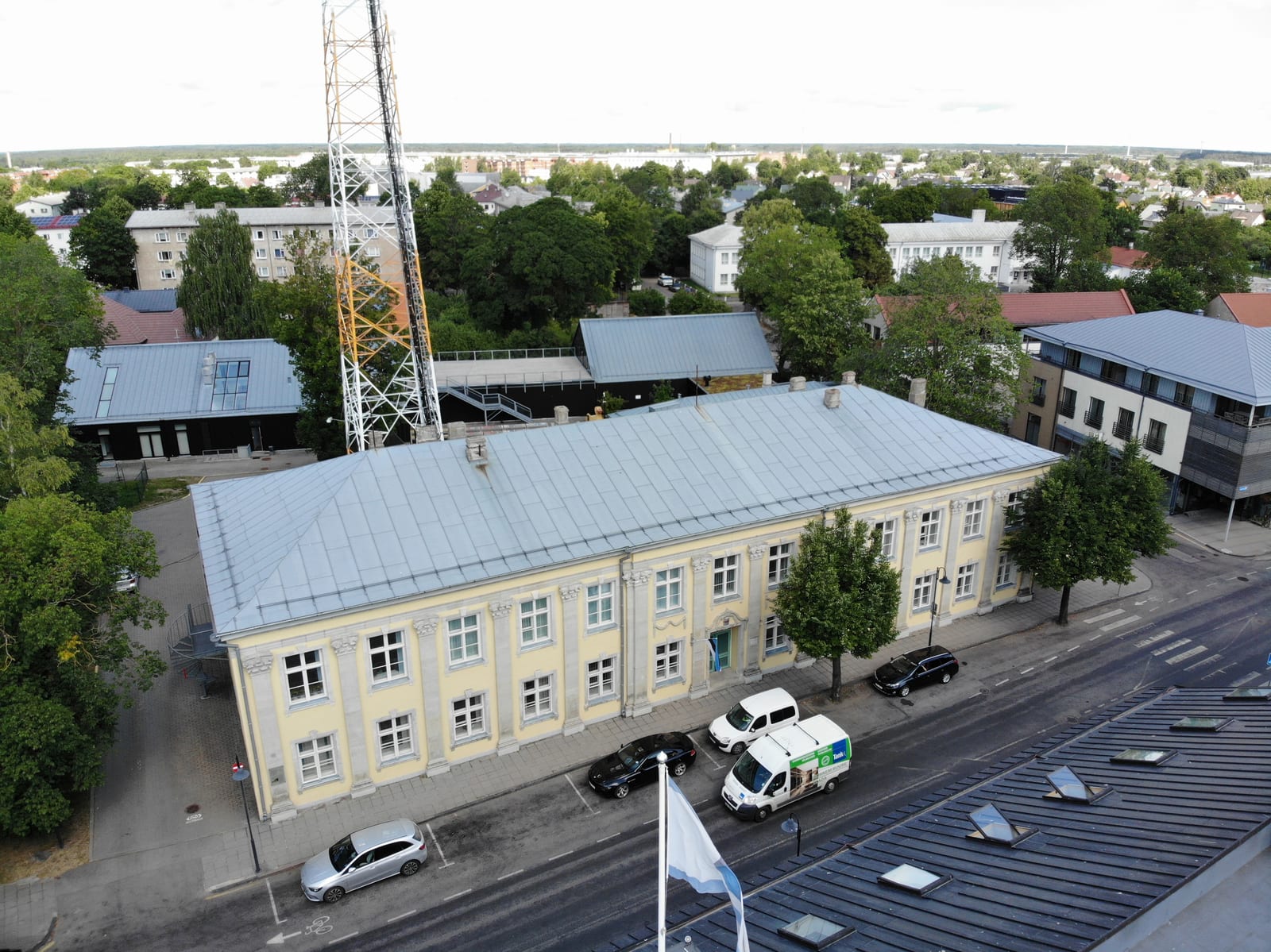
Tallinn University of Technology Kuressaare College · Photo: SaaremeesCC BY-SA 4.0
Applies everywhere on the site, on this device — change it any time.
Not set — every fee below is the international rate. Home and EU/EEA rates are often far lower.

courses

3 courses

BSc · 3 years · Engineering (General)

International tuition

€3,000 per term

~€18,000 for the whole 3 years, at today's fee
Verified

2026/27 · Faculty-wide rate · Non-EU students

TalTech sets tuition by Senate resolution as a per-semester fee for each School, not per programme: the cited row is 1.2 School of Engineering, whose 2026/2027-or-later rate is 3000 euros per semester. The columns run left to right from students enrolled in 2019/2020-2021/2022 through to those enrolling in 2026/2027 or later, so 3000 is the last figure in the row. Two semesters make the 6000 euros per year the programme page prints ("Tuition fee: 6000 per year; free for EU/EEA citizens"). EU citizens and permanent residents of Estonia studying in the School of Engineering pay nothing. Students from outside the EU must pay the tuition for two semesters before enrolment.

Show the fee on the university's site
Intake
August 2026
Source
Taught in
English
Source
Application deadline
1 April 2026 for non-EU citizens (application period 1 February - 1 April 2026). Non-EU applicants resident in Estonia, and citizens of OECD member states, Georgia and Ukraine, apply by 1 May 2026.
Source

Add to calendar

What you'll study

Not yet added.

Scholarships1 available
  • Success Scholarship

    200 euros per month.

    Eligibility: Enrolled TalTech students with excellent academic performance. Applications go through the study information system (SIS) in February and September; students are ranked by School on the grade point average of their last semester, so it is an award for students already studying rather than something an applicant can hold on arrival.

    TalTech states the total scholarship fund has not been increased, so the number of recipients is limited. TalTech publishes no grade ladder or fixed number of awards, and the university's scholarship regulation restricts eligibility to Estonian citizens and to students residing in Estonia on a residence permit or other legal basis - which an enrolled international student would hold. It is not a tuition waiver and does not reduce the fee above.

    Source
Entry requirementsEnglish · tests · grades · interview

English language

  • IELTS Academic, 6 overall, at least 5.5 in each component
  • TOEFL iBT, 75 overall
Source

Admissions tests

  • Proctored Online Test requiredA TalTech Moodle multiple-choice test covering secondary-school mathematics, physics, chemistry and IT, taken remotely under Proctorio invigilation with 30 minutes to complete it. At least 60 of 100 points are needed to be invited to the online interview. It is set and marked by TalTech itself, not a competitive national entrance examination, and it can be taken only once per application - a failed attempt caused by a poor connection does not earn a second chance.
Source

Academic offer

Secondary school diploma or equivalent with at least 60% of the highest possible CGPA. Below that, the bar can be met by a higher education degree averaging at least 60% of the maximum, but only if the secondary CGPA is not under 50%.
Source
Convert your grade to compare →

Interview

Online interview, held only for candidates who pass the proctored online test. Admission requires a combined score of at least 60 points across the test and the interview.
Source

BSc · 3 years · Cybersecurity, Computer Science

International tuition

€3,500 per term

~€21,000 for the whole 3 years, at today's fee
Verified

2026/27 · Faculty-wide rate · Non-EU students

TalTech sets tuition by Senate resolution as a per-semester fee for each School, not per programme: the cited row is 1.3 School of Information Technologies, whose 2026/2027-or-later rate is 3500 euros per semester - the last figure in the row, after five years held at 3000. Two semesters make the 7000 euros per year the programme page prints ("Tuition Fee: 7000 per year; free for EU/EEA citizens"). EU citizens and permanent residents of Estonia studying in the School of Information Technologies pay nothing. Students from outside the EU must pay the tuition for two semesters before enrolment.

Show the fee on the university's site
Intake
August 2026
Source
Taught in
English
Source
Application deadline
1 April 2026 for non-EU citizens (application period 1 February - 1 April 2026). Non-EU applicants resident in Estonia, and citizens of OECD member states, Georgia and Ukraine, apply by 1 May 2026.
Source

Add to calendar

What you'll study

Not yet added.

Scholarships1 available
  • Success Scholarship

    200 euros per month.

    Eligibility: Enrolled TalTech students with excellent academic performance. Applications go through the study information system (SIS) in February and September; students are ranked by School on the grade point average of their last semester, so it is an award for students already studying rather than something an applicant can hold on arrival.

    TalTech states the total scholarship fund has not been increased, so the number of recipients is limited. TalTech publishes no grade ladder or fixed number of awards, and the university's scholarship regulation restricts eligibility to Estonian citizens and to students residing in Estonia on a residence permit or other legal basis - which an enrolled international student would hold. It is not a tuition waiver and does not reduce the fee above.

    Source
Entry requirementsEnglish · tests · grades · interview

English language

  • IELTS Academic, 6 overall, at least 5.5 in each component
  • TOEFL iBT, 75 overall
Source

Admissions tests

  • Proctored Online Test requiredFive exercises on logic, algorithmic thinking and basic high-school mathematics, taken in TalTech Moodle under Proctorio invigilation with five hours allowed. At least 60 of 100 points are needed to reach the interview, and TalTech publishes a sample test. Set and marked by TalTech, not a competitive national entrance examination.
Source

Academic offer

Secondary school diploma or equivalent with at least 60% of the highest possible CGPA. Below that, the bar can be met by a higher education degree averaging at least 60% of the maximum, but only if the secondary CGPA is not under 50%.
Source
Convert your grade to compare →

Interview

Online interview of 20-25 minutes for candidates who pass the test, covering the motivation letter, English language skills and test results. Admission needs at least 60 points on the test and at least 60 points for the motivation letter and interview together.
Source

BA · 3 years · International Business, Business & Management

International tuition

€5,000 per year

~€15,000 for the whole 3 years, at today's fee
Published, undated

Priced for this course · All students — no separate international rate

TalTech publishes this figure without stating which year it applies to, so it may already be out of date. Treat it as a starting point and check the course page for the current rate. Flag it below if you know it has changed.

TalTech states this rate on the programme page as applying to EU/EEA and non-EU citizens alike, which is why it is recorded as all-students rather than international; it attaches no academic year to the figure, hence undated. TalTech's Senate fee resolution sets the underlying rate per semester for this programme code (TVTB) in the School of Business and Governance.

Show the fee on the university's site
Intake
August 2026
Source
Taught in
English
Source
Application deadline
1 April 2026 for non-EU citizens (application period 1 February - 1 April 2026). Non-EU applicants resident in Estonia, and citizens of OECD member states, Georgia and Ukraine, apply by 1 May 2026.
Source

Add to calendar

What you'll study

Not yet added.

Advertisement

More about TalTech

Student body

QS's own figures · QS World University Rankings 2027

Students
7,448
International students
725
≈10% of the student body (worked out here)
Faculty
724
International faculty
19%

These come from QS, not the university's own pages. Unlike every fee and deadline on this site. QS is the primary source for its own rankings and measurements, which is why it is cited here and rejected everywhere else.

Show the QS profile

About & contact

Tallinn, Estonia· view on Google Maps ↗taltech.ee

Find nearby

These open a map search near Tallinn. StudyPath isn't listing or vouching for specific places — what the university itself publishes about on-campus facilities appears under On-campus amenities, cited like everything else here.

No admissions email, phone number, or address verified for this university yet. Not yet collected, not necessarily unavailable.

Accommodation

€500–€750per month

typical off-campus rent for a small private flat in Tallinn

Published by the university itself, not a live listings price. Actual cost depends on room type, availability and when you apply.

Show the source

After you graduate

Rules read 17 Aug 2026

What Estonia's own immigration authority currently publishes. Not a ranking, not a guarantee, and not the same as what any agent or forum will tell you. Whether someone actually obtains residence depends on occupation, points, funds and policy that can change between application and graduation.

Work during study

A holder of a residence permit for study may work alongside their studies, but the rule is qualitative rather than an hours cap: employment must not interfere with the studies, and the holder must continue studying full-time. The Police and Border Guard Board's own page does not state a maximum weekly-hours figure for this — unlike several other countries in this dataset, Estonia's own stated rule is about not jeopardising full-time study status, not a numeric hours ceiling.

Show the source

Post-study work visa

Extended legal stay after a residence permit for study expires (no separate named visa; a statutory grace period under the Aliens Act) . Up to 9 months
When a residence permit for study (or, separately, for employment as a researcher) reaches its validity date and is not extended, its holder may remain legally in Estonia for up to 270 days (about 9 months) — longer than the ordinary 90-day grace period that applies after most other residence permits expire. This is not itself a work-authorising 'job search visa' in the way some other countries in this dataset grant one; it is a statutory window of continued lawful stay, intended to give a graduate time to find qualifying work and apply for a residence permit for employment (which includes 'graduates of Estonian higher education institutions' as one of its own explicitly named grounds) before having to leave.

Show the source

Route to permanent residence

Time spent in Estonia on a residence permit for study explicitly does not count toward the residence period required for the permanent-resident route — the Police and Border Guard Board states this directly. The standard route is a temporary residence permit for permanent residence, requiring at least 3 years of residence out of the preceding 5 consecutive years held on a residence permit or right of residence (of a kind other than for study), successful integration (an A2-level Estonian exam, waived if the applicant was educated in Estonian, plus completion of a basic adaptation-programme course), sufficient income, health insurance, and compliance with the conditions of whatever permit brought the applicant to that point. The page separately flags that special conditions apply to doctoral-degree holders, without detailing them further. Employment-based residence permits themselves are issued for up to 5 years and can be extended for up to 10 years at a time.

Show the source

Route to citizenship

Estonian citizenship by naturalisation is decided by the Police and Border Guard Board (PPA), the same authority that issues residence permits. An applicant must hold a long-term residence permit or the right of permanent residence, and must have lived in Estonia for at least 8 years before applying on the basis of a residence permit or right of residence, of which at least the last 5 years must have been on a permanent basis. Applicants must also pass an Estonian-language proficiency exam (waived if educated in Estonian), pass an exam on the Estonian Constitution and the Citizenship Act, have a permanent legal income, be registered in Estonia's population register, and be loyal to the Estonian state. Unlike most other countries in this dataset, Estonia does not generally allow dual citizenship for someone who naturalises: the PPA's own list of required application documents includes 'a document proving that the applicant has been released from citizenship of another state or will be released from such citizenship in relation to the acquisition of Estonian citizenship' — i.e. proof of renunciation is a standard part of the application. The PPA carves out only narrow exceptions to this document requirement: a person granted international protection whose home-country situation has not changed, and a person who has been declared to have undetermined citizenship (a status that exists in Estonia, chiefly affecting some Russian-speaking residents without any citizenship to renounce).

Show the source

Read 17 August 2026. inDemandOccupations is deliberately left null: Estonia's residence permit for employment is gated primarily on a salary floor (the employer must pay at least the average gross salary in Estonia, 'subject to exceptions' not detailed on the page found this pass) across a list of named employment grounds — skilled workers, top specialists, start-up employees, scientists/lecturers, and, notably for this dataset, 'graduates of Estonian higher education institutions' as its own distinct ground — rather than a published shortage-occupation or priority list. No page on politsei.ee or studyinestonia.ee found this pass named or linked to such a list. All figures in this entry are cited to politsei.ee (Politsei- ja Piirivalveamet, the Police and Border Guard Board, Estonia's actual immigration-granting authority) — studyinestonia.ee, the other pre-approved domain for Estonia, was checked but its 'Working' page duplicates rather than adds to what politsei.ee already states more precisely, so it was not separately cited. Estonia does not appear in this dataset's university list yet, so this entry is general country-level context, collected the same way Ireland's, Finland's and the Netherlands' were. citizenshipRoute added 17 August 2026, cited to politsei.ee's own 'Estonian citizenship for an adult' pages (both the Conditions tab, 8f2096279fa8e5fd, for the 8-year/5-year-permanent residence split, and the Application tab, 51d3f059c9ff758d, for the renunciation-document requirement and its exceptions) — both already-allowed under this dataset's existing politsei.ee entry. This page is a client-side-routed multi-tab document (Conditions / Exams / Application / Process / ID card and passport / Certificate on citizenship all share one URL path structure with sub-paths), so each tab was captured separately via the project's browser fallback rather than in one fetch. naturalisationStatus set to 'published-route' on 18 August 2026: the authority already cited under citizenshipRoute publishes criteria a foreign resident could actually follow, which is the only claim this field makes. It is deliberately not a judgement about how attainable that route is in practice. Recorded as a published route even though Estonia requires proof of release from the applicant's previous citizenship as a standard application document: that is a condition attached to the route, not evidence that no route exists. citizenshipTerms cites the already-archived PPA conditions page (snapshot 8f2096279fa8e5fd), which states the 8-year period; the application-documents page cited by citizenshipRoute states the renunciation requirement instead. Both are the same PPA instruction set. studentVisaFunds deliberately left empty, 19 August 2026, after checking: Estonia states the rule as a multiplier, not a sum. The Police and Border Guard Board’s residence-permit-for-study page (snapshot cd9562f377b49acc) says the applicant must have "sufficient income (four times the subsistence level) to support yourself in Estonia", and that "The subsistence level is established annually by the State Budget Act" — so the page carries no euro figure at all. Producing one would mean this project multiplying a rate out of a different document, which is exactly the kind of derived number the schema forbids. If a future collector finds a Politsei- or State-Budget-published euro amount stated as the student requirement, that can be recorded; the multiplier alone cannot.

Open the immigration authority's own page ↗
Advertisement

Student photos

Contributed by students and applicants. Not checked the way the campus photos above are, just real photos from people who've actually been here.

Loading…

What students say about TalTech

Opinions from students and applicants. Not checked against the university's own pages the way the fees and deadlines above are.

to write a review. Signing in with your university email marks you as a verified student here.

Loading reviews…