Still growing.New universities and courses are added most weekdays (not weekends), each checked against the university's own page before it goes live β€” worth checking back. Sources last read 13 Sept 2026. How we verify β†’

StudyPath
QS #851-900Sunshine Coast, AustraliaΒ· QS World University Rankings 2027

University of the Sunshine Coast

University of the Sunshine Coast, in Sunshine Coast, Australia, has 11 undergraduate courses listed on StudyPath. International tuition runs from A$28,500 to A$33,500 a year depending on the course. UniSC publishes its own accommodation prices, from A$85 per week. All of them publish an application deadline. 2 named scholarships are recorded against these courses. Every figure above was read from UniSC's own published pages and last checked on 19 August 2026.

Courses
11
Fees verified
11 / 11
Scholarship entries
22
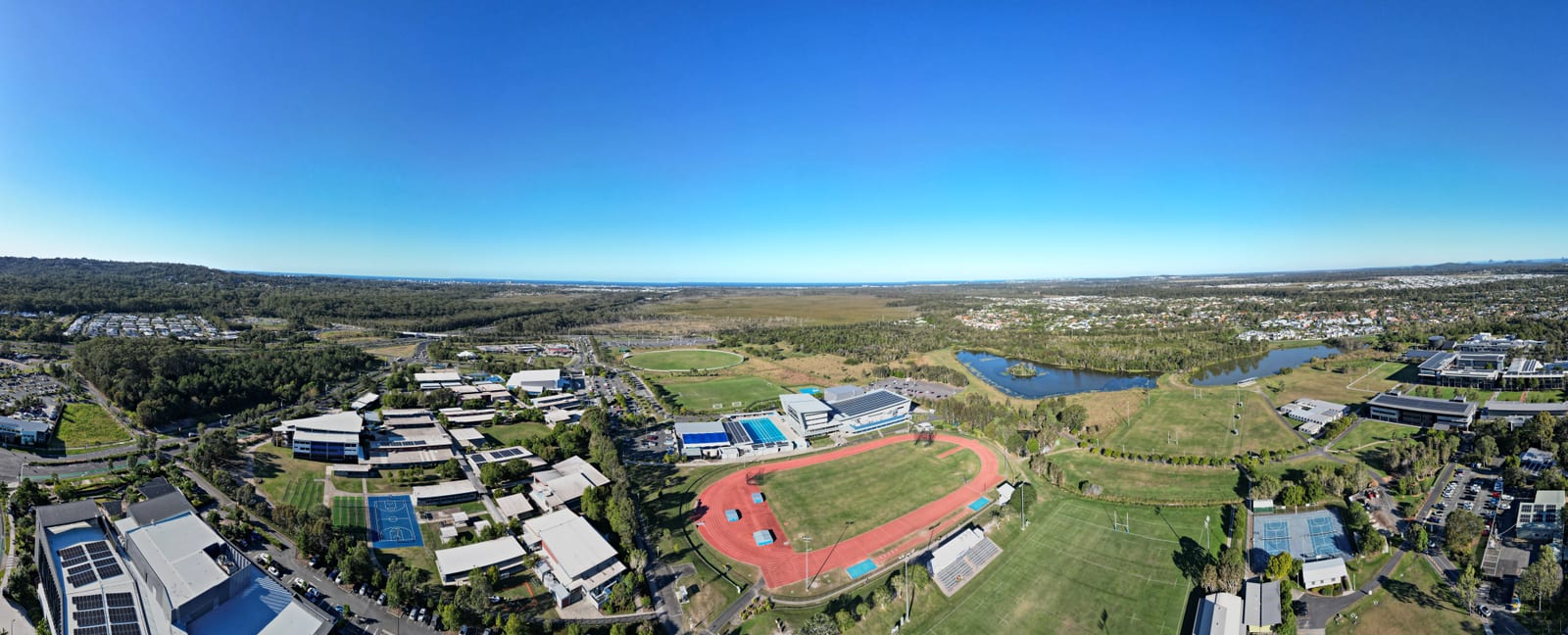
Aerial vista of Sunshine Coast University and its surrounds. 2023. Verified
Aerial vista of Sunshine Coast University and its surrounds. 2023. Β· Photo: Bob TanCC BY 4.0
Applies everywhere on the site, on this device β€” change it any time.
Not set β€” every fee below is the international rate. Home and EU/EEA rates are often far lower.

courses

11 courses

BCompSc Β· 3 years Β· Computer Science

International tuition

A$30,500 per year

~A$91,500 for the whole 3 years, at today's fee
Verified

2026 Β· Priced for this course Β· International students

UniSC publishes this as the 'Annual tuition fee (A$, 2026)' for international fee-paying students, distinct from the much lower domestic 'CSP estimate' (A$8,336) shown alongside it on the same page. The page's own fee methodology note states 'Annual tuition fees are based on 2025 rates and the equivalent full-time student load as per the recommended study sequence in the relevant program' even though the labelled figure is presented as the 2026 rate; quoted here exactly as UniSC states it. Only offered at UniSC's Moreton Bay campus; international students on a Student visa must study full-time and on-campus. Actual fees vary with courses selected and enrolment load.

Show the fee on the university's site
Intake
March (Trimester 1), July (Trimester 2)
Source
Taught in
English
Source
Application deadline
UniSC's own International Application dates page does not publish a fixed on-time closing date for the international-student category for any 2026/2027 trimester or session intake β€” the 'International Students' row for every listed intake simply reads 'Contact UniSC International', unlike domestic categories, which do have fixed on-time due dates (e.g. 27 November 2026 for direct undergraduate applicants starting Trimester 1, 2027). Prospective international applicants should contact UniSC International directly to confirm processing timelines for their intended trimester.
Source

Scholarships2 available
  • International Student Scholarship

    15% tuition fee reduction, automatically included in the offer.

    Eligibility: Automatically applied to commencing international students in 2026 β€” no application or merit threshold required.

    Cannot be used together with the International Bright Futures Scholarship or any other UniSC international tuition fee reduction.

    Source
  • International Bright Futures Scholarship

    20% tuition fee reduction, automatically included in the offer if eligible.

    Eligibility: Awarded to commencing international students in 2026 who are citizens of Brunei Darussalam, Cambodia, Indonesia, Laos, Malaysia, the Philippines, Singapore, Thailand, Timor-Leste or Vietnam. (The scholarship's alternative eligibility route β€” enrolling in specific newly-launched programs β€” covers only Bachelor of Education Studies (Early Childhood) and several named Master's programs, none of which are STEM bachelor's degrees.)

    The cited page lists the specific eligible countries and eligible programs immediately below the sentence quoted here (omitted from the quote only to stay under this dataset's quote-length limit β€” the full list was read directly from the archived snapshot). Cannot be used together with the International Student Scholarship or any other UniSC international tuition fee reduction. Eligible citizenships are subject to change; confirm current eligibility with UniSC International.

    Source
Entry requirementsEnglish Β· grades

English language

  • IELTS Academic, 6 overall, minimum 5.5 in each subtest
  • TOEFL iBT, 76 overall, minimum score of 18 for writing
Source

Academic offer

Minimum ATAR/Selection Rank of 60.00 (Moreton Bay campus, the only campus this program is offered at). Prerequisite: English (Units 3 and 4, grade C). Recommended prior study: Maths Methods and/or Specialist Maths.
Source
Convert your grade to compare β†’

BICT Β· 3 years Β· Information Systems

International tuition

A$28,500 per year

~A$85,500 for the whole 3 years, at today's fee
Verified

2026 Β· Priced for this course Β· International students

UniSC publishes this as the 'Annual tuition fee (A$, 2026)' for international fee-paying students, distinct from the much lower domestic 'CSP estimate' (A$10,519) shown alongside it on the same page. The page's own fee methodology note states 'Annual tuition fees are based on 2025 rates and the equivalent full-time student load as per the recommended study sequence in the relevant program' even though the labelled figure is presented as the 2026 rate; quoted here exactly as UniSC states it. Offered on-campus at Sunshine Coast, Moreton Bay and UniSC Adelaide (Adelaide is offered to international students only); online study is not available to Student visa holders. Actual fees vary with courses selected and enrolment load.

Show the fee on the university's site
Intake
March (Trimester 1), July (Trimester 2)
Source
Taught in
English
Source
Application deadline
UniSC's own International Application dates page does not publish a fixed on-time closing date for the international-student category for any 2026/2027 trimester or session intake β€” the 'International Students' row for every listed intake simply reads 'Contact UniSC International', unlike domestic categories, which do have fixed on-time due dates (e.g. 27 November 2026 for direct undergraduate applicants starting Trimester 1, 2027). Prospective international applicants should contact UniSC International directly to confirm processing timelines for their intended trimester.
Source

Scholarships2 available
  • International Student Scholarship

    15% tuition fee reduction, automatically included in the offer.

    Eligibility: Automatically applied to commencing international students in 2026 β€” no application or merit threshold required.

    Cannot be used together with the International Bright Futures Scholarship or any other UniSC international tuition fee reduction.

    Source
  • International Bright Futures Scholarship

    20% tuition fee reduction, automatically included in the offer if eligible.

    Eligibility: Awarded to commencing international students in 2026 who are citizens of Brunei Darussalam, Cambodia, Indonesia, Laos, Malaysia, the Philippines, Singapore, Thailand, Timor-Leste or Vietnam. (The scholarship's alternative eligibility route β€” enrolling in specific newly-launched programs β€” covers only Bachelor of Education Studies (Early Childhood) and several named Master's programs, none of which are STEM bachelor's degrees.)

    The cited page lists the specific eligible countries and eligible programs immediately below the sentence quoted here (omitted from the quote only to stay under this dataset's quote-length limit β€” the full list was read directly from the archived snapshot). Cannot be used together with the International Student Scholarship or any other UniSC international tuition fee reduction. Eligible citizenships are subject to change; confirm current eligibility with UniSC International.

    Source
Entry requirementsEnglish Β· grades

English language

  • IELTS Academic, 6 overall, minimum 5.5 in each subtest
  • TOEFL iBT, 76 overall, minimum score of 18 for writing
Source

Academic offer

Minimum ATAR/Selection Rank of 50.00 at Sunshine Coast, Moreton Bay, Online and Adelaide campuses. No separate subject prerequisite is listed; recommended prior study is English, and General Maths, Maths Methods or Specialist Maths.
Source
Convert your grade to compare β†’

BEng (Hons) Β· 4 years Β· Civil Engineering

International tuition

A$33,500 per year

~A$134,000 for the whole 4 years, at today's fee
Verified

2026 Β· Priced for this course Β· International students

UniSC publishes this as the 'Annual tuition fee (A$, 2026)' for international fee-paying students, distinct from the much lower domestic 'CSP estimate' (A$8,336) shown alongside it on the same page. The page's own fee methodology note states 'Annual tuition fees are based on 2025 rates and the equivalent full-time student load as per the recommended study sequence in the relevant program' even though the labelled figure is presented as the 2026 rate; quoted here exactly as UniSC states it. Offered on-campus at Sunshine Coast and Moreton Bay; international students on a Student visa must study full-time and on-campus. Includes a minimum 60 days of work experience. Actual fees vary with courses selected and enrolment load.

Show the fee on the university's site
Intake
March (Trimester 1), July (Trimester 2)
Source
Taught in
English
Source
Application deadline
UniSC's own International Application dates page does not publish a fixed on-time closing date for the international-student category for any 2026/2027 trimester or session intake β€” the 'International Students' row for every listed intake simply reads 'Contact UniSC International', unlike domestic categories, which do have fixed on-time due dates (e.g. 27 November 2026 for direct undergraduate applicants starting Trimester 1, 2027). Prospective international applicants should contact UniSC International directly to confirm processing timelines for their intended trimester.
Source

Scholarships2 available
  • International Student Scholarship

    15% tuition fee reduction, automatically included in the offer.

    Eligibility: Automatically applied to commencing international students in 2026 β€” no application or merit threshold required.

    Cannot be used together with the International Bright Futures Scholarship or any other UniSC international tuition fee reduction.

    Source
  • International Bright Futures Scholarship

    20% tuition fee reduction, automatically included in the offer if eligible.

    Eligibility: Awarded to commencing international students in 2026 who are citizens of Brunei Darussalam, Cambodia, Indonesia, Laos, Malaysia, the Philippines, Singapore, Thailand, Timor-Leste or Vietnam. (The scholarship's alternative eligibility route β€” enrolling in specific newly-launched programs β€” covers only Bachelor of Education Studies (Early Childhood) and several named Master's programs, none of which are STEM bachelor's degrees.)

    The cited page lists the specific eligible countries and eligible programs immediately below the sentence quoted here (omitted from the quote only to stay under this dataset's quote-length limit β€” the full list was read directly from the archived snapshot). Cannot be used together with the International Student Scholarship or any other UniSC international tuition fee reduction. Eligible citizenships are subject to change; confirm current eligibility with UniSC International.

    Source
Entry requirementsEnglish Β· grades

English language

  • IELTS Academic, 6 overall, minimum 5.5 in each subtest
  • TOEFL iBT, 76 overall, minimum score of 18 for writing
Source

Academic offer

Minimum ATAR/Selection Rank of 60.00 at Sunshine Coast and Moreton Bay campuses. Prerequisite: English (Units 3 and 4, grade C). Recommended prior study: Maths Methods and/or Specialist Maths, and Physics or Chemistry. Post-admission requirement: a minimum of 60 days of suitable field experience must be completed.
Source
Convert your grade to compare β†’

BEng (Hons) Β· 4 years Β· Mechanical Engineering

International tuition

A$33,500 per year

~A$134,000 for the whole 4 years, at today's fee
Verified

2026 Β· Priced for this course Β· International students

UniSC publishes this as the 'Annual tuition fee (A$, 2026)' for international fee-paying students, distinct from the much lower domestic 'CSP estimate' (A$8,336) shown alongside it on the same page. The page's own fee methodology note states 'Annual tuition fees are based on 2025 rates and the equivalent full-time student load as per the recommended study sequence in the relevant program' even though the labelled figure is presented as the 2026 rate; quoted here exactly as UniSC states it. Offered on-campus at Sunshine Coast and Moreton Bay; international students on a Student visa must study full-time and on-campus. Includes a minimum 60 days of work experience. Actual fees vary with courses selected and enrolment load.

Show the fee on the university's site
Intake
March (Trimester 1), July (Trimester 2)
Source
Taught in
English
Source
Application deadline
UniSC's own International Application dates page does not publish a fixed on-time closing date for the international-student category for any 2026/2027 trimester or session intake β€” the 'International Students' row for every listed intake simply reads 'Contact UniSC International', unlike domestic categories, which do have fixed on-time due dates (e.g. 27 November 2026 for direct undergraduate applicants starting Trimester 1, 2027). Prospective international applicants should contact UniSC International directly to confirm processing timelines for their intended trimester.
Source

Scholarships2 available
  • International Student Scholarship

    15% tuition fee reduction, automatically included in the offer.

    Eligibility: Automatically applied to commencing international students in 2026 β€” no application or merit threshold required.

    Cannot be used together with the International Bright Futures Scholarship or any other UniSC international tuition fee reduction.

    Source
  • International Bright Futures Scholarship

    20% tuition fee reduction, automatically included in the offer if eligible.

    Eligibility: Awarded to commencing international students in 2026 who are citizens of Brunei Darussalam, Cambodia, Indonesia, Laos, Malaysia, the Philippines, Singapore, Thailand, Timor-Leste or Vietnam. (The scholarship's alternative eligibility route β€” enrolling in specific newly-launched programs β€” covers only Bachelor of Education Studies (Early Childhood) and several named Master's programs, none of which are STEM bachelor's degrees.)

    The cited page lists the specific eligible countries and eligible programs immediately below the sentence quoted here (omitted from the quote only to stay under this dataset's quote-length limit β€” the full list was read directly from the archived snapshot). Cannot be used together with the International Student Scholarship or any other UniSC international tuition fee reduction. Eligible citizenships are subject to change; confirm current eligibility with UniSC International.

    Source
Entry requirementsEnglish Β· grades

English language

  • IELTS Academic, 6 overall, minimum 5.5 in each subtest
  • TOEFL iBT, 76 overall, minimum score of 18 for writing
Source

Academic offer

Minimum ATAR/Selection Rank of 60.00 at Sunshine Coast and Moreton Bay campuses. Prerequisite: English (Units 3 and 4, grade C). Recommended prior study: Maths Methods and/or Specialist Maths, and Physics or Chemistry. Post-admission requirement: a minimum of 60 days of suitable field experience must be completed. High-achieving mathematics students may apply for exemption from introductory maths/calculus courses.
Source
Convert your grade to compare β†’

BEng (Hons) Β· 4 years Β· Electrical & Electronic Engineering

International tuition

A$33,500 per year

~A$134,000 for the whole 4 years, at today's fee
Verified

2026 Β· Priced for this course Β· International students

UniSC publishes this as the 'Annual tuition fee (A$, 2026)' for international fee-paying students, distinct from the much lower domestic 'CSP estimate' (A$8,336) shown alongside it on the same page. The page's own fee methodology note states 'Annual tuition fees are based on 2025 rates and the equivalent full-time student load as per the recommended study sequence in the relevant program' even though the labelled figure is presented as the 2026 rate; quoted here exactly as UniSC states it. Only offered at UniSC's Moreton Bay campus; international students on a Student visa must study full-time and on-campus. Actual fees vary with courses selected and enrolment load.

Show the fee on the university's site
Intake
March (Trimester 1), July (Trimester 2)
Source
Taught in
English
Source
Application deadline
UniSC's own International Application dates page does not publish a fixed on-time closing date for the international-student category for any 2026/2027 trimester or session intake β€” the 'International Students' row for every listed intake simply reads 'Contact UniSC International', unlike domestic categories, which do have fixed on-time due dates (e.g. 27 November 2026 for direct undergraduate applicants starting Trimester 1, 2027). Prospective international applicants should contact UniSC International directly to confirm processing timelines for their intended trimester.
Source

Scholarships2 available
  • International Student Scholarship

    15% tuition fee reduction, automatically included in the offer.

    Eligibility: Automatically applied to commencing international students in 2026 β€” no application or merit threshold required.

    Cannot be used together with the International Bright Futures Scholarship or any other UniSC international tuition fee reduction.

    Source
  • International Bright Futures Scholarship

    20% tuition fee reduction, automatically included in the offer if eligible.

    Eligibility: Awarded to commencing international students in 2026 who are citizens of Brunei Darussalam, Cambodia, Indonesia, Laos, Malaysia, the Philippines, Singapore, Thailand, Timor-Leste or Vietnam. (The scholarship's alternative eligibility route β€” enrolling in specific newly-launched programs β€” covers only Bachelor of Education Studies (Early Childhood) and several named Master's programs, none of which are STEM bachelor's degrees.)

    The cited page lists the specific eligible countries and eligible programs immediately below the sentence quoted here (omitted from the quote only to stay under this dataset's quote-length limit β€” the full list was read directly from the archived snapshot). Cannot be used together with the International Student Scholarship or any other UniSC international tuition fee reduction. Eligible citizenships are subject to change; confirm current eligibility with UniSC International.

    Source
Entry requirementsEnglish Β· grades

English language

  • IELTS Academic, 6 overall, minimum 5.5 in each subtest
  • TOEFL iBT, 76 overall, minimum score of 18 for writing
Source

Academic offer

Minimum ATAR/Selection Rank of 60.00 (Moreton Bay campus, the only campus this program is offered at). Prerequisite: English (Units 3 and 4, grade C). Recommended prior study: Maths Methods and/or Specialist Maths, and Physics or Chemistry. Post-admission requirement: a minimum of 60 days of suitable engineering work experience must be completed.
Source
Convert your grade to compare β†’

BEng (Hons) Β· 4 years Β· Electrical & Electronic Engineering, Mechatronic Engineering

International tuition

A$33,500 per year

~A$134,000 for the whole 4 years, at today's fee
Verified

2026 Β· Priced for this course Β· International students

UniSC publishes this as the 'Annual tuition fee (A$, 2026)' for international fee-paying students, distinct from the much lower domestic 'CSP estimate' (A$8,336) shown alongside it on the same page. The page's own fee methodology note states 'Annual tuition fees are based on 2025 rates and the equivalent full-time student load as per the recommended study sequence in the relevant program' even though the labelled figure is presented as the 2026 rate; quoted here exactly as UniSC states it. Only offered at UniSC's Moreton Bay campus; international students on a Student visa must study full-time and on-campus. Actual fees vary with courses selected and enrolment load.

Show the fee on the university's site
Intake
March (Trimester 1), July (Trimester 2)
Source
Taught in
English
Source
Application deadline
UniSC's own International Application dates page does not publish a fixed on-time closing date for the international-student category for any 2026/2027 trimester or session intake β€” the 'International Students' row for every listed intake simply reads 'Contact UniSC International', unlike domestic categories, which do have fixed on-time due dates (e.g. 27 November 2026 for direct undergraduate applicants starting Trimester 1, 2027). Prospective international applicants should contact UniSC International directly to confirm processing timelines for their intended trimester.
Source

Scholarships2 available
  • International Student Scholarship

    15% tuition fee reduction, automatically included in the offer.

    Eligibility: Automatically applied to commencing international students in 2026 β€” no application or merit threshold required.

    Cannot be used together with the International Bright Futures Scholarship or any other UniSC international tuition fee reduction.

    Source
  • International Bright Futures Scholarship

    20% tuition fee reduction, automatically included in the offer if eligible.

    Eligibility: Awarded to commencing international students in 2026 who are citizens of Brunei Darussalam, Cambodia, Indonesia, Laos, Malaysia, the Philippines, Singapore, Thailand, Timor-Leste or Vietnam. (The scholarship's alternative eligibility route β€” enrolling in specific newly-launched programs β€” covers only Bachelor of Education Studies (Early Childhood) and several named Master's programs, none of which are STEM bachelor's degrees.)

    The cited page lists the specific eligible countries and eligible programs immediately below the sentence quoted here (omitted from the quote only to stay under this dataset's quote-length limit β€” the full list was read directly from the archived snapshot). Cannot be used together with the International Student Scholarship or any other UniSC international tuition fee reduction. Eligible citizenships are subject to change; confirm current eligibility with UniSC International.

    Source
Entry requirementsEnglish Β· grades

English language

  • IELTS Academic, 6 overall, minimum 5.5 in each subtest
  • TOEFL iBT, 76 overall, minimum score of 18 for writing
Source

Academic offer

Minimum ATAR/Selection Rank of 60.00 (Moreton Bay campus, the only campus this program is offered at). Prerequisite: English (Units 3 and 4, grade C). Recommended prior study: Maths Methods and/or Specialist Maths, and Physics or Chemistry. Post-admission requirement: a minimum of 60 days of suitable engineering work experience must be completed.
Source
Convert your grade to compare β†’

Advertisement

More about UniSC

Student body

QS's own figures Β· QS World University Rankings 2027

Students
10,875
International students
1,059
β‰ˆ10% of the student body (worked out here)
Faculty
450
International faculty
19%

These come from QS, not the university's own pages. Unlike every fee and deadline on this site. QS is the primary source for its own rankings and measurements, which is why it is cited here and rejected everywhere else.

Show the QS profile

About & contact

Sunshine Coast, AustraliaΒ· view on Google Maps β†—unisc.edu.au β†—

Find nearby

These open a map search near Sunshine Coast. StudyPath isn't listing or vouching for specific places β€” what the university itself publishes about on-campus facilities appears under On-campus amenities, cited like everything else here.

No admissions email, phone number, or address verified for this university yet. Not yet collected, not necessarily unavailable.

Accommodation

A$85–A$300per week

Typical off-campus private share accommodation for international students near UniSC campuses, as published in UniSC's own international living-costs guide. UniSC does not itself own or administer student accommodation β€” it is privately arranged between students and providers β€” so no on-campus halls rate exists to cite instead.

UniSC's own guidance is that an international student would normally need approximately A$450–500 per week in total to live comfortably on the Sunshine Coast, covering accommodation, food, transport and other daily costs; the private-share range recorded here is the accommodation component of that guide, and the same page also lists homestay accommodation (which may include some meals) at A$235–325+ per week.

Published by the university itself, not a live listings price. Actual cost depends on room type, availability and when you apply.

Show the source

Search student housing near Sunshine Coast β†’ (partner link)

After you graduate

Rules read 16 Aug 2026

What Australia's own immigration authority currently publishes. Not a ranking, not a guarantee, and not the same as what any agent or forum will tell you. Whether someone actually obtains residence depends on occupation, points, funds and policy that can change between application and graduation.

Money you must prove before the visa

A$29,71012 months of living costs, for the student alone β€” course fees, travel and any school fees for accompanying children are counted separately and on top

Shown as a balance in a bank account. You keep control of it.

Figure published for: 10 May 2024 β€” the Department's own announcement is headed 'From 10 May 2024, the amount of money that Student and Student Guardian visa applicants need to have to be eligible for the visa is increasing', raising the primary applicant's figure from AUD24,505 to AUD29,710, and says applications lodged before that date are assessed under the earlier requirement. Still the published figure on the Subclass 500 page when read on 19 August 2026. It is set by Legislative Instrument LIN 19/198 as amended and is pegged to 75 per cent of the national minimum wage, so it moves when that wage does. This amount is revised regularly, so check it again before you transfer anything.

AUD29,710 is living costs only. The Department requires the applicant to hold enough for travel, 12 months of course fees (or the total if the course is shorter, less anything already paid and evidenced), 12 months of living costs for the student and anyone coming with them, and school fees for any school-age child. Family members add to it: AUD10,394 for a partner, AUD4,449 for a child, and at least AUD13,502 a year in school costs per school-age child. Travel costs to include as a guide are AUD2,000 applying from outside Australia, AUD2,500 from East or Southern Africa, AUD3,000 from West Africa, AUD1,000 applying inside Australia. A shorter stay is pro-rated: annual cost divided by 365, multiplied by the days intended. An alternative to showing savings is evidence that a parent or partner earned a personal annual income of at least AUD87,856 in the 12 months before applying, or AUD102,500 if family members come too β€” evidenced by official government documents such as a tax assessment less than 12 months old, not by bank statements or an employer's letter. Genuine access must also be proved: a single-day bank balance certificate is explicitly not enough, because it does not show how the funds accumulated. Secondary exchange students may instead give a completed AASES form, and DFAT or Department of Defence students a letter of support. Whether evidence must be attached up front depends on the Document Checklist Tool for the applicant's passport country and provider β€” but the Department may still ask for it later, and subsequent entrants must always attach it.

Show the source
Compare this against other countries β†’

Australia also requires proof of health cover for this visa. See what's required β†’

Work during study

Student visa (subclass 500) holders may work up to 48 hours per fortnight while their course is in session β€” a limit that applies during study terms and semesters (including exam periods), before the course starts (unless a different visa already permits work), and when taking a term-break course that counts toward the main course (unless CRICOS requires it). Working more than 48 hours a fortnight during these periods breaches the visa condition and can lead to visa cancellation. At other times β€” including scheduled course breaks β€” there is no work-hour limit on a student visa. A student who has started a Master's by Research or Doctoral degree has no work-hour limit at any time once the course has started.

Show the source

Post-study work visa

Temporary Graduate visa (subclass 485) β€” Post-Higher Education Work stream . Up to 3 years
For international students who have recently graduated with a degree-level qualification or higher (bachelor's, master's or doctoral) in a CRICOS-registered course from an Australian institution. Applicants must generally be aged 35 or under and have held a Student visa in the last 6 months. Grants the right to live, work (unrestricted hours, any sector) and study in Australia temporarily, usually for between 2 and 3 years depending on the qualification (Hong Kong and British National (Overseas) passport holders may be granted up to 5 years). A separate, shorter Post-Vocational Education Work stream (up to 18 months) exists for associate degree, diploma or trade-qualification graduates whose qualification is tied to a nominated occupation on the skilled occupation list.

Show the source

Route to permanent residence

Australia does not grant permanent residence automatically at the end of a Temporary Graduate visa. A graduate must separately qualify for one of the permanent or provisional skilled-visa programs gated by the country's combined list of eligible skilled occupations β€” for example the points-tested Skilled Independent visa (subclass 189), the state/territory-nominated Skilled Nominated visa (subclass 190), employer-sponsored routes such as the Employer Nomination Scheme (subclass 186), or the Skills in Demand visa (subclass 482) Core Skills Stream, which an eligible Temporary Graduate visa holder who finds skilled work may be able to apply for while still in Australia. Each program requires the applicant's nominated occupation to appear on the relevant occupation list for that specific visa.

Show the source

Route to citizenship

Australian citizenship by conferral is granted by the Department of Home Affairs, the same department that runs the visa system. The general residence requirement is having lived in Australia on a valid visa for the 4 years immediately before applying, holding a permanent visa (or a New Zealand citizen's Special Category subclass 444 visa) for the last 12 months of that period, and not having been absent from Australia for more than 12 months in total across the 4 years, including no more than 90 days in the 12 months immediately before applying. Applicants must also meet separate character, 'knowledge of Australia,' English-language and 'close and continuing link to Australia' requirements (most commonly demonstrated through the citizenship test). Australia has permitted dual citizenship since April 2002: on the Department's own dual-citizen travel page it states plainly that Australia allows a person to have dual citizenship, while noting some other countries do not, so becoming an Australian citizen does not require renouncing another nationality.

Show the source

What the government currently prioritises

Australia's skilled-visa programs gate eligibility by occupation, using a combined list of eligible skilled occupations coded to the Australian and New Zealand Standard Classification of Occupations (ANZSCO). Depending on the specific visa, the relevant list is the Core Skills Occupation List (CSOL, used for the Skills in Demand visa's Core Skills Stream), the Medium and Long-term Strategic Skills List (MLTSSL) or Short-term Skilled Occupation List (STSOL) used by the points-tested and state/territory-nominated skilled visas, or a Regional Occupation List (ROL) for regional visas. Which list an occupation sits on β€” or whether it is on any list at all β€” can change; the current lists are published in each visa's legislative instrument rather than in one fixed table on this page. Reading the Department's own published CSOL directly (a 456-occupation ANZSCO table) confirms engineering and ICT occupations are heavily represented, as this dataset's brief expected: named engineering occupations include Chemical, Materials, Civil, Geotechnical, Structural, Transport, Electrical, Electronics, Industrial, Mechanical, Production/Plant, Mining, Petroleum, Aeronautical, Agricultural, Biomedical and Environmental Engineer, plus Engineering Technologist; named ICT occupations include ICT Business Analyst, Systems Analyst, Web Developer, Analyst Programmer, Developer Programmer, Software Engineer, Software Tester, Cyber Security Engineer, DevOps Engineer, Penetration Tester, Database Administrator, Systems Administrator, several named cyber-security specialisms, and Computer Network and Systems Engineer. Being on the CSOL is necessary but not sufficient on its own β€” which visa (if any) it actually unlocks depends on the specific programme (see residencyRoute) β€” and it is a list of eligible occupations, not a job or salary guarantee.

Show the source

The Skills in Demand (subclass 482) visa replaced the Temporary Skill Shortage (subclass 482) visa on 7 December 2024, and the Temporary Graduate visa (subclass 485) was restructured into named streams β€” Post-Higher Education Work (degree-level graduates) and Post-Vocational Education Work (associate degree/diploma/trade graduates tied to a nominated occupation) β€” with shorter maximum stays than the visa previously granted. Some government-linked pages not yet updated for that restructure still refer to a 'Post-Study Work stream' by its pre-restructure name; this entry uses the current stream name and durations as published on the pages cited above. Read 16 August 2026 β€” Australia's post-study work settings have changed more than once in the last two years and should be re-checked before anyone relies on this. Deepening pass, 17 August 2026: inDemandOccupations re-cited directly to the Department of Home Affairs' own published Core Skills Occupation List PDF (immi.homeaffairs.gov.au/Documents/core-sol.pdf, 456 occupations) rather than only its own overview page, to name the actual engineering and ICT occupations on it. The PDF returned only raw binary bytes to this project's default fetcher and to WebFetch (HTTP 403); it was downloaded with curl and converted with pdftotext (poppler-utils, -enc UTF-8 -layout), then archived over the same snapshot ID via fetch-source.mjs --save, the same pattern used for Italian- and Korean-government PDFs in the original residency-pathways pass β€” flagged here for a future collector processing another Home Affairs PDF. citizenshipRoute added 17 August 2026: the 4-year residence quote is cited to immi.homeaffairs.gov.au's own 'Become an Australian citizen (by conferral)' page (3854466f05248e57) β€” its Eligibility tab is a set of nested accordions with no static HTML text, so it was captured with the project's browser fallback after expanding the Residence requirement panel. The dual-citizenship statement ('Australia allows a person to have dual citizenship. Some countries do not.') was separately archived from the same Department's entering-and-leaving-australia/traveling-as-a-dual-citizen page (1097061b02b91fa4, also browser-captured) rather than folded into one citation, since the two facts sit on different pages of the same official domain. naturalisationStatus set to 'published-route' on 18 August 2026: the authority already cited under citizenshipRoute publishes criteria a foreign resident could actually follow, which is the only claim this field makes. It is deliberately not a judgement about how attainable that route is in practice. studentVisaFunds added 19 August 2026. Capture note, because it is unusual: immi.homeaffairs.gov.au assembles this page client-side from a JSON payload, so plain HTTP fetching returns a shell with none of the financial-capacity content in it β€” the project's own fetcher produced a 3,480-character snapshot containing no figures at all. The figure was therefore read in a real browser, with the 'Step by step' tab and the 'Evidence you have enough money for your stay' section expanded, and the rendered text archived through fetch-source.mjs --save (capture: browser, snapshot 7f47e8b7e2b6338c). Nothing else in the dataset cited the earlier HTTP snapshot of this URL, so nothing was disturbed by replacing it. The effective date comes from the Department's own announcement of the change, archived the same way (snapshot 5ed6634501eda7b0, immi.homeaffairs.gov.au/news-media/archive/article?itemId=1196), which prints the before-and-after table: AUD24,505 before 10 May 2024, AUD29,710 after. mechanism is bank-balance because Home Affairs names no single instrument β€” deposits with a financial institution, a government or bank loan, or a scholarship are all accepted β€” and because its guidance is specifically about a balance being shown to be genuinely held and accumulated over time. studyaustralia.gov.au, also allowlisted, was checked and publishes no figure on its living-costs or visa pages.

Open the immigration authority's own page β†—

Advertisement

Student photos

Contributed by students and applicants. Not checked the way the campus photos above are, just real photos from people who've actually been here.

Loading…

What students say about UniSC

Opinions from students and applicants. Not checked against the university's own pages the way the fees and deadlines above are.

to write a review. Signing in with your university email marks you as a verified student here.

Loading reviews…