Still growing.New universities and courses are added most weekdays (not weekends), each checked against the university's own page before it goes live — worth checking back. Sources last read 1 Oct 2026. How we verify →

StudyPath
QS #=134Mumbai, India· QS World University Rankings 2027

Indian Institute of Technology Bombay (IIT Bombay)

Indian Institute of Technology Bombay (IIT Bombay), in Mumbai, India, has 20 undergraduate courses listed on StudyPath. International tuition is ~₹600,000 a year. IIT Bombay publishes its own accommodation prices, from ₹13,050 per term. Every figure above was read from IIT Bombay's own published pages and last checked on 17 August 2026.

Courses
20
Fees verified
20 / 20
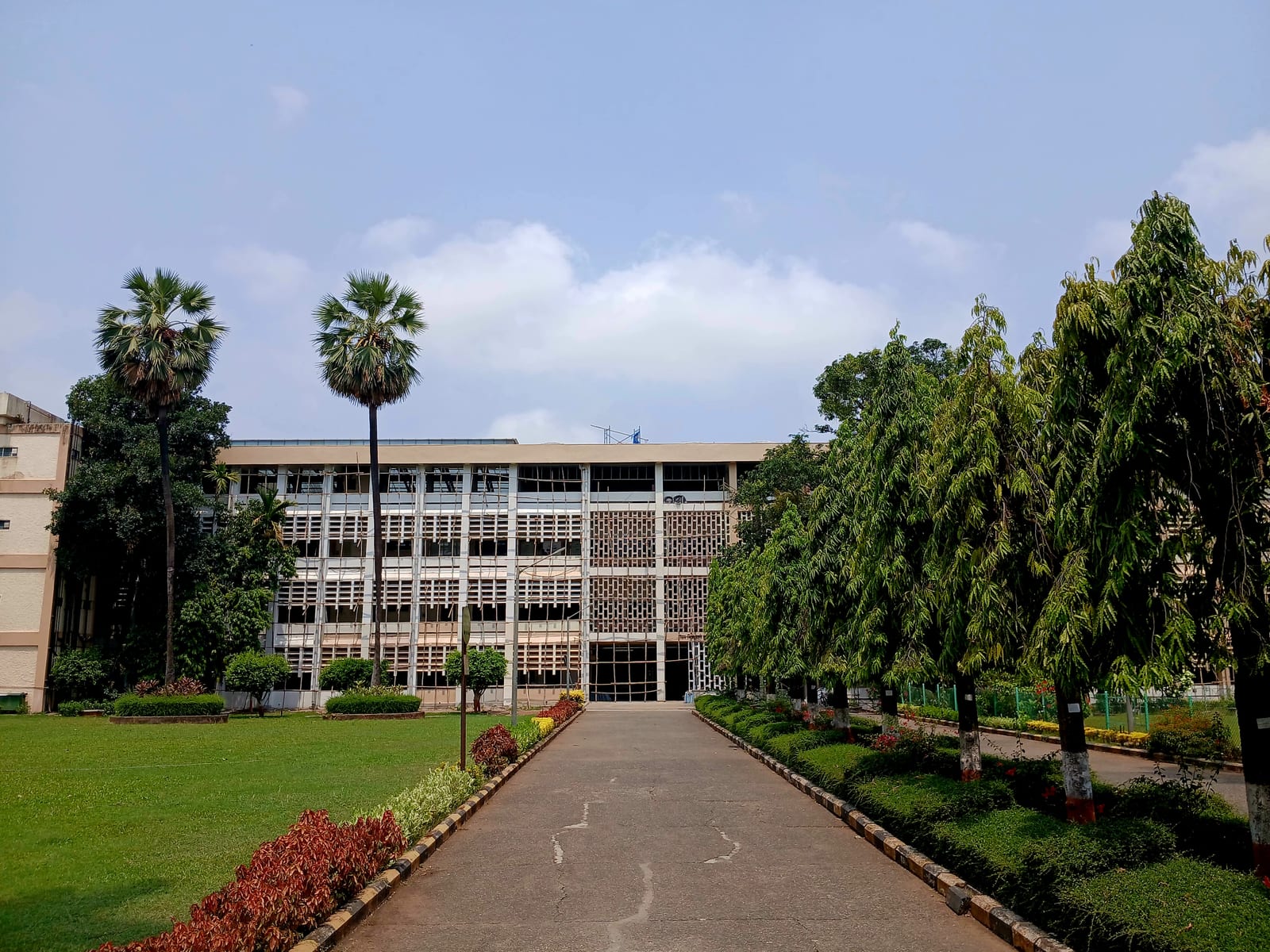
Main building in IIT Bombay Verified
Main building in IIT Bombay · Photo: ShishirdasikaCC BY-SA 4.0
Applies everywhere on the site, on this device — change it any time.
Not set — every fee below is the international rate. Home and EU/EEA rates are often far lower.

courses

20 courses

B.Tech. · 4 years · Computer Science

International tuition

₹300,000 per term

~₹2,400,000 for the whole 4 years, at today's fee
Verified

2026/27 · Same rate across the institution · International students

IIT Bombay charges one tuition rate to every B.Tech./B.S./B.Des./Dual Degree student admitted to a Foreign National supernumerary seat, regardless of major. Rs 3,00,000 per semester (statutory Tuition Fee), i.e. roughly Rs 6,00,000/year before the smaller per-semester charges (registration, exam, gymkhana, benevolent fund, insurance, medical — Rs 8,150/semester) and one-time admission/deposit fees also shown on this circular. The cited table prints two adjacent columns, 'Indian Nationals ... Seats Alloted under OPEN Category' and 'Foreign Nationals (Seats alloted under Foreign National Supernumarary seats)'; the quoted figures are the second (Foreign National) column — 100000/2400/2400/800/400/2150 totalling 108150 is the Indian column, 300000/2400/2400/800/400/2150 totalling 308150 is the Foreign National column. Independently corroborated by IIT Bombay's companion 'Final Signed Fee circular 2026-27' document, whose own footnote states plainly: 'Tuition Fee for the Foreign Nationals is Rs. 3,00,000/-'. Admission to a Foreign National seat is via JEE (Advanced) — see the entry requirements — not a separate DASA-style scheme; seats are supernumerary and capped at 10% of each course's total intake.

Show the fee on the university's site
Intake
Not verified
Application deadline
Not verified

What you'll study

Not yet added.

Entry requirementstests · grades

Admissions tests

  • JEE (Advanced) requiredForeign nationals (and OCI/PIO candidates who obtained their card before 04.03.2021 and elect to be treated as foreign nationals) register directly for JEE (Advanced) without first needing to qualify JEE (Main). Seats allotted to this route are supernumerary, capped at 10% of the total seats in each course, and are outside India's domestic reservation categories.
Source

Academic offer

Class XII (or equivalent) with Physics, Chemistry and Mathematics as compulsory subjects, first attempted in 2025 or 2026
Source
Convert your grade to compare →

B.Tech. · 4 years · Electrical & Electronic Engineering

International tuition

₹300,000 per term

~₹2,400,000 for the whole 4 years, at today's fee
Verified

2026/27 · Same rate across the institution · International students

IIT Bombay charges one tuition rate to every B.Tech./B.S./B.Des./Dual Degree student admitted to a Foreign National supernumerary seat, regardless of major. Rs 3,00,000 per semester (statutory Tuition Fee), i.e. roughly Rs 6,00,000/year before the smaller per-semester charges (registration, exam, gymkhana, benevolent fund, insurance, medical — Rs 8,150/semester) and one-time admission/deposit fees also shown on this circular. The cited table prints two adjacent columns, 'Indian Nationals ... Seats Alloted under OPEN Category' and 'Foreign Nationals (Seats alloted under Foreign National Supernumarary seats)'; the quoted figures are the second (Foreign National) column — 100000/2400/2400/800/400/2150 totalling 108150 is the Indian column, 300000/2400/2400/800/400/2150 totalling 308150 is the Foreign National column. Independently corroborated by IIT Bombay's companion 'Final Signed Fee circular 2026-27' document, whose own footnote states plainly: 'Tuition Fee for the Foreign Nationals is Rs. 3,00,000/-'. Admission to a Foreign National seat is via JEE (Advanced) — see the entry requirements — not a separate DASA-style scheme; seats are supernumerary and capped at 10% of each course's total intake.

Show the fee on the university's site
Intake
Not verified
Application deadline
Not verified

What you'll study

Not yet added.

Entry requirementstests · grades

Admissions tests

  • JEE (Advanced) requiredForeign nationals (and OCI/PIO candidates who obtained their card before 04.03.2021 and elect to be treated as foreign nationals) register directly for JEE (Advanced) without first needing to qualify JEE (Main). Seats allotted to this route are supernumerary, capped at 10% of the total seats in each course, and are outside India's domestic reservation categories.
Source

Academic offer

Class XII (or equivalent) with Physics, Chemistry and Mathematics as compulsory subjects, first attempted in 2025 or 2026
Source
Convert your grade to compare →

B.Tech. · 4 years · Mechanical Engineering

International tuition

₹300,000 per term

~₹2,400,000 for the whole 4 years, at today's fee
Verified

2026/27 · Same rate across the institution · International students

IIT Bombay charges one tuition rate to every B.Tech./B.S./B.Des./Dual Degree student admitted to a Foreign National supernumerary seat, regardless of major. Rs 3,00,000 per semester (statutory Tuition Fee), i.e. roughly Rs 6,00,000/year before the smaller per-semester charges (registration, exam, gymkhana, benevolent fund, insurance, medical — Rs 8,150/semester) and one-time admission/deposit fees also shown on this circular. The cited table prints two adjacent columns, 'Indian Nationals ... Seats Alloted under OPEN Category' and 'Foreign Nationals (Seats alloted under Foreign National Supernumarary seats)'; the quoted figures are the second (Foreign National) column — 100000/2400/2400/800/400/2150 totalling 108150 is the Indian column, 300000/2400/2400/800/400/2150 totalling 308150 is the Foreign National column. Independently corroborated by IIT Bombay's companion 'Final Signed Fee circular 2026-27' document, whose own footnote states plainly: 'Tuition Fee for the Foreign Nationals is Rs. 3,00,000/-'. Admission to a Foreign National seat is via JEE (Advanced) — see the entry requirements — not a separate DASA-style scheme; seats are supernumerary and capped at 10% of each course's total intake.

Show the fee on the university's site
Intake
Not verified
Application deadline
Not verified

What you'll study

Not yet added.

Entry requirementstests · grades

Admissions tests

  • JEE (Advanced) requiredForeign nationals (and OCI/PIO candidates who obtained their card before 04.03.2021 and elect to be treated as foreign nationals) register directly for JEE (Advanced) without first needing to qualify JEE (Main). Seats allotted to this route are supernumerary, capped at 10% of the total seats in each course, and are outside India's domestic reservation categories.
Source

Academic offer

Class XII (or equivalent) with Physics, Chemistry and Mathematics as compulsory subjects, first attempted in 2025 or 2026
Source
Convert your grade to compare →

Civil Engineering

B.Tech. · 4 years · Civil Engineering

International tuition

₹300,000 per term

~₹2,400,000 for the whole 4 years, at today's fee
Verified

2026/27 · Same rate across the institution · International students

IIT Bombay charges one tuition rate to every B.Tech./B.S./B.Des./Dual Degree student admitted to a Foreign National supernumerary seat, regardless of major. Rs 3,00,000 per semester (statutory Tuition Fee), i.e. roughly Rs 6,00,000/year before the smaller per-semester charges (registration, exam, gymkhana, benevolent fund, insurance, medical — Rs 8,150/semester) and one-time admission/deposit fees also shown on this circular. The cited table prints two adjacent columns, 'Indian Nationals ... Seats Alloted under OPEN Category' and 'Foreign Nationals (Seats alloted under Foreign National Supernumarary seats)'; the quoted figures are the second (Foreign National) column — 100000/2400/2400/800/400/2150 totalling 108150 is the Indian column, 300000/2400/2400/800/400/2150 totalling 308150 is the Foreign National column. Independently corroborated by IIT Bombay's companion 'Final Signed Fee circular 2026-27' document, whose own footnote states plainly: 'Tuition Fee for the Foreign Nationals is Rs. 3,00,000/-'. Admission to a Foreign National seat is via JEE (Advanced) — see the entry requirements — not a separate DASA-style scheme; seats are supernumerary and capped at 10% of each course's total intake.

Show the fee on the university's site
Intake
Not verified
Application deadline
Not verified

What you'll study

Not yet added.

Entry requirementstests · grades

Admissions tests

  • JEE (Advanced) requiredForeign nationals (and OCI/PIO candidates who obtained their card before 04.03.2021 and elect to be treated as foreign nationals) register directly for JEE (Advanced) without first needing to qualify JEE (Main). Seats allotted to this route are supernumerary, capped at 10% of the total seats in each course, and are outside India's domestic reservation categories.
Source

Academic offer

Class XII (or equivalent) with Physics, Chemistry and Mathematics as compulsory subjects, first attempted in 2025 or 2026
Source
Convert your grade to compare →

B.Tech. · 4 years · Chemical Engineering

International tuition

₹300,000 per term

~₹2,400,000 for the whole 4 years, at today's fee
Verified

2026/27 · Same rate across the institution · International students

IIT Bombay charges one tuition rate to every B.Tech./B.S./B.Des./Dual Degree student admitted to a Foreign National supernumerary seat, regardless of major. Rs 3,00,000 per semester (statutory Tuition Fee), i.e. roughly Rs 6,00,000/year before the smaller per-semester charges (registration, exam, gymkhana, benevolent fund, insurance, medical — Rs 8,150/semester) and one-time admission/deposit fees also shown on this circular. The cited table prints two adjacent columns, 'Indian Nationals ... Seats Alloted under OPEN Category' and 'Foreign Nationals (Seats alloted under Foreign National Supernumarary seats)'; the quoted figures are the second (Foreign National) column — 100000/2400/2400/800/400/2150 totalling 108150 is the Indian column, 300000/2400/2400/800/400/2150 totalling 308150 is the Foreign National column. Independently corroborated by IIT Bombay's companion 'Final Signed Fee circular 2026-27' document, whose own footnote states plainly: 'Tuition Fee for the Foreign Nationals is Rs. 3,00,000/-'. Admission to a Foreign National seat is via JEE (Advanced) — see the entry requirements — not a separate DASA-style scheme; seats are supernumerary and capped at 10% of each course's total intake.

Show the fee on the university's site
Intake
Not verified
Application deadline
Not verified

What you'll study

Not yet added.

Entry requirementstests · grades

Admissions tests

  • JEE (Advanced) requiredForeign nationals (and OCI/PIO candidates who obtained their card before 04.03.2021 and elect to be treated as foreign nationals) register directly for JEE (Advanced) without first needing to qualify JEE (Main). Seats allotted to this route are supernumerary, capped at 10% of the total seats in each course, and are outside India's domestic reservation categories.
Source

Academic offer

Class XII (or equivalent) with Physics, Chemistry and Mathematics as compulsory subjects, first attempted in 2025 or 2026
Source
Convert your grade to compare →

B.Tech. · 4 years · Aerospace Engineering

International tuition

₹300,000 per term

~₹2,400,000 for the whole 4 years, at today's fee
Verified

2026/27 · Same rate across the institution · International students

IIT Bombay charges one tuition rate to every B.Tech./B.S./B.Des./Dual Degree student admitted to a Foreign National supernumerary seat, regardless of major. Rs 3,00,000 per semester (statutory Tuition Fee), i.e. roughly Rs 6,00,000/year before the smaller per-semester charges (registration, exam, gymkhana, benevolent fund, insurance, medical — Rs 8,150/semester) and one-time admission/deposit fees also shown on this circular. The cited table prints two adjacent columns, 'Indian Nationals ... Seats Alloted under OPEN Category' and 'Foreign Nationals (Seats alloted under Foreign National Supernumarary seats)'; the quoted figures are the second (Foreign National) column — 100000/2400/2400/800/400/2150 totalling 108150 is the Indian column, 300000/2400/2400/800/400/2150 totalling 308150 is the Foreign National column. Independently corroborated by IIT Bombay's companion 'Final Signed Fee circular 2026-27' document, whose own footnote states plainly: 'Tuition Fee for the Foreign Nationals is Rs. 3,00,000/-'. Admission to a Foreign National seat is via JEE (Advanced) — see the entry requirements — not a separate DASA-style scheme; seats are supernumerary and capped at 10% of each course's total intake.

Show the fee on the university's site
Intake
Not verified
Application deadline
Not verified

What you'll study

Not yet added.

Entry requirementstests · grades

Admissions tests

  • JEE (Advanced) requiredForeign nationals (and OCI/PIO candidates who obtained their card before 04.03.2021 and elect to be treated as foreign nationals) register directly for JEE (Advanced) without first needing to qualify JEE (Main). Seats allotted to this route are supernumerary, capped at 10% of the total seats in each course, and are outside India's domestic reservation categories.
Source

Academic offer

Class XII (or equivalent) with Physics, Chemistry and Mathematics as compulsory subjects, first attempted in 2025 or 2026
Source
Convert your grade to compare →

Subjects taught at IIT Bombay

Each one opens every course in that subject, at every university we hold, with the same verified fees.

Where these figures come from

5 sentences from IIT Bombay's own site each back several figures above. Each is quoted once here; every course that uses one still opens it and links to its own source page.

  1. Used for course length on 13 courses

    “B.Tech., B.S. and B.Des. are 4-year programmes (8 Semesters), and Dual Degree (B.Tech. + M.Tech.) is a 5-year programme (10 Semesters).”
    Fee Structure for UG New Entrants (B.Tech., B.Tech. + M.Tech., B.Des., B.S.), Autumn Semester 2026-27 | IIT Bombay Academic Officeacad.iitb.ac.inread 17 Aug 2026
    Open the official page ↗
  2. Used for international fee on 13 courses

    “Fee payable (Rs.) Indian Nationals including PIO/ OCI Card holders (issued before 4th March 2021) Seats Alloted under OPEN Category Foreign Nationals (Seats alloted under Foreign National Supernumarary seats) I(A) At the time of Admission (one time) 1. Admission Fee 2. Alumni Life Membership Fees 3. Student Welfare Fund 9650 5000 1350 9650 5000 1350 Total I (A) 16000 16000 I(B) Per Semester Fees 1. Tuition Fee – Statutory Fees 2. Registration Fee & Examination Fee 3. Gymkhana Fee 4. Student Benevolent Fund 5. Student Accident Insurance Fund 6. Medical Fee 100000 2400 2400 800 400 2150 300000 2400 2400 800 400 2150 Total I (B) 108150 308150”
    Fee Structure for UG New Entrants (B.Tech., B.Tech. + M.Tech., B.Des., B.S.), Autumn Semester 2026-27 | IIT Bombay Academic Officeacad.iitb.ac.inread 17 Aug 2026
    Open the official page ↗
  3. Used for entry requirements on 12 courses

    “A candidate should have appeared for the Class XII (or equivalent) examination for the first time in either 2025 or 2026 with Physics, Chemistry, and Mathematics as compulsory subjects.”
    Foreign Nationals | JEE (Advanced) 2026jeeadv.ac.inread 17 Aug 2026
    Open the official page ↗
  4. Used for entry requirements on 12 courses

    “The foreign national candidates, at the time of registering for JEE (Advanced) 2026 are NOT required to write JEE (Main) 2026 and may register for JEE (Advanced) 2026 directly subject to fulfilment of other eligibility criteria mentioned below.”
    Foreign Nationals | JEE (Advanced) 2026jeeadv.ac.inread 17 Aug 2026
    Open the official page ↗
  5. Used for international fee on 7 courses

    “I(B) Per Semester Fees 1. Tuition Fee – Statutory Fees 2. Registration Fee & Examination Fee 3. Gymkhana Fee 4. Student Benevolent Fund 5. Student Accident Insurance Fund 6. Medical Fee 100000 2400 2400 800 400 2150 300000 2400 2400 800 400 2150 Total I (B) 108150 308150”
    Fee Structure for UG New Entrants (B.Tech., B.Tech. + M.Tech., B.Des., B.S.), Autumn Semester 2026-27 | IIT Bombay Academic Officeacad.iitb.ac.inread 17 Aug 2026
    Open the official page ↗

More about IIT Bombay

Student body

QS's own figures · QS World University Rankings 2027

Students
12,684
International students
90
≈1% of the student body (worked out here)
Faculty
873
International faculty
3%

These come from QS, not the university's own pages. Unlike every fee and deadline on this site. QS is the primary source for its own rankings and measurements, which is why it is cited here and rejected everywhere else.

Show the QS profile
✓ Word for wordRead 17 Aug 2026
“Students & Staff Total students 12,684 UG students 44.9% PG students 55.1% International students 90 UG students 14.4% PG students 85.6% Total faculty staff 873 Domestic staff 97% Int'l staff 3%”
Indian Institute of Technology Bombay (IITB) : Rankings, Fees & Courses Details | TopUniversitiestopuniversities.com
Open the official page ↗

About & contact

Mumbai, India· view on Google Maps ↗iitb.ac.in ↗

Find nearby

These open a map search near Mumbai. StudyPath isn't listing or vouching for specific places — what the university itself publishes about on-campus facilities appears under On-campus amenities, cited like everything else here.

No admissions email, phone number, or address verified for this university yet. Not yet collected, not necessarily unavailable.

Accommodation

₹13,050–₹13,900per term

on-campus hostel, UG students (B.Tech/Dual Degree/B.S/B.Des), total hostel fee for Spring Semester 2024-25, varying by entry-year batch

Published by the university itself, not a live listings price. Actual cost depends on room type, availability and when you apply.

Show the source
✓ Word for wordRead 17 Aug 2026
“Total Hostel Fee (A) | Rs.13,050/- (Rupees Thirteen Thousand Fifty Only) | Rs.13,400/- (Rupees Thirteen Thousand Four Hundred Only) | Rs.13,900/- (Rupees Thirteen Thousand Nine Hundred Only)”
IIT Bombay — Hostel Fees Structure Spring 2024-25iitb.ac.in
Open the official page ↗

After you graduate

Rules read 19 Aug 2026. Check the current rules, this may be out of date

What India's own immigration authority currently publishes. Not a ranking, not a guarantee, and not the same as what any agent or forum will tell you. Whether someone actually obtains residence depends on occupation, points, funds and policy that can change between application and graduation.

Work during study

A foreigner on a Student Visa has no work rights at all. The Bureau of Immigration's own guidance for foreign students states this as a direct prohibition rather than an hours-based limit of the kind several other countries on StudyPath publish: a Student visa holder must not take up any employment or business activity in India, full stop. Foreigners intending an internship instead use a separate, dedicated visa (Student (S-5) Visa) for that specific purpose, rather than a general work permission attached to the ordinary Student (S-1) visa.

Show the source
✓ Word for wordRead 19 Aug 2026
“Foreigners on Student visa are must not involve in any Employment/Business activities in India.”
Study in India | Bureau of Immigrationboi.gov.in
Open the official page ↗

Route to permanent residence

India does not publish a distinct post-study job-search visa or a general permanent-residence status for a foreign graduate; the Bureau of Immigration's own materials describe only the ordinary Employment Visa route, open to any qualified professional (not graduates specifically) with a confirmed engagement from an Indian company, organisation, industry or undertaking, or a foreign firm executing a project in India. As a general rule the employed foreigner must draw a gross salary above Rs. 16.25 lakh a year, though the Government periodically notifies specific sectors exempt from that floor. The visa is tied to the sponsoring employer: no change of employer is permitted while the visa is current — someone who wants to switch jobs must leave India and apply for a fresh Employment Visa — and a person may not hold an Employment Visa for more than one employer at a time. Employment Visas are issued and renewed on a case-by-case, typically annual, basis rather than converting into a fixed permanent-resident status after a stated number of years the way several other countries on StudyPath describe; StudyPath found no published route from repeated Employment Visa renewal into any form of Indian permanent residence for a person with no Indian family or ancestral connection.

Show the source
✓ Word for wordRead 19 Aug 2026
“Foreigner employed in any sector should draw a gross salary in excess of Rs. 16.25 lakhs per annum . However, certain foreigners who are employed in such sectors as notified by the GOI from time to time will be exempted from this annual floor limit.”
Work in India | Bureau of Immigrationboi.gov.in
Open the official page ↗

Route to citizenship

Indian citizenship by naturalisation is governed by Section 6 of the Citizenship Act, 1955, published by the Ministry of Home Affairs. The Central Government may grant a certificate of naturalisation to an applicant of full age and capacity if satisfied they are qualified under the Act's Third Schedule (a distinguished contribution to science, philosophy, art, literature, world peace or human progress lets the Government waive some or all of those conditions instead). The Third Schedule's qualifications include: residence in India (or service under an Indian government) throughout the 12 months immediately before applying; residence or government service in India for at least 11 of the preceding 14 years in aggregate (reduced to 5 years for a Hindu, Sikh, Buddhist, Jain, Parsi or Christian applicant from Afghanistan, Bangladesh or Pakistan, under a 2019 amendment); good character; adequate knowledge of a language listed in the Eighth Schedule to the Constitution (one of India's own scheduled languages, not necessarily English); and an intention to reside in India, or to continue in government, international-organisation or Indian-body service, after naturalising. On dual nationality: India does not recognise it. Section 9(1) of the same Act states that an Indian citizen who voluntarily acquires the citizenship of another country automatically ceases to be an Indian citizen — the same principle applies in reverse to naturalisation, and in practice an applicant must not hold another country's citizenship at the point Indian citizenship is granted.

Show the source
✓ Word for wordRead 19 Aug 2026
“(c) that he has either resided in India or been in the service of a Government in India or partly the one and partly the other, throughout the period of twelve months immediately preceding the date of the application; 3[Provided that if the Central Government is satisfied that special circumstances exist, it may, after recording the circumstances in writing, relax the period of twelve months up to a maximum of thirty days which may be in different breaks.] (d) that during the 4[fourteen years] immediately preceding the said period of twelve months, he has either resided in India or been in the service of a Government in India, or partly the one and partly the other, for periods amounting in the aggregate to not less than 5[eleven years];”
The Citizenship Act, 1955 (Act No. 57 of 1955), as amended - Ministry of Home Affairsmha.gov.in
Open the official page ↗

New entry added 19 August 2026. Two Indian government domains accepted as a government source here: boi.gov.in (Bureau of Immigration, Ministry of Home Affairs — the actual visa and stay authority) and mha.gov.in (the Ministry of Home Affairs itself, whose own site hosts the current consolidated text of the Citizenship Act, 1955). postStudyWork is left null: StudyPath found no published job-search, practical-training or graduate-specific status distinct from the ordinary Employment Visa described under residencyRoute — a genuine gap in what boi.gov.in itself publishes for graduates specifically, not an assumption. Collection note: the Citizenship Act PDF from mha.gov.in returned raw binary bytes to automated fetching; it was downloaded and converted with pdftotext (poppler-utils, -enc UTF-8 -layout) and archived from a browser capture, the pattern already used elsewhere on StudyPath for PDF-only government sources. One textual nuance worth recording: the Third Schedule's clause (b) — which, before a 2004 amendment, explicitly required an applicant to have renounced any other country's citizenship — now reads only 'that, if he is a citizen of any country, [omitted]' in the current consolidated text, i.e. the specific renunciation wording was deleted by the 2004 amendment rather than replaced with new text; this entry's dual-nationality claim rests instead on Section 9(1)'s clear, currently-in-force statement that an Indian citizen automatically loses that citizenship on voluntarily acquiring another, which is unambiguous, rather than on the now-textually-uncertain clause (b). inDemandOccupations is left null: no shortage-occupation list gating the Employment Visa was found; the salary floor is a flat threshold with sector-based exemptions the Government notifies from time to time, not a named list of occupations. naturalisationStatus set to 'published-route': the Third Schedule states real, numbered, followable criteria, even though the residence requirement (11 of 14 years, or 5 of 14 for the named-minority exception) is among the longer qualifying periods on StudyPath — per the doc comment on ResidencyPathway.naturalisationStatus this field records only whether criteria are published, not how long or attainable the route is. citizenshipTerms records 11 years, the aggregate the Third Schedule requires within the preceding 14 years. That sits on top of a separate requirement of continuous residence throughout the 12 months immediately before the application, so the qualifying history is 12 years in total; 11 is the figure the Act states. The Third Schedule reduces the aggregate to 5 years for a Hindu, Sikh, Buddhist, Jain, Parsi or Christian applicant from Afghanistan, Bangladesh or Pakistan under the 2019 amendment.

Open the immigration authority's own page ↗
Student photos

Contributed by students and applicants. Not checked the way the campus photos above are, just real photos from people who've actually been here.

Loading…

What students say about IIT Bombay

Opinions from students and applicants. Not checked against the university's own pages the way the fees and deadlines above are.

to write a review. Signing in with your university email marks you as a verified student here.

Loading reviews…