Still growing.New universities and courses are added most weekdays (not weekends), each checked against the university's own page before it goes live — worth checking back. Sources last read 1 Oct 2026. How we verify →

StudyPath
QS #=2London, United Kingdom· QS World University Rankings 2027

Imperial College London

Imperial College London, in London, United Kingdom, has 20 undergraduate courses and 1 master's course listed on StudyPath. International tuition runs from ~£42,700 to ~£78,000 a year depending on the course. Imperial publishes its own accommodation prices, from £150 per week. 19 of the 21 publish an application deadline. 2 named scholarships are recorded against these courses. Every figure above was read from Imperial's own published pages and last checked on 29 September 2026.

#12 · Computer Science and Information Systems#=7 · Biological Sciences
Courses
21
Fees verified
21 / 21
Scholarship entries
16
International tuition across 21 courses

~£42,700to~£78,000a year

Lowest: Mathematics BSc and Economics, Finance and Data Science BScHighest: Full-Time MBA
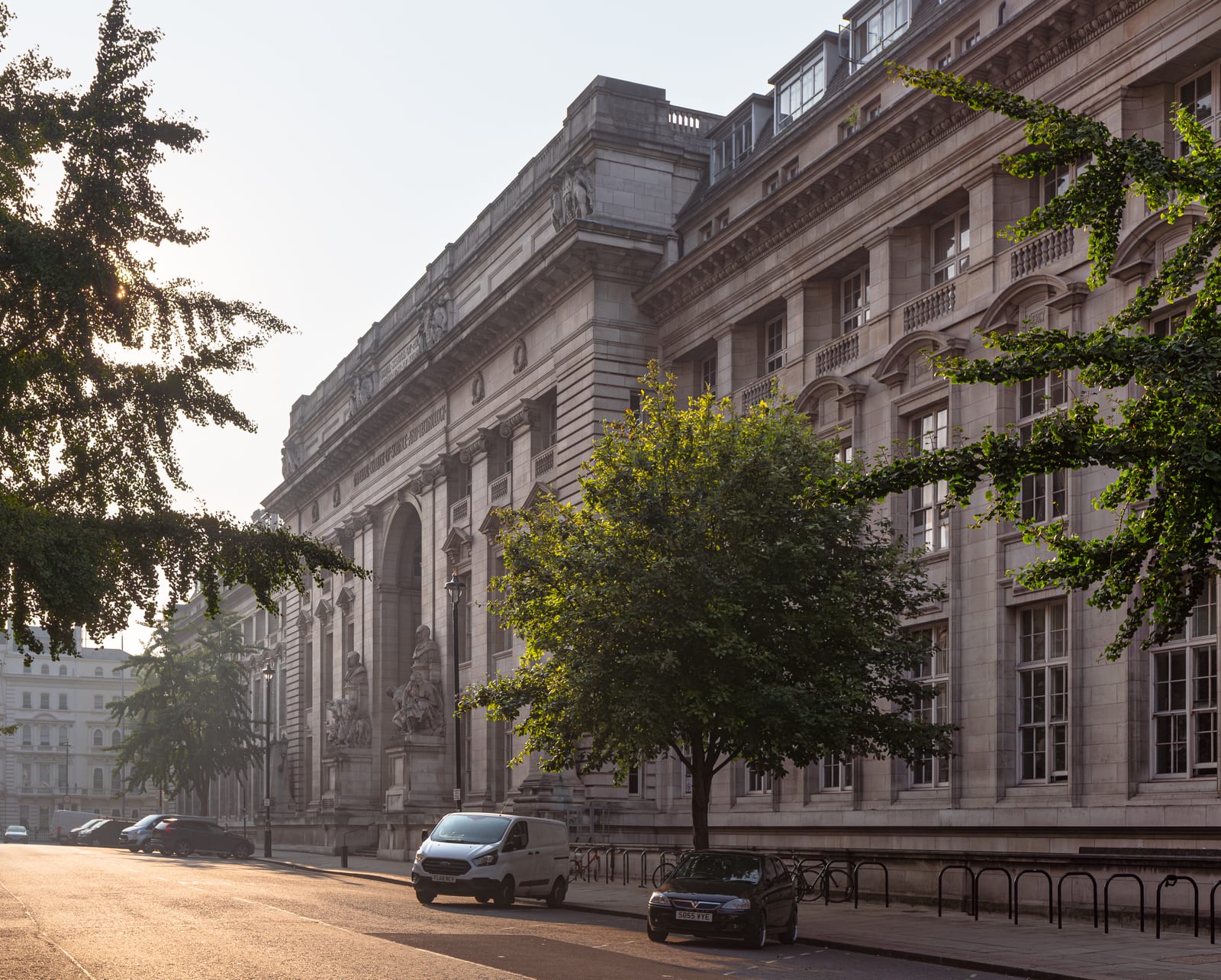
Royal School of Mines, Imperial College London South Kensington Campus, London, 2020. Verified
Royal School of Mines, Imperial College London South Kensington Campus, London, 2020. · Photo: Julian Herzog (Website)CC BY 4.0
Applies everywhere on the site, on this device — change it any time.
Not set — every fee below is the international rate. Home and EU/EEA rates are often far lower.

courses

21 courses

#12 Computer Science

Computing

MEng · 4 years · Computer Science

International tuition

£45,500 per year

~£182,000 for the whole 4 years, at today's fee
Verified

2026/27 · Priced for this course · International students

This course starts in 2027, but Imperial has only published fees up to 2026/27. Expect the 2027 figure to be higher.

Imperial publishes a separate "Overseas fee" for each course and each entry year. £45,500 is the figure Imperial published for 2026 entry, i.e. the 2026/27 academic year, on the 2026-entry version of this course page. The live course page now advertises 2027 entry, but at the time of capture Imperial had not set the 2027-entry Overseas fee: it shows "Not set" and quotes this £45,500 as a guide, so the 2027-entry cost is likely to be higher. Charged for every year of the course. Home (UK) students pay the government-capped fee instead (£9,790 per year for 2026 entry). Imperial also warns of extra course costs (field trips, books, protective clothing) on top of tuition.

Show the fee on the university's site
Intake
October 2027 (October 2027)
Source
✓ Word for wordRead 31 Jul 2026
“Start date October 2027 UCAS course code G401”
Computing MEng | Study | Imperial College Londonimperial.ac.uk
Open the official page ↗
Application deadline
Wednesday 13 January 2027 at 18.00 (UK time)
Source

Scholarships1 available
  • International Baccalaureate Excellence Scholarship

    £5,000 per year for each year the course lasts.

    Eligibility: Studying the International Baccalaureate (IB) diploma programme; an international student paying the Overseas rate of tuition; applying for an undergraduate course within the Faculty of Engineering, the Faculty of Natural Sciences, or Imperial Business School. No fixed IB point-score threshold is published — academically excellent IB applicants are nominated for the scholarship by the Imperial department they apply to, as part of the admissions process (no separate application).

    For 2026 entry, Imperial is offering 23 of these scholarships across the three eligible faculties (Engineering, Natural Sciences, Imperial Business School). Awarded by department nomination, not application; continuation depends on maintaining satisfactory academic progress.

    Source

#12 Computer Science

Computing

BEng · 3 years · Computer Science

International tuition

£45,500 per year

~£136,500 for the whole 3 years, at today's fee
Verified

2026/27 · Priced for this course · International students

This course starts in 2027, but Imperial has only published fees up to 2026/27. Expect the 2027 figure to be higher.

Imperial publishes a separate "Overseas fee" for each course and each entry year. £45,500 is the figure Imperial published for 2026 entry, i.e. the 2026/27 academic year, on the 2026-entry version of this course page. The live course page now advertises 2027 entry, but at the time of capture Imperial had not set the 2027-entry Overseas fee: it shows "Not set" and quotes this £45,500 as a guide, so the 2027-entry cost is likely to be higher. Charged for every year of the course. Home (UK) students pay the government-capped fee instead (£9,790 per year for 2026 entry). Imperial also warns of extra course costs (field trips, books, protective clothing) on top of tuition.

Show the fee on the university's site
Intake
October 2027 (October 2027)
Source
✓ Word for wordRead 31 Jul 2026
“Start date October 2027 UCAS course code G400”
Computing BEng | Study | Imperial College Londonimperial.ac.uk
Open the official page ↗
Application deadline
Wednesday 13 January 2027 at 18.00 (UK time)
Source

What you'll study

Not yet added.

Scholarships1 available
  • International Baccalaureate Excellence Scholarship

    £5,000 per year for each year the course lasts.

    Eligibility: Studying the International Baccalaureate (IB) diploma programme; an international student paying the Overseas rate of tuition; applying for an undergraduate course within the Faculty of Engineering, the Faculty of Natural Sciences, or Imperial Business School. No fixed IB point-score threshold is published — academically excellent IB applicants are nominated for the scholarship by the Imperial department they apply to, as part of the admissions process (no separate application).

    For 2026 entry, Imperial is offering 23 of these scholarships across the three eligible faculties (Engineering, Natural Sciences, Imperial Business School). Awarded by department nomination, not application; continuation depends on maintaining satisfactory academic progress.

    Source

Mathematics

BSc · 3 years · Mathematics

International tuition

£42,700 per year

~£128,100 for the whole 3 years, at today's fee
Verified

2026/27 · Priced for this course · International students

This course starts in 2027, but Imperial has only published fees up to 2026/27. Expect the 2027 figure to be higher.

Imperial publishes a separate "Overseas fee" for each course and each entry year. £42,700 is the figure Imperial published for 2026 entry, i.e. the 2026/27 academic year, on the 2026-entry version of this course page. The live course page now advertises 2027 entry, but at the time of capture Imperial had not set the 2027-entry Overseas fee: it shows "Not set" and quotes this £42,700 as a guide, so the 2027-entry cost is likely to be higher. Charged for every year of the course. Home (UK) students pay the government-capped fee instead (£9,790 per year for 2026 entry). Imperial also warns of extra course costs (field trips, books, protective clothing) on top of tuition.

Show the fee on the university's site
Intake
October 2027 (October 2027)
Source
✓ Word for wordRead 31 Jul 2026
“Start date October 2027 UCAS course code G100”
Mathematics BSc | Study | Imperial College Londonimperial.ac.uk
Open the official page ↗
Application deadline
Wednesday 13 January 2027 at 18.00 (UK time)
Source

What you'll study

Not yet added.

Scholarships1 available
  • International Baccalaureate Excellence Scholarship

    £5,000 per year for each year the course lasts.

    Eligibility: Studying the International Baccalaureate (IB) diploma programme; an international student paying the Overseas rate of tuition; applying for an undergraduate course within the Faculty of Engineering, the Faculty of Natural Sciences, or Imperial Business School. No fixed IB point-score threshold is published — academically excellent IB applicants are nominated for the scholarship by the Imperial department they apply to, as part of the admissions process (no separate application).

    For 2026 entry, Imperial is offering 23 of these scholarships across the three eligible faculties (Engineering, Natural Sciences, Imperial Business School). Awarded by department nomination, not application; continuation depends on maintaining satisfactory academic progress.

    Source

Physics

BSc · 3 years · Physics

International tuition

£45,500 per year

~£136,500 for the whole 3 years, at today's fee
Verified

2026/27 · Priced for this course · International students

This course starts in 2027, but Imperial has only published fees up to 2026/27. Expect the 2027 figure to be higher.

Imperial publishes a separate "Overseas fee" for each course and each entry year. £45,500 is the figure Imperial published for 2026 entry, i.e. the 2026/27 academic year, on the 2026-entry version of this course page. The live course page now advertises 2027 entry, but at the time of capture Imperial had not set the 2027-entry Overseas fee: it shows "Not set" and quotes this £45,500 as a guide, so the 2027-entry cost is likely to be higher. Charged for every year of the course. Home (UK) students pay the government-capped fee instead (£9,790 per year for 2026 entry). Imperial also warns of extra course costs (field trips, books, protective clothing) on top of tuition.

Show the fee on the university's site
Intake
October 2027 (October 2027)
Source
✓ Word for wordRead 31 Jul 2026
“Start date October 2027 UCAS course code F300”
Physics BSc | Study | Imperial College Londonimperial.ac.uk
Open the official page ↗
Application deadline
Wednesday 13 January 2027 at 18.00 (UK time)
Source

What you'll study

Not yet added.

Scholarships1 available
  • International Baccalaureate Excellence Scholarship

    £5,000 per year for each year the course lasts.

    Eligibility: Studying the International Baccalaureate (IB) diploma programme; an international student paying the Overseas rate of tuition; applying for an undergraduate course within the Faculty of Engineering, the Faculty of Natural Sciences, or Imperial Business School. No fixed IB point-score threshold is published — academically excellent IB applicants are nominated for the scholarship by the Imperial department they apply to, as part of the admissions process (no separate application).

    For 2026 entry, Imperial is offering 23 of these scholarships across the three eligible faculties (Engineering, Natural Sciences, Imperial Business School). Awarded by department nomination, not application; continuation depends on maintaining satisfactory academic progress.

    Source

Physics

MSci · 4 years · Physics

International tuition

£45,500 per year

~£182,000 for the whole 4 years, at today's fee
Verified

2026/27 · Priced for this course · International students

This course starts in 2027, but Imperial has only published fees up to 2026/27. Expect the 2027 figure to be higher.

Imperial publishes a separate "Overseas fee" for each course and each entry year. £45,500 is the figure Imperial published for 2026 entry, i.e. the 2026/27 academic year, on the 2026-entry version of this course page. The live course page now advertises 2027 entry, but at the time of capture Imperial had not set the 2027-entry Overseas fee: it shows "Not set" and quotes this £45,500 as a guide, so the 2027-entry cost is likely to be higher. Charged for every year of the course. Home (UK) students pay the government-capped fee instead (£9,790 per year for 2026 entry). Imperial also warns of extra course costs (field trips, books, protective clothing) on top of tuition.

Show the fee on the university's site
Intake
October 2027 (October 2027)
Source
✓ Word for wordRead 31 Jul 2026
“Start date October 2027 UCAS course code F303”
Physics MSci | Study | Imperial College Londonimperial.ac.uk
Open the official page ↗
Application deadline
Wednesday 13 January 2027 at 18.00 (UK time)
Source

What you'll study

Not yet added.

Scholarships1 available
  • International Baccalaureate Excellence Scholarship

    £5,000 per year for each year the course lasts.

    Eligibility: Studying the International Baccalaureate (IB) diploma programme; an international student paying the Overseas rate of tuition; applying for an undergraduate course within the Faculty of Engineering, the Faculty of Natural Sciences, or Imperial Business School. No fixed IB point-score threshold is published — academically excellent IB applicants are nominated for the scholarship by the Imperial department they apply to, as part of the admissions process (no separate application).

    For 2026 entry, Imperial is offering 23 of these scholarships across the three eligible faculties (Engineering, Natural Sciences, Imperial Business School). Awarded by department nomination, not application; continuation depends on maintaining satisfactory academic progress.

    Source

Chemistry

MSci · 4 years · Chemistry

International tuition

£45,500 per year

~£182,000 for the whole 4 years, at today's fee
Verified

2026/27 · Priced for this course · International students

This course starts in 2027, but Imperial has only published fees up to 2026/27. Expect the 2027 figure to be higher.

Imperial publishes a separate "Overseas fee" for each course and each entry year. £45,500 is the figure Imperial published for 2026 entry, i.e. the 2026/27 academic year, on the 2026-entry version of this course page. The live course page now advertises 2027 entry, but at the time of capture Imperial had not set the 2027-entry Overseas fee: it shows "Not set" and quotes this £45,500 as a guide, so the 2027-entry cost is likely to be higher. Charged for every year of the course. Home (UK) students pay the government-capped fee instead (£9,790 per year for 2026 entry). Imperial also warns of extra course costs (field trips, books, protective clothing) on top of tuition.

Show the fee on the university's site
Intake
October 2027 (October 2027)
Source
✓ Word for wordRead 31 Jul 2026
“Start date October 2027 UCAS course code F103”
Chemistry MSci | Study | Imperial College Londonimperial.ac.uk
Open the official page ↗
Application deadline
Wednesday 13 January 2027 at 18.00 (UK time)
Source

What you'll study

Not yet added.

Scholarships1 available
  • International Baccalaureate Excellence Scholarship

    £5,000 per year for each year the course lasts.

    Eligibility: Studying the International Baccalaureate (IB) diploma programme; an international student paying the Overseas rate of tuition; applying for an undergraduate course within the Faculty of Engineering, the Faculty of Natural Sciences, or Imperial Business School. No fixed IB point-score threshold is published — academically excellent IB applicants are nominated for the scholarship by the Imperial department they apply to, as part of the admissions process (no separate application).

    For 2026 entry, Imperial is offering 23 of these scholarships across the three eligible faculties (Engineering, Natural Sciences, Imperial Business School). Awarded by department nomination, not application; continuation depends on maintaining satisfactory academic progress.

    Source

How Imperial compares

Against the other universities in the United Kingdom on StudyPath, using each one's verified international fees and its own published housing prices. Universities are only compared with others charging in the same currency (and, for housing, for the same period), so no figure here has been converted. A ~ marks a year worked out from a per-term or whole-course fee.

Imperial's lowest undergraduate fee for international students is £42,700 a year, for Economics, Finance and Data Science. Of the 43 other universities in the United Kingdom we list with undergraduate fees in GBP, 1 charges more at their lowest, 42 charge less. Their lowest undergraduate fees run from ~£2,939 (UoL Online) to £46,210 (Oxford).

Imperial's lowest master's fee for international students is ~£78,000 a year, for Full-Time MBA. Of the 4 other universities in the United Kingdom we list with master's fees in GBP, 1 charges more at their lowest, 3 charge less. Their lowest master's fees run from ~£19,500 (Cranfield) to ~£94,120 (Oxford).

Student housing. Imperial's own lowest published rate is £150 per week. Of the 33 other universities in the United Kingdom we list that publish housing per week in GBP, 14 charge more, 19 charge less. Their lowest published rates run from £72 (Leicester) to £254.80 (City St George's).

Living costs. The living-cost figure for a student visa to the United Kingdom is £1,171 per month, on top of tuition (figure for 31 December 2025; read 19 Aug 2026 from gov.uk). The authority attaches conditions that can change this amount; see them in full on student finance.

By subject
SubjectLowest fee hereAgainst other universities in the United KingdomTheir lowest fees
Computer Scienceundergraduate£45,500Computing2 of 42 charge more~£7,276 to £66,580
Mathematicsundergraduate£42,700Mathematics2 of 42 charge more£17,400 to £50,420
Biology & Life Sciencesundergraduate£45,500Biological Sciences1 of 37 charge more£21,795 to £46,210
Economicsundergraduate£42,700Economics, Finance and Data Science1 of 37 charge more~£2,939 to £46,210
Physicsundergraduate£45,500Physics1 of 36 charge more£23,500 to £50,420
Electrical & Electronic Engineeringundergraduate£45,500Electrical and Electronic EngineeringHighest of 36£21,795 to £44,400

Subjects taught at Imperial

Each one opens every course in that subject, at every university we hold, with the same verified fees.

Where these figures come from

10 sentences from Imperial's own site each back several figures above. Each is quoted once here; every course that uses one still opens it and links to its own source page.

  1. Used for application deadline on 15 courses

    “Application deadlines – Wednesday 13 January 2027 at 18.00 (UK time)”
    The same sentence appears on 15 pagesimperial.ac.ukread 31 Jul 2026 to 19 Aug 2026
    Open one of them ↗
  2. Used for home fee on 15 courses

    “Fees £9,790 per year Home £45,500 per year Overseas”
    The same sentence appears on 15 pagesimperial.ac.ukread 31 Jul 2026 to 2 Sept 2026
    Open one of them ↗
  3. Used for scholarship on 15 courses

    “Each scholarship is worth £5,000 per year for each year that your course lasts. This applies for students commencing from 2024. Check if you're eligible To be eligible for a scholarship, you must be: studying the International Baccalaureate (IB) diploma programme an international student paying the Overseas rate of tuition applying for an undergraduate course within the Faculty of Engineering, the Faculty of Natural Sciences, or Imperial Business School”
    IB Excellence scholarships | Study | Imperial College Londonimperial.ac.ukread 14 Aug 2026
    Open the official page ↗
  4. Used for international fee on 14 courses

    “Overseas fee 2026 entry £45,500 per year”
    The same sentence appears on 14 pagesimperial.ac.ukread 31 Jul 2026 to 17 Aug 2026
    Open one of them ↗
  5. Used for international fee on 2 courses

    “As a guide, the Overseas fee for 2026-27 was £45,500.”
    The same sentence appears on 2 pagesimperial.ac.ukread 29 Sept 2026
    Open one of them ↗
  6. Used for international fee on 2 courses

    “Overseas fee 2026 entry £42,700 per year”
    The same sentence appears on 2 pagesimperial.ac.ukread 31 Jul 2026 to 19 Aug 2026
    Open one of them ↗
  7. Used for home fee on 2 courses

    “Fees £9,790 per year Home £42,700 per year Overseas”
    The same sentence appears on 2 pagesimperial.ac.ukread 31 Jul 2026 to 19 Aug 2026
    Open one of them ↗
  8. Used for course length on 1 course, start dates on 1 course

    “Duration 6 years Start date October 2027”
    Medicine MBBS/BSc | Study | Imperial College Londonimperial.ac.ukread 17 Aug 2026
    Open the official page ↗
  9. Used for course length on 1 course, start dates on 1 course

    “Qualification MEng Duration 4 years Start date October 2026 UCAS course code G600”
    Computing (Software Engineering) MEng (2026 entry) | Study | Imperial College Londonimperial.ac.ukread 17 Aug 2026
    Open the official page ↗
  10. Used for curriculum on 1 course

    “Core modules Introduction to Computer Systems Introduction to Databases Introduction to Computer Architecture Computing Practical 1 Discrete Mathematics, Logic and Reasoning Graphs and Algorithms Calculus Linear Algebra Year 2 In your second year, you will study all core modules. You will also select one optional module. Core modules Algorithm Design and Analysis Software Engineering Design Models of Computation Operating Systems Networks and Communications Probability and Statistics Computing Practical 2 Computing Group Project Machine Learning Optional modules Symbolic Reasoning Computational Techniques Year 3 In your third year, you will study the following core modules. You will also select six optional modules. Core modules Industrial Placement (First Part) I-Explore”
    Computing MEng - Imperial College Londonimperial.ac.ukread 31 Jul 2026
    Open the official page ↗

More about Imperial

Student body

QS's own figures · QS World University Rankings 2027

Students
20,360
International students
10,802
≈53% of the student body (worked out here)
Faculty
4,082
International faculty
53%

These come from QS, not the university's own pages. Unlike every fee and deadline on this site. QS is the primary source for its own rankings and measurements, which is why it is cited here and rejected everywhere else.

Show the QS profile
✓ Word for wordRead 15 Aug 2026
“Students & Staff Total students 20,360 UG students 58.9% PG students 41.1% International students 10,802 UG students 47.5% PG students 52.5% Total faculty staff 4,082 Domestic staff 47% Int'l staff 53%”
Imperial College London : Rankings, Fees & Courses Details | TopUniversitiestopuniversities.com
Open the official page ↗

About & contact

London, United Kingdom· view on Google Maps ↗imperial.ac.uk ↗

Find nearby

These open a map search near London. StudyPath isn't listing or vouching for specific places — what the university itself publishes about on-campus facilities appears under On-campus amenities, cited like everything else here.

No admissions email, phone number, or address verified for this university yet. Not yet collected, not necessarily unavailable.

Accommodation

£150–£295per week

On-campus undergraduate halls — Wilson House room rates, 2026-27

  • Standard twin£150
  • Small standard single - RV**£174
  • Small standard single£179
  • Medium standard single - RV**£184
  • Medium standard single£189
  • Large standard single - RV**£194
  • Large standard single£199
  • En suite twin£199
  • En suite single£295

Published by the university itself, not a live listings price. Actual cost depends on room type, availability and when you apply.

Show the source
✓ Word for wordRead 16 Aug 2026
“Wilson House En suite single 64 £295 Small standard single 37 £179 Small standard single - RV** 27 £174 Medium standard single 89 £189 Medium standard single - RV** 2 £184 Large standard single 116 £199 Large standard single - RV** 3 £194 En suite twin 8 £199 Standard twin 36 £150 Total bed spaces:”
Fees and payment | Current students | Imperial College Londonimperial.ac.uk
Open the official page ↗

Search student housing near London → (partner link)

After you graduate

Rules read 17 Aug 2026. Check the current rules, this may be out of date

What United Kingdom's own immigration authority currently publishes. Not a ranking, not a guarantee, and not the same as what any agent or forum will tell you. Whether someone actually obtains residence depends on occupation, points, funds and policy that can change between application and graduation.

Money you must prove before the visa

£1,171per month, for each month of the course up to a maximum of 9 months, for a course OUTSIDE London — a course in London requires £1,529 for each month instead, on the same 9-month cap

Shown as a balance in a bank account. You keep control of it.

Figure published for: 31 December 2025 — the date gov.uk records against this guidance, whose change log for it reads 'Updated the How much money you need - Student visa section to reflect the changes in the living cost requirements'. The same log shows the previous rates (£1,136 outside London, £1,483 in London) applied to applications made on or after 2 January 2025, so the figure has moved each year. This amount is revised regularly, so check it again before you transfer anything.

This is living costs only and is IN ADDITION to course fees: the applicant must separately show enough to pay one academic year's tuition (up to 9 months), at the amount printed on their Confirmation of Acceptance for Studies (CAS). London means the City of London and the 32 London boroughs. The money must have been held for 28 days in a row, counted back from the closing balance on the most recent evidence provided, and that 28-day period must end within 31 days of the application date. Each dependant brought along needs a further £680 per month outside London or £845 per month in London, again capped at 9 months. Someone boarding at a residential independent school shows the boarding fees instead. No financial evidence is needed at all if the applicant has already been in the UK on a valid visa for at least 12 months, is applying as a Student Union Sabbatical Officer, is applying to study as a doctor or dentist in training, or is a British national overseas or a national of one of the countries on the differential evidence requirement list (which includes Australia, Canada, China, Brazil, Japan, Malaysia, Qatar, the UAE and the USA among others). A student loan or financial sponsorship is accepted but needs evidence from the loan or sponsorship company.

Show the source
✓ Word for wordRead 19 Aug 2026
“£1,171 for each month of your course (up to a maximum of 9 months), if you’re studying outside London £1,529 for each month of your course (up to a maximum of 9 months), if you’re studying in London”
Financial evidence for Student and Child Student visa applicants - GOV.UK (Home Office / UK Visas and Immigration)gov.uk
Open the official page ↗
Compare this against other countries →

United Kingdom also requires proof of health cover for this visa. See what's required →

Work during study

A Student visa holder on a full-time degree-level course sponsored by a higher-education provider with a track record of compliance may work up to 20 hours per week during term-time, and full-time outside of term-time. A student on a full-time course below degree level (sponsored by such a provider) is limited to 10 hours per week during term-time, also full-time outside of term-time. All other study, including any part-time study, permits no employment at all under the visa. Work that is an assessed, integral part of the course (a work placement) is separately permitted, as is an elected Student Union Sabbatical Officer or National Union of Students role, for up to 2 years.

Show the source
✓ Word for wordRead 17 Aug 2026
“20 hours per week during term-time (full- time employment permitted outside of term-time)”
Immigration Rules: Appendix Student - Guidance - GOV.UKgov.uk
Open the official page ↗

Post-study work visa

Graduate visa . Up to 3 years
Available to a Student visa holder who has successfully completed an eligible UK bachelor's degree, postgraduate degree or other eligible course for a minimum required period on that visa, and whose education provider has confirmed completion to the Home Office. It cannot be extended, and cannot be applied for from outside the UK. For a bachelor's or master's graduate it currently lasts 2 years — but only for an application made on or before 31 December 2026; for an application made on or after 1 January 2027 it will last only 18 months instead, a reduction already confirmed on the Home Office's own page. A PhD or other doctoral graduate gets 3 years regardless. It permits working in most jobs, being self-employed, and looking for work, but not most public funds and not professional sport. There is no route to extend a Graduate visa itself — a holder who wants to stay longer must separately qualify for and switch to a different visa (typically Skilled Worker) before it expires.

Show the source
✓ Word for wordRead 17 Aug 2026
“A Graduate visa lasts for: 2 years if you apply on or before 31 December 2026 18 months if you apply on or after 1 January 2027 If you have a PhD or other doctoral qualification, it will last for 3 years.”
Graduate visa: Overview - GOV.UKgov.uk
Open the official page ↗

Route to permanent residence

The Graduate visa does not itself lead to settlement and cannot be extended — a graduate who wants to remain permanently must switch to a different, qualifying visa (commonly Skilled Worker, which requires a job offer from a Home-Office-approved sponsor, a role on the list of eligible occupations, and a minimum salary) before the Graduate visa expires. Time spent on the Graduate visa (or as a Student) does not itself count towards the 5-year continuous-residence period ordinarily required for indefinite leave to remain (ILR, 'settlement') under a work route — that clock generally starts once the switch to a qualifying work visa is made, though it is counted as lawful residence towards the separate 10-year long-residence settlement route. After 5 years on an eligible work visa, a person who still meets salary and other eligibility rules may apply for indefinite leave to remain, which removes all immigration time limits. This 5-year figure is itself under active review: the Government's May 2025 immigration white paper proposed replacing automatic settlement after a fixed period with an 'earned settlement' model built around a 10-year baseline qualifying period, adjustable by contribution, integration, residence and character; a public consultation on implementing this closed on 12 February 2026 and the Home Office's own consultation page still states only that it is 'analysing your feedback', with no outcome or Immigration Rules change published as of this reading.

Show the source
✓ Word for wordRead 17 Aug 2026
“After 5 years, you may be able to apply to settle permanently in the UK (also known as 'indefinite leave to remain'). This gives you the right to live, work and study here for as long as you like, and apply for benefits if you're eligible.”
Skilled Worker visa: Eligibility - GOV.UKgov.uk
Open the official page ↗

Route to citizenship

Naturalisation as a British citizen is decided by the Home Office — the same department that runs the visa system. The most common route is holding indefinite leave to remain (ILR, 'settlement') for at least 12 months before applying, on top of the qualifying period already needed to reach ILR itself (usually 5 years of lawful residence, so around 6 years in total); a person married to or in a civil partnership with a British citizen can instead apply as soon as they have lived in the UK for the last 3 years and hold ILR or settled status. Applicants generally must also prove knowledge of English to at least CEFR level B1 (or hold a degree taught or researched in English) and pass the Life in the UK Test, alongside a good-character requirement and limits on time spent outside the UK. The UK recognises dual nationality: Home Office guidance for passport staff, updated 13 October 2025, states the UK 'allows British nationals who have dual nationality, to hold a British passport' and that staff 'will never tell a customer to renounce another country's citizenship or cancel their foreign passport' — so becoming British does not require giving up an applicant's existing nationality, though other countries may not reciprocate.

Show the source
✓ Word for wordRead 17 Aug 2026
“You can usually apply for ILR after you’ve lived in the UK for 5 years. To apply for citizenship with ILR you must usually have lived in the UK for 12 months after getting it.”
Check if you can become a British citizen - GOV.UKgov.uk
Open the official page ↗

What the government currently prioritises

Skilled Worker visa sponsorship normally requires a salary at or above a standard threshold and the job's own 'going rate' — but an eligible job that appears on the Government's immigration salary list can be sponsored at a reduced salary floor and a lower visa fee, functioning as this route's shortage/priority-occupation mechanism. The list is a live, searchable Government tool rather than a fixed table reproduced here, and eligibility also depends on which part of the UK the role is based in. The Government's May 2025 immigration white paper announced this list is due to be replaced by a new 'Temporary Shortage List', with current sub-RQF6 immigration-salary-list occupations remaining usable only until December 2026 — so which occupations qualify, and under which list's name, is expected to change within the currency of StudyPath.

Show the source
✓ Word for wordRead 17 Aug 2026
“The immigration salary list is a list of skilled jobs which have lower salary requirements. If your job is on the immigration salary list you also pay a lower fee to apply for your visa.”
Skilled Worker visa: When you can be paid less - GOV.UKgov.uk
Open the official page ↗

Read 17 August 2026. Two things anyone timing a UK application should know: (1) the Graduate visa's standard length is confirmed dropping from 2 years to 18 months for any application made on or after 1 January 2027 — someone graduating in mid-2026 who applies before the end of the year still gets 2 years, but the same graduate applying only a few months later would not, so timing genuinely matters here. (2) the entire post-Graduate-visa settlement picture (currently 5 years of qualifying work-visa residence for indefinite leave to remain) is under active Government reform towards a 10-year 'earned settlement' baseline; the relevant consultation closed 12 February 2026 with no published outcome yet, so StudyPath records the rules as they stand today, not as they are proposed to become. Only gov.uk is treated as authoritative for UK immigration facts on StudyPath. citizenshipRoute added 17 August 2026: the ILR-plus-12-months residence path is cited to gov.uk/british-citizenship; the B1 English requirement to gov.uk/english-language; and the dual-nationality statement to the Home Office's own modernised guidance publication 'Dual nationality' (gov.uk/government/publications/dual-citizens/dual-nationality, 54d0b653a6707230), version 4.0 dated 13 October 2025 — chosen over an older 2017-archived caseworker PDF found during (assets.publishing.service.gov.uk/.../dualnationality.pdf) precisely because it is current rather than an archived historical document, even though the substantive legal position (no UK-law bar on dual nationality since the British Nationality Act 1981) is unchanged between the two. naturalisationStatus set to 'published-route' on 18 August 2026: the authority already cited under citizenshipRoute publishes criteria a foreign resident could actually follow, which is the only claim this field makes. It is deliberately not a judgement about how attainable that route is in practice. citizenshipTerms records minimumResidenceYears 5 because 5 years is the residence figure GOV.UK itself states; the Home Office publishes no single years-to-citizenship number. Citizenship additionally requires having held ILR for the 12 months before applying, and most applicants only reach ILR at the 5-year point, so in practice the route usually takes about 6 years in the UK — a total the authority never states as a figure of its own, which is why it is not the number recorded here. studentVisaFunds added 19 August 2026. The Student route publishes two maintenance rates, not one, and the schema holds a single amount — so the OUTSIDE-London rate (£1,171/month) is recorded as the amount because it is the baseline the majority of StudyPath’s UK universities sit under, and the London rate (£1,529/month) is stated in both period and conditions and appears in the same quote, so it cannot be lost. Neither figure was multiplied out to a 9-month total: the Home Office publishes them per month with a 9-month cap and that is what is stored. Two Home Office pages were archived and agree exactly: the citizen-facing Student visa 'Money you need' page and the caseworker-facing financial-evidence guidance. The guidance page is cited because it alone carries the dated change log that gives effectiveFrom, plus the dependant rates and the exemption list. Note the trap here: search engines were still serving the superseded 2 January 2025 rates (£1,136 / £1,483) on the day this was collected, and those are the figures a student would find first.

Open the immigration authority's own page ↗

Student photos

Contributed by students and applicants. Not checked the way the campus photos above are, just real photos from people who've actually been here.

Loading…

What students say about Imperial

Opinions from students and applicants. Not checked against the university's own pages the way the fees and deadlines above are.

to write a review. Signing in with your university email marks you as a verified student here.

Loading reviews…