Still growing.New universities and courses are added most weekdays (not weekends), each checked against the university's own page before it goes live — worth checking back. Sources last read 1 Oct 2026. How we verify →

StudyPath
QS #65Daejeon, South Korea· QS World University Rankings 2027

KAIST - Korea Advanced Institute of Science & Technology

What stands out

  • Taught in English

    All 20courses

    Taught fully in English

    Across the 40 courses we list in South Korea, 20 are not fully English-taught.

    See the courses ↓

KAIST - Korea Advanced Institute of Science & Technology, in Daejeon, South Korea, has 20 undergraduate courses listed on StudyPath. International tuition is ₩6,866,000 a year. KAIST publishes its own accommodation prices, from ₩364,000 per 4 months. 13 of the 20 publish an application deadline. Every figure above was read from KAIST's own published pages and last checked on 31 August 2026.

Courses
20
Fees verified
20 / 20
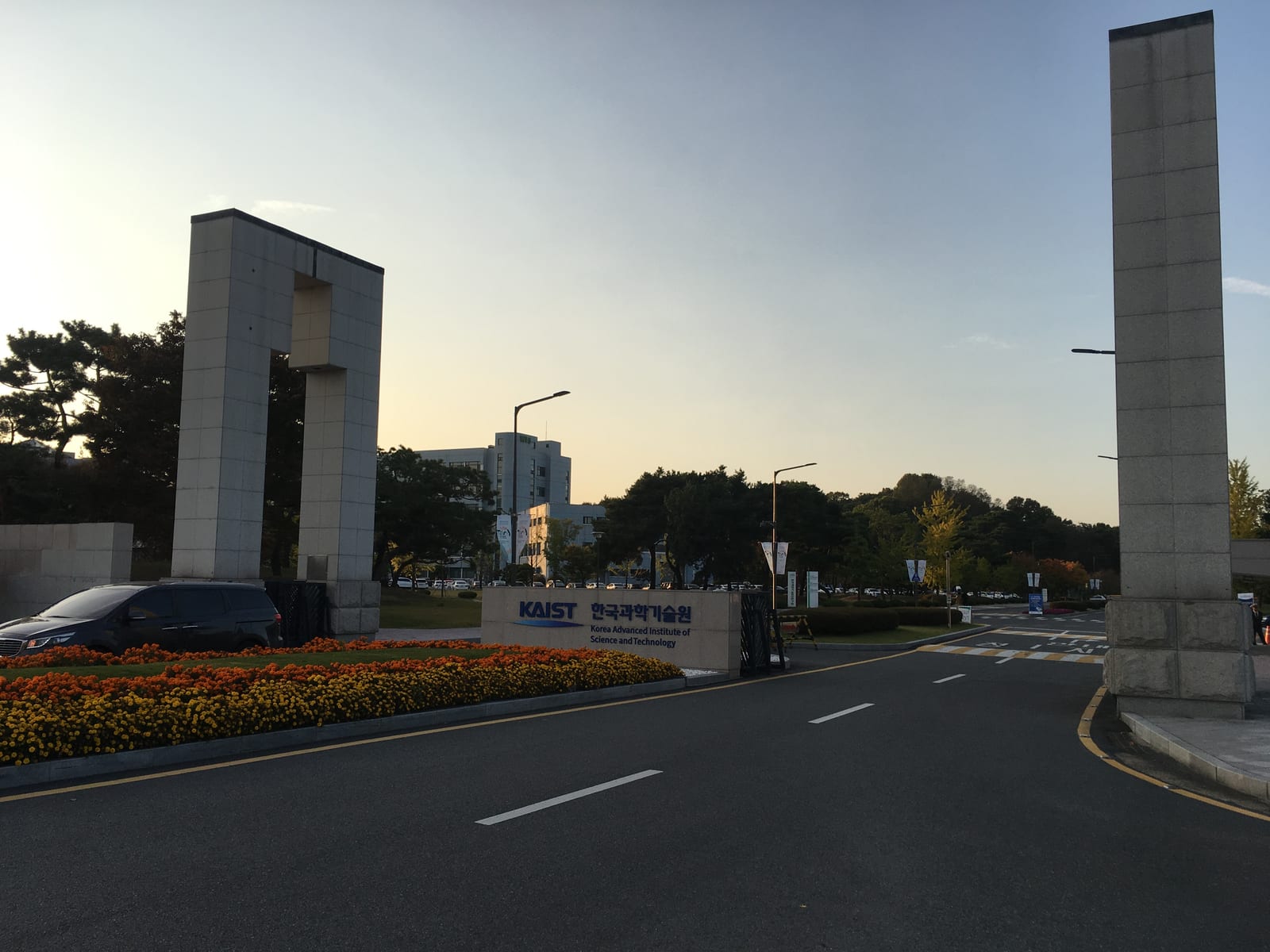
Main entrance of en:KAIST. Verified
Main entrance of en:KAIST. · Photo: reviCC BY 2.0 kr
Applies everywhere on the site, on this device — change it any time.
Not set — every fee below is the international rate. Home and EU/EEA rates are often far lower.

courses

20 courses

Computer Science

BS · 4 years · Computer Science

International tuition

₩6,866,000 per year

~₩27,464,000 for the whole 4 years, at today's fee
Published, undated

Same rate across the institution · International students

KAIST publishes this figure without stating which year it applies to, so it may already be out of date. Treat it as a starting point and check the course page for the current rate. Flag it below if you know it has changed.

KAIST's Cost of Attendance table for the Undergraduate Program (Main Campus) prints tuition as KRW 3,433,000 for each of the two semesters, KRW 6,866,000 a year, and does not break it down by department. In practice almost no admitted international undergraduate pays it: the KAIST Scholarship covers full tuition for eight semesters plus KRW 350,000 a month for living expenses and medical insurance, with no separate application (applicants tick 'KAIST scholarship' on the Statement of Financial Resources). It is conditional on keeping a GPA above 2.7/4.3 after the freshman year, so the full fee is shown here. The same table puts essential non-tuition costs at a further KRW 8,019,680 a year (National Health Insurance 916,680, books 300,000, a shared Hee Mang Hall room 1,328,000, campus cafeteria food 5,475,000), and KAIST notes the table is subject to change with inflation.

Show the fee on the university's site

KAIST publishes standard undergraduate tuition of KRW 3,433,000 per semester (KRW 6,866,000/year), but this figure carries no academic year on the page it is published on, so it cannot be stored as a dated fee. Almost every admitted international undergraduate automatically receives the KAIST Scholarship — there is no separate application, selection happens as part of admission — which covers full tuition for all 8 semesters, a living-expense stipend of KRW 350,000 per month, and medical health insurance. The scholarship requires maintaining a GPA above 2.7 out of 4.3 from the second year onward.

Show the source
Intake
February 2027 (End of February 2027 (Spring 2027 intake, Early admission track only)), August 2027 (End of August 2027 (Fall 2027 intake, Early or Regular admission))
Source
Taught in
English
Source
Application deadline
14 January 2027, 6:00 PM (KST) — Regular Admission deadline for Fall 2027 entry (application window opens 10 November 2026). An earlier Early Admission deadline of 22 October 2026 also exists, covering either Spring or Fall 2027 entry.
Source

Add to calendar

What you'll study

Not yet added.

Entry requirementsEnglish · tests · grades · interview

English language

  • TOEFL iBT, 83 overall83 for tests taken before 21 Jan 2026; from 21 Jan 2026 the recommended score is 4.5 on ETS's redesigned TOEFL iBT scale. Listed by KAIST as a 'Recommended Score', not stated as a strict pass/fail cutoff — but submitting at least one EPT score is mandatory for all international applicants.
  • IELTS, 6.5 overallListed by KAIST as a 'Recommended Score', not stated as a strict pass/fail cutoff — but submitting at least one EPT score is mandatory for all international applicants.
  • TOEIC, 720 overallListed by KAIST as a 'Recommended Score'. TOEIC here refers to the Listening & Reading test.
  • TEPS, 326 overallListed by KAIST as a 'Recommended Score' on the (New) TEPS scale.
Source

Admissions tests

  • SAT requiredApplicants must submit at least one of SAT, ACT, AP, IB, or GCE A-Level (or another recognised national high-school-leaving/university-entrance exam) — not all are required, only one.
  • ACT requiredApplicants must submit at least one of SAT, ACT, AP, IB, or GCE A-Level (or another recognised national high-school-leaving/university-entrance exam) — not all are required, only one.
  • AP requiredApplicants must submit at least one of SAT, ACT, AP, IB, or GCE A-Level (or another recognised national high-school-leaving/university-entrance exam) — not all are required, only one.
  • IB requiredApplicants must submit at least one of SAT, ACT, AP, IB, or GCE A-Level (or another recognised national high-school-leaving/university-entrance exam) — not all are required, only one.
  • GCE A-Level requiredApplicants must submit at least one of SAT, ACT, AP, IB, or GCE A-Level (or another recognised national high-school-leaving/university-entrance exam) — not all are required, only one.
Source

Academic offer

High school graduation (or expected graduation) by 31 August 2027 for Fall 2027 entry (Early or Regular track), or by 28 February 2027 for Spring 2027 entry (Early track only). KAIST states admission is a holistic review with no published minimum GPA: academic achievement (especially in mathematics and science), potential, personal achievements, integrity and leadership are all weighed together.
Source
Convert your grade to compare →

Interview

Not required for all applicants. KAIST conducts online interviews only where deemed necessary; selected applicants are contacted individually by email with instructions, and the interview date is subject to change.
Source

BS · 4 years · Electrical & Electronic Engineering

International tuition

₩6,866,000 per year

~₩27,464,000 for the whole 4 years, at today's fee
Published, undated

Same rate across the institution · International students

KAIST publishes this figure without stating which year it applies to, so it may already be out of date. Treat it as a starting point and check the course page for the current rate. Flag it below if you know it has changed.

KAIST's Cost of Attendance table for the Undergraduate Program (Main Campus) prints tuition as KRW 3,433,000 for each of the two semesters, KRW 6,866,000 a year, and does not break it down by department. In practice almost no admitted international undergraduate pays it: the KAIST Scholarship covers full tuition for eight semesters plus KRW 350,000 a month for living expenses and medical insurance, with no separate application (applicants tick 'KAIST scholarship' on the Statement of Financial Resources). It is conditional on keeping a GPA above 2.7/4.3 after the freshman year, so the full fee is shown here. The same table puts essential non-tuition costs at a further KRW 8,019,680 a year (National Health Insurance 916,680, books 300,000, a shared Hee Mang Hall room 1,328,000, campus cafeteria food 5,475,000), and KAIST notes the table is subject to change with inflation.

Show the fee on the university's site

KAIST publishes standard undergraduate tuition of KRW 3,433,000 per semester (KRW 6,866,000/year), but this figure carries no academic year on the page it is published on, so it cannot be stored as a dated fee. Almost every admitted international undergraduate automatically receives the KAIST Scholarship — there is no separate application, selection happens as part of admission — which covers full tuition for all 8 semesters, a living-expense stipend of KRW 350,000 per month, and medical health insurance. The scholarship requires maintaining a GPA above 2.7 out of 4.3 from the second year onward.

Show the source
Intake
February 2027 (End of February 2027 (Spring 2027 intake, Early admission track only)), August 2027 (End of August 2027 (Fall 2027 intake, Early or Regular admission))
Source
Taught in
English
Source
Application deadline
14 January 2027, 6:00 PM (KST) — Regular Admission deadline for Fall 2027 entry (application window opens 10 November 2026). An earlier Early Admission deadline of 22 October 2026 also exists, covering either Spring or Fall 2027 entry.
Source

Add to calendar

What you'll study

Not yet added.

Entry requirementsEnglish · tests · grades · interview

English language

  • TOEFL iBT, 83 overall83 for tests taken before 21 Jan 2026; from 21 Jan 2026 the recommended score is 4.5 on ETS's redesigned TOEFL iBT scale. Listed by KAIST as a 'Recommended Score', not stated as a strict pass/fail cutoff — but submitting at least one EPT score is mandatory for all international applicants.
  • IELTS, 6.5 overallListed by KAIST as a 'Recommended Score', not stated as a strict pass/fail cutoff — but submitting at least one EPT score is mandatory for all international applicants.
  • TOEIC, 720 overallListed by KAIST as a 'Recommended Score'. TOEIC here refers to the Listening & Reading test.
  • TEPS, 326 overallListed by KAIST as a 'Recommended Score' on the (New) TEPS scale.
Source

Admissions tests

  • SAT requiredApplicants must submit at least one of SAT, ACT, AP, IB, or GCE A-Level (or another recognised national high-school-leaving/university-entrance exam) — not all are required, only one.
  • ACT requiredApplicants must submit at least one of SAT, ACT, AP, IB, or GCE A-Level (or another recognised national high-school-leaving/university-entrance exam) — not all are required, only one.
  • AP requiredApplicants must submit at least one of SAT, ACT, AP, IB, or GCE A-Level (or another recognised national high-school-leaving/university-entrance exam) — not all are required, only one.
  • IB requiredApplicants must submit at least one of SAT, ACT, AP, IB, or GCE A-Level (or another recognised national high-school-leaving/university-entrance exam) — not all are required, only one.
  • GCE A-Level requiredApplicants must submit at least one of SAT, ACT, AP, IB, or GCE A-Level (or another recognised national high-school-leaving/university-entrance exam) — not all are required, only one.
Source

Academic offer

High school graduation (or expected graduation) by 31 August 2027 for Fall 2027 entry (Early or Regular track), or by 28 February 2027 for Spring 2027 entry (Early track only). KAIST states admission is a holistic review with no published minimum GPA: academic achievement (especially in mathematics and science), potential, personal achievements, integrity and leadership are all weighed together.
Source
Convert your grade to compare →

Interview

Not required for all applicants. KAIST conducts online interviews only where deemed necessary; selected applicants are contacted individually by email with instructions, and the interview date is subject to change.
Source

Biological Sciences

BS · 4 years · Biology & Life Sciences

International tuition

₩6,866,000 per year

~₩27,464,000 for the whole 4 years, at today's fee
Published, undated

Same rate across the institution · International students

KAIST publishes this figure without stating which year it applies to, so it may already be out of date. Treat it as a starting point and check the course page for the current rate. Flag it below if you know it has changed.

KAIST's Cost of Attendance table for the Undergraduate Program (Main Campus) prints tuition as KRW 3,433,000 for each of the two semesters, KRW 6,866,000 a year, and does not break it down by department. In practice almost no admitted international undergraduate pays it: the KAIST Scholarship covers full tuition for eight semesters plus KRW 350,000 a month for living expenses and medical insurance, with no separate application (applicants tick 'KAIST scholarship' on the Statement of Financial Resources). It is conditional on keeping a GPA above 2.7/4.3 after the freshman year, so the full fee is shown here. The same table puts essential non-tuition costs at a further KRW 8,019,680 a year (National Health Insurance 916,680, books 300,000, a shared Hee Mang Hall room 1,328,000, campus cafeteria food 5,475,000), and KAIST notes the table is subject to change with inflation.

Show the fee on the university's site

KAIST publishes standard undergraduate tuition of KRW 3,433,000 per semester (KRW 6,866,000/year), but this figure carries no academic year on the page it is published on, so it cannot be stored as a dated fee. Almost every admitted international undergraduate automatically receives the KAIST Scholarship — there is no separate application, selection happens as part of admission — which covers full tuition for all 8 semesters, a living-expense stipend of KRW 350,000 per month, and medical health insurance. The scholarship requires maintaining a GPA above 2.7 out of 4.3 from the second year onward.

Show the source
Intake
February 2027 (End of February 2027 (Spring 2027 intake, Early admission track only)), August 2027 (End of August 2027 (Fall 2027 intake, Early or Regular admission))
Source
Taught in
English
Source
Application deadline
14 January 2027, 6:00 PM (KST) — Regular Admission deadline for Fall 2027 entry (application window opens 10 November 2026). An earlier Early Admission deadline of 22 October 2026 also exists, covering either Spring or Fall 2027 entry.
Source

Add to calendar

What you'll study

Not yet added.

Entry requirementsEnglish · tests · grades · interview

English language

  • TOEFL iBT, 83 overall83 for tests taken before 21 Jan 2026; from 21 Jan 2026 the recommended score is 4.5 on ETS's redesigned TOEFL iBT scale. Listed by KAIST as a 'Recommended Score', not stated as a strict pass/fail cutoff — but submitting at least one EPT score is mandatory for all international applicants.
  • IELTS, 6.5 overallListed by KAIST as a 'Recommended Score', not stated as a strict pass/fail cutoff — but submitting at least one EPT score is mandatory for all international applicants.
  • TOEIC, 720 overallListed by KAIST as a 'Recommended Score'. TOEIC here refers to the Listening & Reading test.
  • TEPS, 326 overallListed by KAIST as a 'Recommended Score' on the (New) TEPS scale.
Source

Admissions tests

  • SAT requiredApplicants must submit at least one of SAT, ACT, AP, IB, or GCE A-Level (or another recognised national high-school-leaving/university-entrance exam) — not all are required, only one.
  • ACT requiredApplicants must submit at least one of SAT, ACT, AP, IB, or GCE A-Level (or another recognised national high-school-leaving/university-entrance exam) — not all are required, only one.
  • AP requiredApplicants must submit at least one of SAT, ACT, AP, IB, or GCE A-Level (or another recognised national high-school-leaving/university-entrance exam) — not all are required, only one.
  • IB requiredApplicants must submit at least one of SAT, ACT, AP, IB, or GCE A-Level (or another recognised national high-school-leaving/university-entrance exam) — not all are required, only one.
  • GCE A-Level requiredApplicants must submit at least one of SAT, ACT, AP, IB, or GCE A-Level (or another recognised national high-school-leaving/university-entrance exam) — not all are required, only one.
Source

Academic offer

High school graduation (or expected graduation) by 31 August 2027 for Fall 2027 entry (Early or Regular track), or by 28 February 2027 for Spring 2027 entry (Early track only). KAIST states admission is a holistic review with no published minimum GPA: academic achievement (especially in mathematics and science), potential, personal achievements, integrity and leadership are all weighed together.
Source
Convert your grade to compare →

Interview

Not required for all applicants. KAIST conducts online interviews only where deemed necessary; selected applicants are contacted individually by email with instructions, and the interview date is subject to change.
Source

BS · 4 years · Biomedical Engineering, Neuroscience

International tuition

₩6,866,000 per year

~₩27,464,000 for the whole 4 years, at today's fee
Published, undated

Same rate across the institution · International students

KAIST publishes this figure without stating which year it applies to, so it may already be out of date. Treat it as a starting point and check the course page for the current rate. Flag it below if you know it has changed.

KAIST's Cost of Attendance table for the Undergraduate Program (Main Campus) prints tuition as KRW 3,433,000 for each of the two semesters, KRW 6,866,000 a year, and does not break it down by department. In practice almost no admitted international undergraduate pays it: the KAIST Scholarship covers full tuition for eight semesters plus KRW 350,000 a month for living expenses and medical insurance, with no separate application (applicants tick 'KAIST scholarship' on the Statement of Financial Resources). It is conditional on keeping a GPA above 2.7/4.3 after the freshman year, so the full fee is shown here. The same table puts essential non-tuition costs at a further KRW 8,019,680 a year (National Health Insurance 916,680, books 300,000, a shared Hee Mang Hall room 1,328,000, campus cafeteria food 5,475,000), and KAIST notes the table is subject to change with inflation.

Show the fee on the university's site

KAIST publishes standard undergraduate tuition of KRW 3,433,000 per semester (KRW 6,866,000/year), but this figure carries no academic year on the page it is published on, so it cannot be stored as a dated fee. Almost every admitted international undergraduate automatically receives the KAIST Scholarship — there is no separate application, selection happens as part of admission — which covers full tuition for all 8 semesters, a living-expense stipend of KRW 350,000 per month, and medical health insurance. The scholarship requires maintaining a GPA above 2.7 out of 4.3 from the second year onward.

Show the source
Intake
February 2027 (End of February 2027 (Spring 2027 intake, Early admission track only)), August 2027 (End of August 2027 (Fall 2027 intake, Early or Regular admission))
Source
Taught in
English
Source
Application deadline
14 January 2027, 6:00 PM (KST) — Regular Admission deadline for Fall 2027 entry (application window opens 10 November 2026). An earlier Early Admission deadline of 22 October 2026 also exists, covering either Spring or Fall 2027 entry.
Source

Add to calendar

What you'll study

Not yet added.

Entry requirementsEnglish · tests · grades · interview

English language

  • TOEFL iBT, 83 overall83 for tests taken before 21 Jan 2026; from 21 Jan 2026 the recommended score is 4.5 on ETS's redesigned TOEFL iBT scale. Listed by KAIST as a 'Recommended Score', not stated as a strict pass/fail cutoff — but submitting at least one EPT score is mandatory for all international applicants.
  • IELTS, 6.5 overallListed by KAIST as a 'Recommended Score', not stated as a strict pass/fail cutoff — but submitting at least one EPT score is mandatory for all international applicants.
  • TOEIC, 720 overallListed by KAIST as a 'Recommended Score'. TOEIC here refers to the Listening & Reading test.
  • TEPS, 326 overallListed by KAIST as a 'Recommended Score' on the (New) TEPS scale.
Source

Admissions tests

  • SAT requiredApplicants must submit at least one of SAT, ACT, AP, IB, or GCE A-Level (or another recognised national high-school-leaving/university-entrance exam) — not all are required, only one.
  • ACT requiredApplicants must submit at least one of SAT, ACT, AP, IB, or GCE A-Level (or another recognised national high-school-leaving/university-entrance exam) — not all are required, only one.
  • AP requiredApplicants must submit at least one of SAT, ACT, AP, IB, or GCE A-Level (or another recognised national high-school-leaving/university-entrance exam) — not all are required, only one.
  • IB requiredApplicants must submit at least one of SAT, ACT, AP, IB, or GCE A-Level (or another recognised national high-school-leaving/university-entrance exam) — not all are required, only one.
  • GCE A-Level requiredApplicants must submit at least one of SAT, ACT, AP, IB, or GCE A-Level (or another recognised national high-school-leaving/university-entrance exam) — not all are required, only one.
Source

Academic offer

High school graduation (or expected graduation) by 31 August 2027 for Fall 2027 entry (Early or Regular track), or by 28 February 2027 for Spring 2027 entry (Early track only). KAIST states admission is a holistic review with no published minimum GPA: academic achievement (especially in mathematics and science), potential, personal achievements, integrity and leadership are all weighed together.
Source
Convert your grade to compare →

Interview

Not required for all applicants. KAIST conducts online interviews only where deemed necessary; selected applicants are contacted individually by email with instructions, and the interview date is subject to change.
Source

BS · 4 years · Chemical Engineering

International tuition

₩6,866,000 per year

~₩27,464,000 for the whole 4 years, at today's fee
Published, undated

Same rate across the institution · International students

KAIST publishes this figure without stating which year it applies to, so it may already be out of date. Treat it as a starting point and check the course page for the current rate. Flag it below if you know it has changed.

KAIST's Cost of Attendance table for the Undergraduate Program (Main Campus) prints tuition as KRW 3,433,000 for each of the two semesters, KRW 6,866,000 a year, and does not break it down by department. In practice almost no admitted international undergraduate pays it: the KAIST Scholarship covers full tuition for eight semesters plus KRW 350,000 a month for living expenses and medical insurance, with no separate application (applicants tick 'KAIST scholarship' on the Statement of Financial Resources). It is conditional on keeping a GPA above 2.7/4.3 after the freshman year, so the full fee is shown here. The same table puts essential non-tuition costs at a further KRW 8,019,680 a year (National Health Insurance 916,680, books 300,000, a shared Hee Mang Hall room 1,328,000, campus cafeteria food 5,475,000), and KAIST notes the table is subject to change with inflation.

Show the fee on the university's site

KAIST publishes standard undergraduate tuition of KRW 3,433,000 per semester (KRW 6,866,000/year), but this figure carries no academic year on the page it is published on, so it cannot be stored as a dated fee. Almost every admitted international undergraduate automatically receives the KAIST Scholarship — there is no separate application, selection happens as part of admission — which covers full tuition for all 8 semesters, a living-expense stipend of KRW 350,000 per month, and medical health insurance. The scholarship requires maintaining a GPA above 2.7 out of 4.3 from the second year onward.

Show the source
Intake
February 2027 (End of February 2027 (Spring 2027 intake, Early admission track only)), August 2027 (End of August 2027 (Fall 2027 intake, Early or Regular admission))
Source
Taught in
English
Source
Application deadline
14 January 2027, 6:00 PM (KST) — Regular Admission deadline for Fall 2027 entry (application window opens 10 November 2026). An earlier Early Admission deadline of 22 October 2026 also exists, covering either Spring or Fall 2027 entry.
Source

Add to calendar

What you'll study

Not yet added.

Entry requirementsEnglish · tests · grades · interview

English language

  • TOEFL iBT, 83 overall83 for tests taken before 21 Jan 2026; from 21 Jan 2026 the recommended score is 4.5 on ETS's redesigned TOEFL iBT scale. Listed by KAIST as a 'Recommended Score', not stated as a strict pass/fail cutoff — but submitting at least one EPT score is mandatory for all international applicants.
  • IELTS, 6.5 overallListed by KAIST as a 'Recommended Score', not stated as a strict pass/fail cutoff — but submitting at least one EPT score is mandatory for all international applicants.
  • TOEIC, 720 overallListed by KAIST as a 'Recommended Score'. TOEIC here refers to the Listening & Reading test.
  • TEPS, 326 overallListed by KAIST as a 'Recommended Score' on the (New) TEPS scale.
Source

Admissions tests

  • SAT requiredApplicants must submit at least one of SAT, ACT, AP, IB, or GCE A-Level (or another recognised national high-school-leaving/university-entrance exam) — not all are required, only one.
  • ACT requiredApplicants must submit at least one of SAT, ACT, AP, IB, or GCE A-Level (or another recognised national high-school-leaving/university-entrance exam) — not all are required, only one.
  • AP requiredApplicants must submit at least one of SAT, ACT, AP, IB, or GCE A-Level (or another recognised national high-school-leaving/university-entrance exam) — not all are required, only one.
  • IB requiredApplicants must submit at least one of SAT, ACT, AP, IB, or GCE A-Level (or another recognised national high-school-leaving/university-entrance exam) — not all are required, only one.
  • GCE A-Level requiredApplicants must submit at least one of SAT, ACT, AP, IB, or GCE A-Level (or another recognised national high-school-leaving/university-entrance exam) — not all are required, only one.
Source

Academic offer

High school graduation (or expected graduation) by 31 August 2027 for Fall 2027 entry (Early or Regular track), or by 28 February 2027 for Spring 2027 entry (Early track only). KAIST states admission is a holistic review with no published minimum GPA: academic achievement (especially in mathematics and science), potential, personal achievements, integrity and leadership are all weighed together.
Source
Convert your grade to compare →

Interview

Not required for all applicants. KAIST conducts online interviews only where deemed necessary; selected applicants are contacted individually by email with instructions, and the interview date is subject to change.
Source

BS · 4 years · Mathematics

International tuition

₩6,866,000 per year

~₩27,464,000 for the whole 4 years, at today's fee
Published, undated

Same rate across the institution · International students

KAIST publishes this figure without stating which year it applies to, so it may already be out of date. Treat it as a starting point and check the course page for the current rate. Flag it below if you know it has changed.

KAIST's Cost of Attendance table for the Undergraduate Program (Main Campus) prints tuition as KRW 3,433,000 for each of the two semesters, KRW 6,866,000 a year, and does not break it down by department. In practice almost no admitted international undergraduate pays it: the KAIST Scholarship covers full tuition for eight semesters plus KRW 350,000 a month for living expenses and medical insurance, with no separate application (applicants tick 'KAIST scholarship' on the Statement of Financial Resources). It is conditional on keeping a GPA above 2.7/4.3 after the freshman year, so the full fee is shown here. The same table puts essential non-tuition costs at a further KRW 8,019,680 a year (National Health Insurance 916,680, books 300,000, a shared Hee Mang Hall room 1,328,000, campus cafeteria food 5,475,000), and KAIST notes the table is subject to change with inflation.

Show the fee on the university's site

KAIST publishes standard undergraduate tuition of KRW 3,433,000 per semester (KRW 6,866,000/year), but this figure carries no academic year on the page it is published on, so it cannot be stored as a dated fee. Almost every admitted international undergraduate automatically receives the KAIST Scholarship — there is no separate application, selection happens as part of admission — which covers full tuition for all 8 semesters, a living-expense stipend of KRW 350,000 per month, and medical health insurance. The scholarship requires maintaining a GPA above 2.7 out of 4.3 from the second year onward.

Show the source
Intake
February 2027 (End of February 2027 (Spring 2027 intake, Early admission track only)), August 2027 (End of August 2027 (Fall 2027 intake, Early or Regular admission))
Source
Taught in
English
Source
Application deadline
14 January 2027, 6:00 PM (KST) — Regular Admission deadline for Fall 2027 entry (application window opens 10 November 2026). An earlier Early Admission deadline of 22 October 2026 also exists, covering either Spring or Fall 2027 entry.
Source

Add to calendar

What you'll study

Not yet added.

Entry requirementsEnglish · tests · grades · interview

English language

  • TOEFL iBT, 83 overall83 for tests taken before 21 Jan 2026; from 21 Jan 2026 the recommended score is 4.5 on ETS's redesigned TOEFL iBT scale. Listed by KAIST as a 'Recommended Score', not stated as a strict pass/fail cutoff — but submitting at least one EPT score is mandatory for all international applicants.
  • IELTS, 6.5 overallListed by KAIST as a 'Recommended Score', not stated as a strict pass/fail cutoff — but submitting at least one EPT score is mandatory for all international applicants.
  • TOEIC, 720 overallListed by KAIST as a 'Recommended Score'. TOEIC here refers to the Listening & Reading test.
  • TEPS, 326 overallListed by KAIST as a 'Recommended Score' on the (New) TEPS scale.
Source

Admissions tests

  • SAT requiredApplicants must submit at least one of SAT, ACT, AP, IB, or GCE A-Level (or another recognised national high-school-leaving/university-entrance exam) — not all are required, only one.
  • ACT requiredApplicants must submit at least one of SAT, ACT, AP, IB, or GCE A-Level (or another recognised national high-school-leaving/university-entrance exam) — not all are required, only one.
  • AP requiredApplicants must submit at least one of SAT, ACT, AP, IB, or GCE A-Level (or another recognised national high-school-leaving/university-entrance exam) — not all are required, only one.
  • IB requiredApplicants must submit at least one of SAT, ACT, AP, IB, or GCE A-Level (or another recognised national high-school-leaving/university-entrance exam) — not all are required, only one.
  • GCE A-Level requiredApplicants must submit at least one of SAT, ACT, AP, IB, or GCE A-Level (or another recognised national high-school-leaving/university-entrance exam) — not all are required, only one.
Source

Academic offer

High school graduation (or expected graduation) by 31 August 2027 for Fall 2027 entry (Early or Regular track), or by 28 February 2027 for Spring 2027 entry (Early track only). KAIST states admission is a holistic review with no published minimum GPA: academic achievement (especially in mathematics and science), potential, personal achievements, integrity and leadership are all weighed together.
Source
Convert your grade to compare →

Interview

Not required for all applicants. KAIST conducts online interviews only where deemed necessary; selected applicants are contacted individually by email with instructions, and the interview date is subject to change.
Source

Subjects taught at KAIST

Each one opens every course in that subject, at every university we hold, with the same verified fees.

Where these figures come from

10 sentences from KAIST's own site each back several figures above. Each is quoted once here; every course that uses one still opens it and links to its own source page.

  1. Used for international fee on 20 courses

    “Tuition Fees 3,433,000 3,433,000 6,866,000 NHI Premiums 458,340 458,340 916,680 KRW 76,390/M (*NHI: National Health Insurance)”
    Cost of Attendance — Financial Support, KAIST Office of Admissionsadmission.kaist.ac.krread 31 Aug 2026
    Open the official page ↗
  2. Used for teaching language on 20 courses

    “The official language of communication and instruction for international students at KAIST is English.”
    KAIST Undergraduate Admissions Guide — For International Applicants (Spring & Fall 2027) | KAIST Office of Admissionsadmission.kaist.ac.krread 3 Aug 2026
    Open the official page ↗
  3. Used for start dates on 13 courses

    “Academic Year Begins End of February, 2027 End of August, 2027”
    Calendar | KAIST International Undergraduate Admissionsadmission.kaist.ac.krread 2 Aug 2026
    Open the official page ↗
  4. Used for course length on 13 courses

    “All international students receive fullly-funded tuition for four years, Monthly Stipend, National Health Insurance.”
    Why KAIST | KAIST International Undergraduate Admissionsadmission.kaist.ac.krread 2 Aug 2026
    Open the official page ↗
  5. Used for cost note on 13 courses

    “Subsidies Full tuition fee: tuition exemption for 8 semesters Living expenses: 350,000 KRW per month Medical Health insurance Requirement We offer KAIST Scholarships to admitted students Students must maintain GPA over 2.7 out of 4.3 at KAIST after their freshman year Application Period Same as Admission Application There is no separate process for applying scholarship”
    KAIST Scholarship | KAIST Admissionsadmission.kaist.ac.krread 2 Aug 2026
    Open the official page ↗
  6. Used for application deadline on 13 courses

    “Admission Track Early Admissions Regular Admissions Spring Track Fall Track Fall Track Only Application Period & Document Submission September 22 ~ October 22, 2026, 6:00 PM (KST) November 10, 2026 ~ January 14, 2027, 6:00 PM (KST)”
    Calendar | KAIST International Undergraduate Admissionsadmission.kaist.ac.krread 2 Aug 2026
    Open the official page ↗
  7. Used for entry requirements on 12 courses

    “Standardized Test Score Reports Applicants must submit at least one official test score (e.g., SAT, ACT, AP, IB, GCE A-Level, or other national high school leaving or university entrance examinations).”
    KAIST Undergraduate Admissions Guide — For International Applicants (Spring & Fall 2027) | KAIST Office of Admissionsadmission.kaist.ac.krread 3 Aug 2026
    Open the official page ↗
  8. Used for entry requirements on 12 courses

    “Fall 2027 (Early/Regular) Applicants who have graduated or will graduate from high school by August 31, 2027.”
    KAIST Undergraduate Admissions Guide — For International Applicants (Spring & Fall 2027) | KAIST Office of Admissionsadmission.kaist.ac.krread 3 Aug 2026
    Open the official page ↗
  9. Used for entry requirements on 12 courses

    “English Proficiency Test (EPT) Score Reports The official language of communication and instruction for international students at KAIST is English. Therefore, all applicants must submit at least one of the following English Proficiency test (EPT) scores. Test Recommended Score TOEFL iBT 83 (Taken before Jan 21, 2026) / 4.5 (Taken on or after Jan 21, 2026) IELTS 6.5 TOEIC 720 TEPS 326”
    KAIST Undergraduate Admissions Guide — For International Applicants (Spring & Fall 2027) | KAIST Office of Admissionsadmission.kaist.ac.krread 3 Aug 2026
    Open the official page ↗
  10. Used for entry requirements on 12 courses

    “* Interviews may be conducted if deemed necessary. Selected applicants will be contacted individually via email with further instructions. The interview date is subject to change.”
    Calendar | KAIST International Undergraduate Admissionsadmission.kaist.ac.krread 2 Aug 2026
    Open the official page ↗

More about KAIST

Student body

QS's own figures · QS World University Rankings 2027

Students
11,328
International students
1,075
≈9% of the student body (worked out here)
Faculty
1,669
International faculty
13%

These come from QS, not the university's own pages. Unlike every fee and deadline on this site. QS is the primary source for its own rankings and measurements, which is why it is cited here and rejected everywhere else.

Show the QS profile
✓ Word for wordRead 15 Aug 2026
“Students & Staff Total students 11,328 UG students 32.3% PG students 67.7% International students 1,075 UG students 37% PG students 63% Total faculty staff 1,669 Domestic staff 87% Int'l staff 13%”
KAIST : Rankings, Fees & Courses Details | TopUniversitiestopuniversities.com
Open the official page ↗

About & contact

Daejeon, South Korea· view on Google Maps ↗kaist.ac.kr ↗

Find nearby

These open a map search near Daejeon. StudyPath isn't listing or vouching for specific places — what the university itself publishes about on-campus facilities appears under On-campus amenities, cited like everything else here.

No admissions email, phone number, or address verified for this university yet. Not yet collected, not necessarily unavailable.

Accommodation

₩364,000per 4 months

on-campus dormitory (undergraduate basic dorm rate, per person)

Published by the university itself, not a live listings price. Actual cost depends on room type, availability and when you apply.

Show the source
✓ Word for wordRead 16 Aug 2026
“Undergraduate area Sarang Somang Seongsil Jilli Siloe Jihye M Undergraduate 364,000 Won / 4 Months”
Dormitory Fees | KAIST International Officeio.kaist.ac.kr
Open the official page ↗

After you graduate

Rules read 17 Aug 2026. Check the current rules, this may be out of date

What South Korea's own immigration authority currently publishes. Not a ranking, not a guarantee, and not the same as what any agent or forum will tell you. Whether someone actually obtains residence depends on occupation, points, funds and policy that can change between application and graduation.

Post-study work visa

Job Seeker status (D-10), including the High-Tech Internship subtype . Up to 1 year
A status of stay for job-seeking activities, start-up preparation, or an internship in a high-technology field, granted to those who meet the relevant requirements. The Ministry of Justice's own official Visa Navigator guide states an initial period of 6 months for the general Job Seeker grant, extended to 1 year specifically for the High-Tech Internship subtype, and describes the status as 'Extendable' without stating a fixed lifetime cap in this document. The High-Tech Internship subtype (most relevant to StudyPath’s STEM audience) is open to enrolled students or graduates, within 3 years of their degree, of an overseas university ranked in the Times Higher Education World University Rankings' top 200 or the QS World University Rankings' top 500, planning an internship in a Ministry-designated high-technology field. General Job Seekers otherwise able to work part-time (D-2-to-D-10 converts who hold an associate degree or higher from a Korean university, obtained within the prior 3 years) face additional TOPIK-Korean-proficiency and social-integration-exam conditions not detailed here. Multiple South Korean and expatriate-advice sources report a Ministry of Justice reform effective 29 October 2025 that lengthened the overall permitted stay and changed renewal increments — see notes; StudyPath could not independently verify the post-reform figures against a primary hikorea.go.kr or immigration.go.kr document, so only the pre-reform figures stated in the Ministry's own guide are recorded as verified here.

Show the source
✓ Word for wordRead 17 Aug 2026
“D-10 Persons engaging in job-seeking activities for employment, 6 months”
VISA NAVIGATOR: Customized Stay Guide for Foreign Residents (Ver. 2023.05) - Korea Immigration Service, Ministry of Justiceimmigration.go.kr
Open the official page ↗

Route to permanent residence

Time spent on a Student (D-2) or Job Seeker (D-10) status does not itself count toward the residence period required for permanent residence: the Ministry of Justice's own guide confirms directly, in an FAQ answering exactly this question, that time on a D-2 visa is excluded from the qualifying period for the F-5-1 (General Permanent Resident) status. The realistic route is to first move onto a professional/employment status — typically E-1 through E-7 (covering, among others, E-7 'Foreign National of Special Ability', which includes a points-based Skilled Worker track) — and, from there, accumulate the required years before applying for permanent residence (F-5) or, first, the intermediate Resident (F-2) status. The guide states F-5 General Permanent Resident eligibility as more than 5 years held with D-7 through D-10, E-1 through E-7, or F-2 status — but the D-2/D-10-exclusion FAQ specifically clarifies that within that list, D-7 through E-7 time counts while D-2/D-10 time does not, for at least the F-5-1 category. Separate, faster F-5 categories exist for doctoral-degree holders in high-tech fields (1 year of related full-time work after an overseas high-tech doctorate) and for bachelor's/master's-degree or technical-license holders (3 years' residence plus 1 year of full-time regular work).

Show the source
✓ Word for wordRead 17 Aug 2026
“The residence period with D-2 visa will not be included. Those who have resided in Korea for over 5 years with D-7(Intra-Company Transferee)~ E-7(Foreign National of Special Ability) visa or F-2(Resident) visa are eligible to apply for F-5-1 visa.”
VISA NAVIGATOR: Customized Stay Guide for Foreign Residents (Ver. 2023.05) - Korea Immigration Service, Ministry of Justiceimmigration.go.kr
Open the official page ↗

Route to citizenship

South Korea's Nationality Act (국적법), administered by the Ministry of Justice, sets 'general naturalisation' (Article 5) as the standard route for someone with no prior claim to Korean nationality: at least 5 years of continuous, lawful address (domicile) in Korea, and — since a 20 December 2018 amendment — a residence status that itself permits permanent residence in Korea (in practice, F-5 permanent-residence status), plus adult status, good conduct, the means to support oneself or dependants, basic Korean-language ability and understanding of Korean customs, and a Ministry of Justice finding that naturalising the applicant will not harm national security, public order or public welfare. Separate, narrower tracks exist with no residence requirement at all: 'simplified naturalisation' (Article 6, 3 years for those with specific family ties to Korea) and 'special naturalisation' (Article 7, for a person with a Korean parent, someone who has rendered special merit to Korea, or someone with outstanding ability in science, the economy, culture or sport). On dual citizenship, Korea's general rule (Article 10) requires a newly naturalised citizen who holds a foreign nationality to renounce it within 1 year — but Article 10(2) creates a genuine exception for specific categories (a Korean-national spouse meeting set marriage-duration conditions, a special-merit or exceptional-ability naturalisation recipient, certain restoration-of-nationality cases, and an elderly overseas Korean who returns after 65 to settle permanently): these applicants may instead pledge to the Minister of Justice not to exercise the foreign nationality while in Korea, rather than formally renouncing it. This is a genuinely conditional rule, not a single clean yes/no on dual citizenship, and the general-naturalisation route (the one most relevant to an international graduate with no Korean family ties) falls under the renounce-within-1-year default rather than the exception.

Show the source
✓ Word for wordRead 17 Aug 2026
“1. 5년 이상 계속하여 대한민국에 주소가 있을 것”
국적법 (Nationality Act) - 국가법령정보센터 (Korea Ministry of Government Legislation)law.go.kr
Open the official page ↗

Read 17 August 2026. Two fields are deliberately left null rather than filled with a weak or unverified substitute. workDuringStudy: StudyPath found only qualitative D-2 (student) part-time work rules in the sourced document (attendance/GPA-based eligibility, restricted specialist fields, TOPIK-linked exceptions) with no explicit weekly-hours figure; secondary sources describe hour caps that vary by degree level and TOPIK score (commonly cited as roughly 10-25 hours/week for undergraduates and up to 30 for graduate students, unrestricted in vacation periods for those meeting language requirements), but StudyPath could not reach a working hikorea.go.kr page stating this directly (the specific page found by search returned a site error, and hikorea.go.kr's other relevant pages are JavaScript-rendered without readable static text). inDemandOccupations: the E-7-4 'Skilled Worker' points-based track and its own eligible-occupation list exist and were referenced in the sourced guide, but did not locate a citable primary-source passage describing the list's mechanism in enough detail to summarize honestly. postStudyWork is sourced to a Ministry of Justice guide dated May 2023 (Ver. 2023.05) — still hosted live at immigration.go.kr as of this reading, but multiple non-official sources describe a substantial reform to the D-10 status effective 29 October 2025 (longer overall stay, larger renewal increments, altered points-system exemptions for D-2-to-D-10 converts) that this document predates and that StudyPath did not independently verify against a primary source; treat the D-10 duration figures here as a floor, not a current ceiling, and re-verify before relying on them. Collection note: the cited PDF's text was extracted with pdftotext (poppler-utils) rather than the usual HTML path, since it is a binary PDF; the extracted text was archived the same way a browser-rendered page would be, and its exact wording (including page-layout artifacts from table columns) is preserved in the archived snapshot for verification. South Korea does not appear on StudyPath's university list yet, so this entry is general country-level context. citizenshipRoute added 17 August 2026, cited to law.go.kr — the Ministry of Government Legislation's own official statute portal (국가법령정보센터), a new domain accepted as a government source here for since it publishes the actual current text of the Nationality Act rather than a paraphrase of it. The page renders its statute text via a canvas/script-based viewer with no extractable static text, so no text could be extracted from it; the Articles 5, 6, 7 and 10 text quoted and paraphrased above was read directly off screenshots of the rendered page and transcribed, then archived as a browser capture against the real law.go.kr URL. A second source, the Seoul Immigration Office's own 'Easy and Concise Guide to Immigration Petitions' PDF (already archived above at 833e31e1297d34a5, now re-saved with clean pdftotext-extracted text rather than raw PDF bytes), independently corroborates the F-5/Article 5 permanent-residence requirement and illustrates the automatic-loss-of-Korean-nationality rule for the reverse case (a Korean who voluntarily acquires a foreign nationality). naturalisationStatus set to 'published-route' on 18 August 2026: the authority already cited under citizenshipRoute publishes criteria a foreign resident could actually follow, which is the only claim this field makes. It is deliberately not a judgement about how attainable that route is in practice. Recorded as a published route even though general naturalisation requires F-5 permanent residence first and, by default, renunciation of the foreign nationality within one year: both are conditions on a published route rather than an absence of one. citizenshipTerms describes general naturalisation (Nationality Act Article 5), the route open to an applicant with no Korean family tie. dualCitizenshipAllowed is false for that route: Article 10 requires a newly naturalised citizen holding a foreign nationality to renounce it within 1 year. Article 10(2)’s pledge-instead-of-renunciation option is confined to the named categories set out in citizenshipRoute (Korean spouse, special-merit or exceptional-ability grants, certain restorations, elderly returning overseas Koreans) and does not reach general naturalisation.

Open the immigration authority's own page ↗

Student photos

Contributed by students and applicants. Not checked the way the campus photos above are, just real photos from people who've actually been here.

Loading…

What students say about KAIST

Opinions from students and applicants. Not checked against the university's own pages the way the fees and deadlines above are.

to write a review. Signing in with your university email marks you as a verified student here.

Loading reviews…